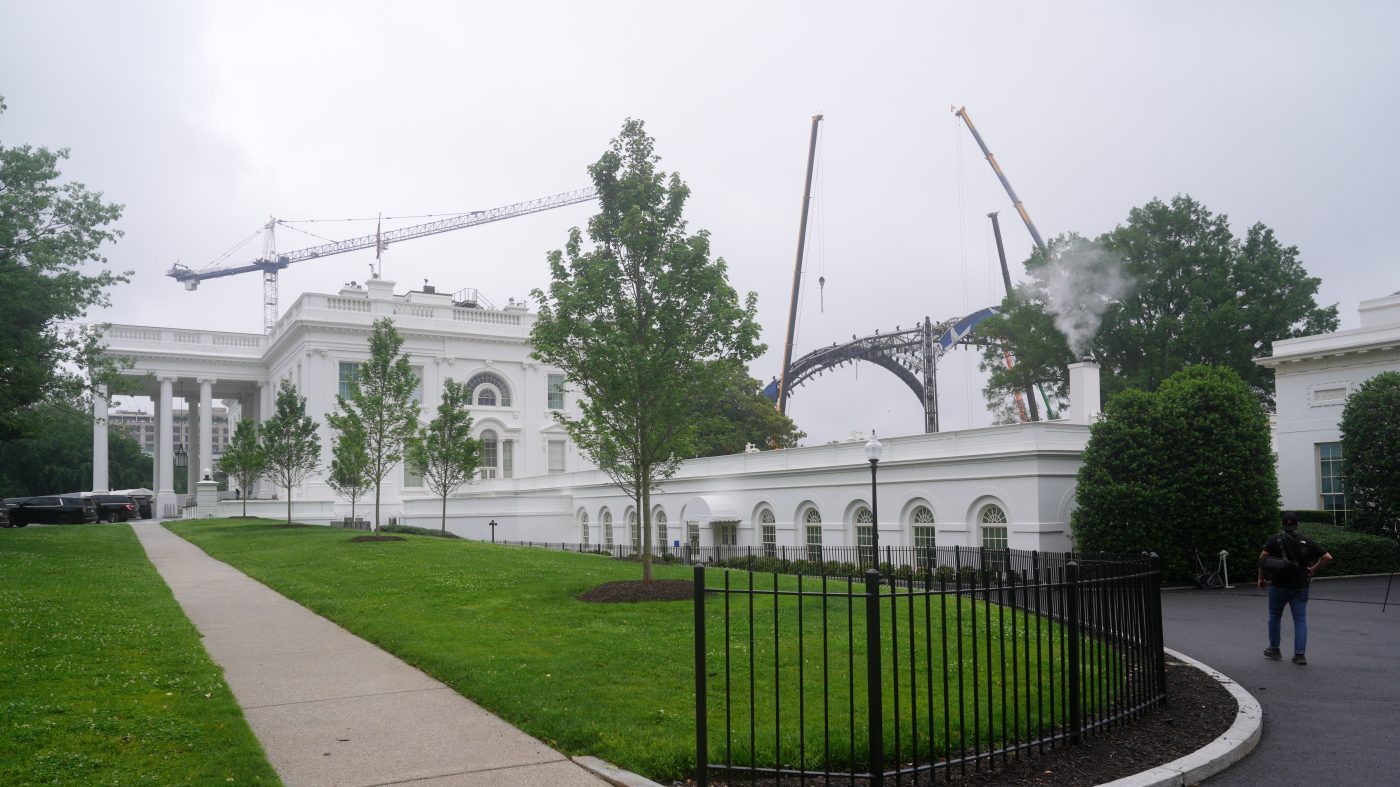
A majority of judges on a three-judge appeals court panel expressed skepticism Friday toward President Trump's legal justification for constructing a new White House ballroom, signaling potential trouble for the $400 million project.
During oral arguments before the U.S. Court of Appeals for the D.C. Circuit, two Democratic-appointed judges—Patricia Millett and Brad Garcia—pressed government attorneys on whether Congress had truly authorized the massive undertaking. The panel is weighing an appeal from the administration after a lower court halted above-ground construction.
Judge Millett posed a pointed hypothetical: if the government bulldozed the Statue of Liberty before anyone could object, could nothing be done? Yaakov Roth, the Justice Department's principal deputy assistant attorney general, answered that under the administration's reading of the law, that would be correct.
The case centers on a federal statute that bars erecting a building or structure on federal land in Washington, D.C., without express congressional approval. The Trump administration argues it has that authority under two laws: one authorizing appropriations for White House alterations and improvements, and another establishing the National Park Service that directs the Interior Secretary to promote and regulate its use.
Judge Garcia questioned whether the Park Service law truly grants explicit permission to build. "Promote the use of the National Park Service equals express authority to erect buildings?" he asked. Roth insisted it would have been understood that way when the law was passed, but Garcia appeared unconvinced.
The administration has increasingly cited national security concerns—pointing to recent shootings near the president's location—to justify the project, which includes below-ground security upgrades. The panel acknowledged those concerns but noted that work on security features is distinct from the ballroom itself and should be allowed to continue regardless.
Trump tore down the East Wing last fall to make way for the 90,000-square-foot ballroom. The National Trust for Historic Preservation sued, arguing Congress must pass new legislation. A federal judge agreed and halted above-ground construction, but the D.C. Circuit allowed work to continue pending its ruling.
The sole Trump appointee on the panel, Judge Neomi Rao, raised questions about whether the preservationist group has legal standing to sue. The group's case relies on a member who walks near the White House monthly. Rao pressed the group's attorney, Thaddeus Heuer, on whether that constitutes a concrete injury. Heuer argued that the statutes do not permit a project of this scale without congressional action.
Trump initially planned to fund the ballroom with private donations, but after court setbacks, he turned to lawmakers. His efforts have stalled: six GOP senators voted with Democrats on a proposal to block the project as part of a lengthy vote-a-rama on the Republican reconciliation bill, and Republicans stripped a $1 billion provision for the ballroom from the package earlier this week.
For more on the legislative battle, see our coverage of the Senate's immigration budget and the ballroom fight. The D.C. Circuit showdown is detailed in this analysis of the legal arguments.