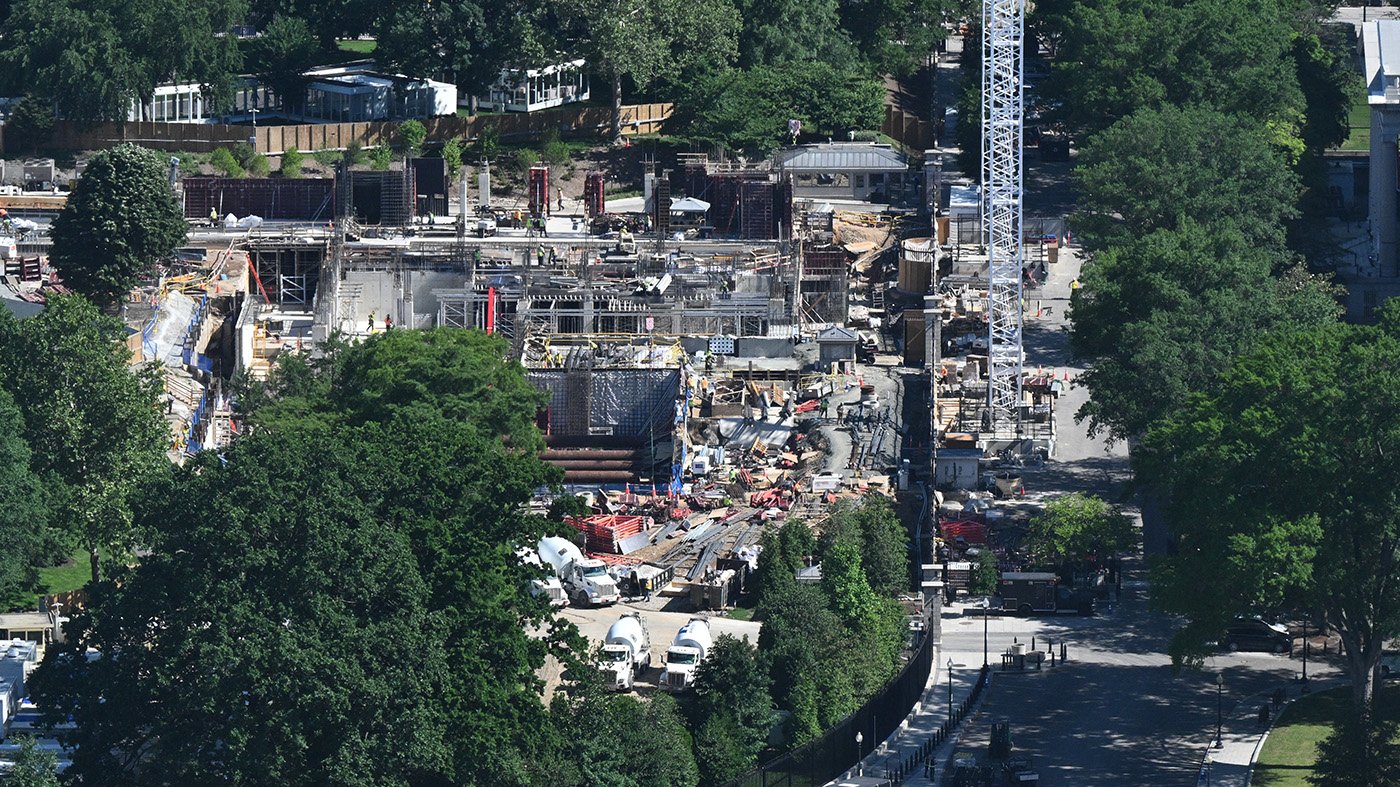
The Trump administration will make its case before the U.S. Court of Appeals for the D.C. Circuit on Friday, arguing it has the legal authority to construct a White House ballroom without additional congressional approval. The three-judge panel has allowed construction to continue temporarily while it weighs the merits of the case, a decision that will determine the project's fate.
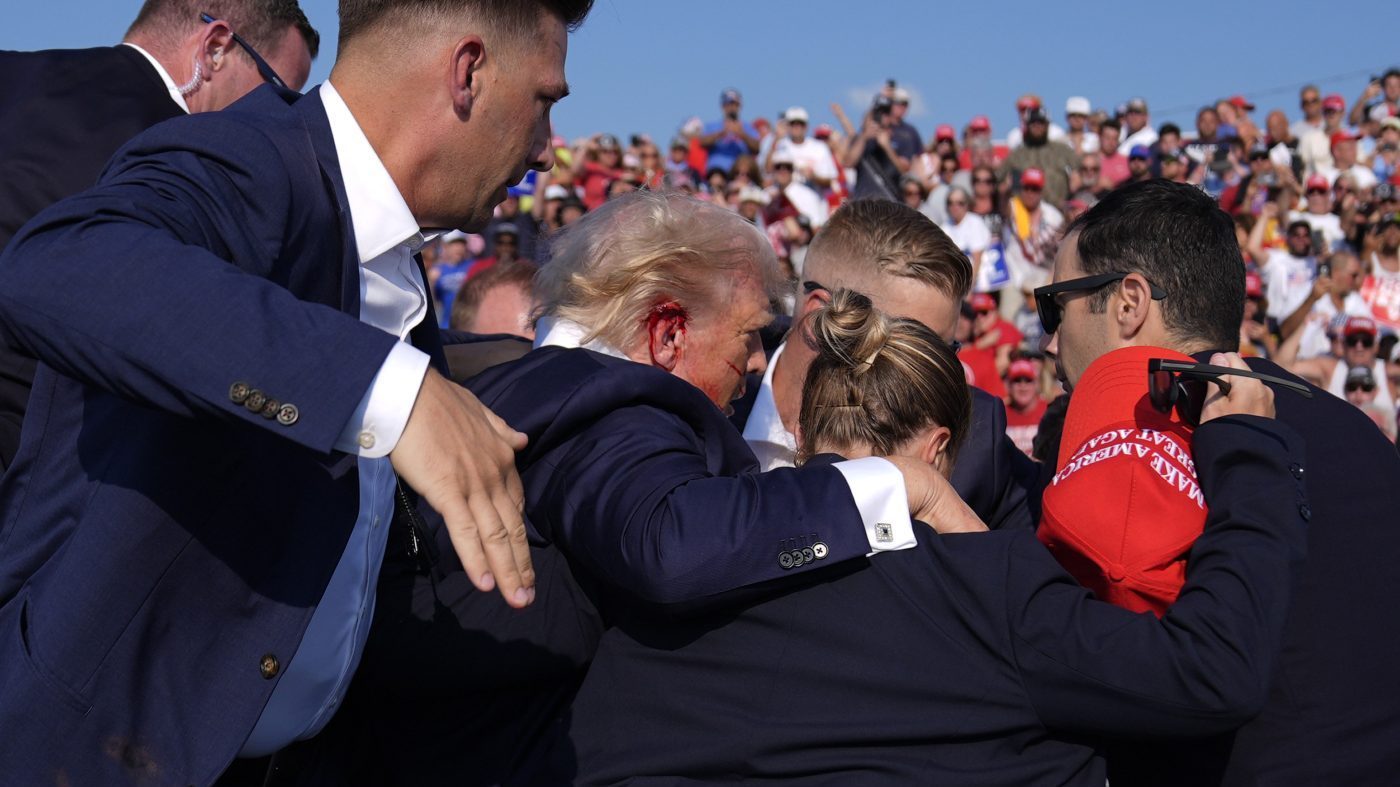
President Trump has been pushing for the ballroom for weeks, framing it as a critical security upgrade after two recent incidents—a shooting at the White House Correspondents' Dinner and another just outside the White House—which the Justice Department has described as assassination attempts. In court filings, the department argued that the ballroom, featuring military-grade security, would serve as a "safe haven" for future presidents. "The Ballroom is on time, under budget, and free to the American taxpayer," the Justice Department wrote, while also benefiting national security.
The legal battle comes amid growing congressional pushback. Six GOP senators joined Democrats on Thursday in supporting a proposal to explicitly block the project. Meanwhile, the administration faces a lawsuit from the National Trust for Historic Preservation, which argues that federal law only permits routine maintenance and upkeep of the White House—not major construction. "But that is all," the group wrote in court filings.
U.S. District Judge Richard Leon, a George W. Bush appointee, sided with the preservationists in March, restricting above-ground construction. "The President of the United States is the steward of the White House for future generations of First Families. He is not, however, the owner!" Leon wrote. The Trump administration is now seeking to overturn that ruling, which has been put on hold pending the appeals court's decision.
The Justice Department contends that Leon wrongly limited the law to cover only "garden-variety" maintenance and points to a separate law establishing the National Park Service as a precedent for similar projects. However, the administration's primary argument is that the National Trust lacks standing to sue. In striking language, the department called the lawsuit "a complete embarrassment to our Country" and "a terrible, tremendously harmful case to the United States of America."
The court fight has also exposed other aspects of the project, including an overhaul of an underground military bunker and security upgrades that officials say are essential to national security. In a post on Truth Social, Trump shared AI-generated renderings of a "DronePort" on the ballroom roof, accusing Leon of "playing games with America's Security." He warned that if anything happens, Leon "will be held responsible."
Acting Attorney General Todd Blanche described the building as fortified with heavy steel, drone-proof ceilings, bulletproof glass, and other "state of the art" security features to "repel all attacks" against the president, his family, staff, and visitors. Deputy Secret Service Director Matthew Quinn warned in a sworn declaration that halting construction would hamper the agency's protective mission, noting that temporary security measures are incomplete.
The National Trust has refused to drop its lawsuit despite administration pressure, but its case could become moot if Congress passes a new law explicitly authorizing the ballroom. Some Senate Republicans have proposed earmarking $1 billion for the Secret Service for security upgrades, though that effort faces an uncertain path.
The oral arguments will unfold before a three-judge panel: U.S. Circuit Judge Neomi Rao (a Trump appointee), U.S. Circuit Judge Brad Garcia (a Biden appointee), and U.S. Circuit Judge Patricia Millett (an Obama appointee). Their decision will determine whether the ballroom project moves forward or faces further legal hurdles.