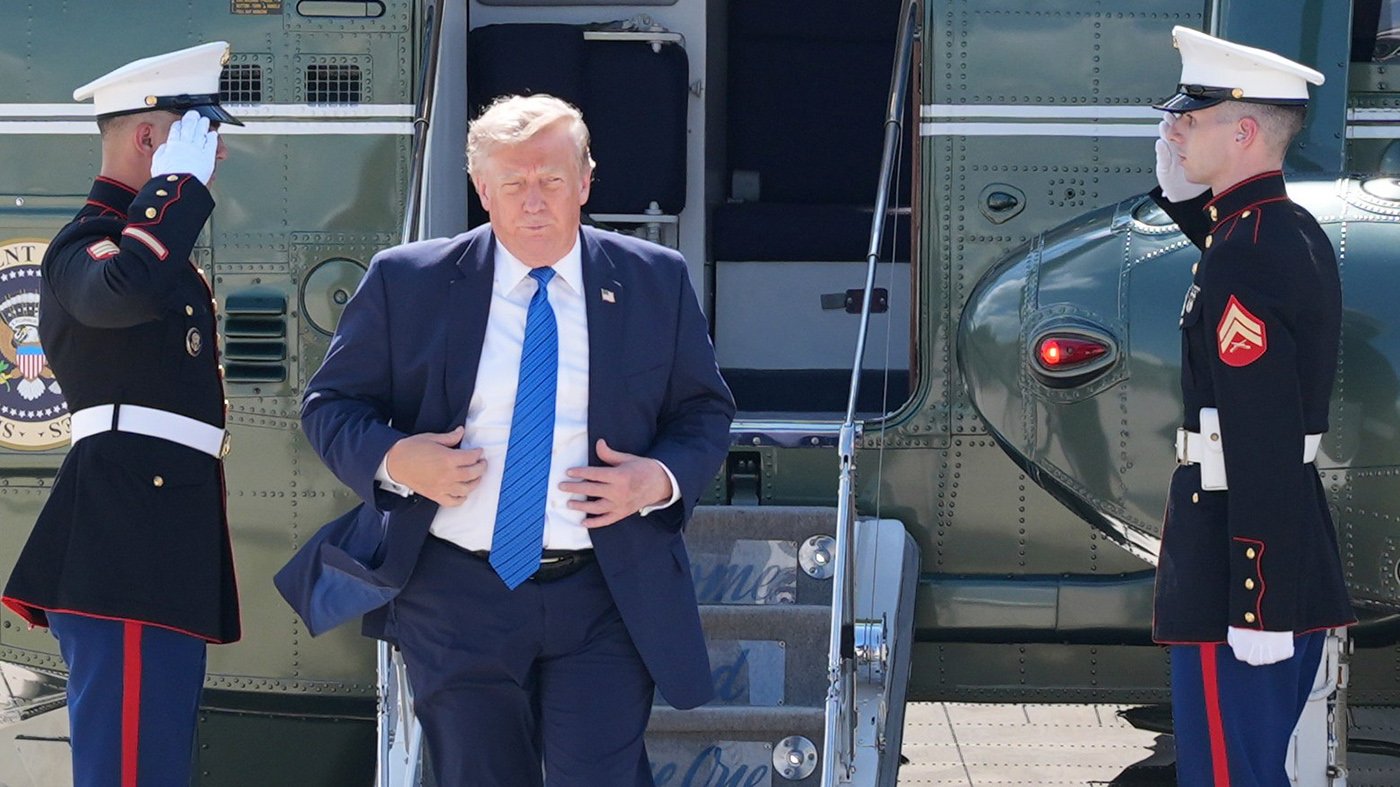
President Trump on Friday rejected the preliminary U.S. intelligence assessment that Iran was likely responsible for the cyberattacks on Minnesota's water systems, instead pointing the finger at state officials whom he called “grossly incompetent.”
Speaking during a Cabinet meeting at Camp David, Trump said he does not believe Tehran was involved in the coordinated attack that targeted roughly 30 municipal water facilities. “We heard in Minnesota there was a cyberattack, and they blame it on Iran. I don’t think so,” he said. “I think I blame it on Minnesota because they’re grossly incompetent.”
The president went further, singling out Minnesota Governor Tim Walz, a Democrat, for the breach. “I would blame it on Minnesota and the governor, the corrupt governor of Minnesota,” Trump said. “They like to say, ‘Oh, is Iran?’ Iran should be so lucky. Iran’s got bigger problems than worrying about Minnesota.”
Walz fired back quickly, accusing Trump of ignoring the real threat and focusing instead on political attacks. “Trump knows exactly who is responsible for this attack, and knows that other states were hit too,” the governor said. “This is what modern warfare looks like, and it further illustrates there’s no plan to win a war with Iran.” In a post on X, Walz wrote: “Trump can’t beat Iran because he’s too busy waging war with Minnesota.”
The FBI issued a public service announcement on Thursday saying water and wastewater utilities in at least seven states have reported cyberattacks, some of which degraded water operations. The attacks disrupted automated systems, forcing some communities to switch to manual controls. Officials stressed that there is no evidence that drinking water was contaminated or that residents need to change their water usage.
Minnesota IT Services said it is coordinating its investigation with the FBI, the Cybersecurity and Infrastructure Security Agency, and the Environmental Protection Agency to identify the source of the attacks. The preliminary assessment, shared by state and federal officials, pointed to possible Iranian-affiliated hackers, but Trump’s comments run counter to that intelligence.
The president’s remarks come as his administration faces escalating tensions with Iran, with some polls showing his approval slipping amid the conflict. The White House has also been dealing with a range of crises, from Iran, Ukraine, and disarmament issues that were on the agenda at Camp David. The cyberattacks on water systems add another layer of complexity to the national security picture.
Walz’s sharp rebuke highlights the political divide over how to handle the threat. “This is a clear example of the president putting politics ahead of national security,” said a spokesperson for the governor. The FBI and CISA have not commented on Trump’s dismissal of the intelligence, but the agencies continue to urge utilities to harden their defenses against potential attacks.
As the investigation continues, the incident underscores the vulnerability of critical infrastructure to cyber threats. While Trump’s comments have drawn criticism from state officials, they also reflect the broader debate about the credibility of intelligence assessments in the current political climate.