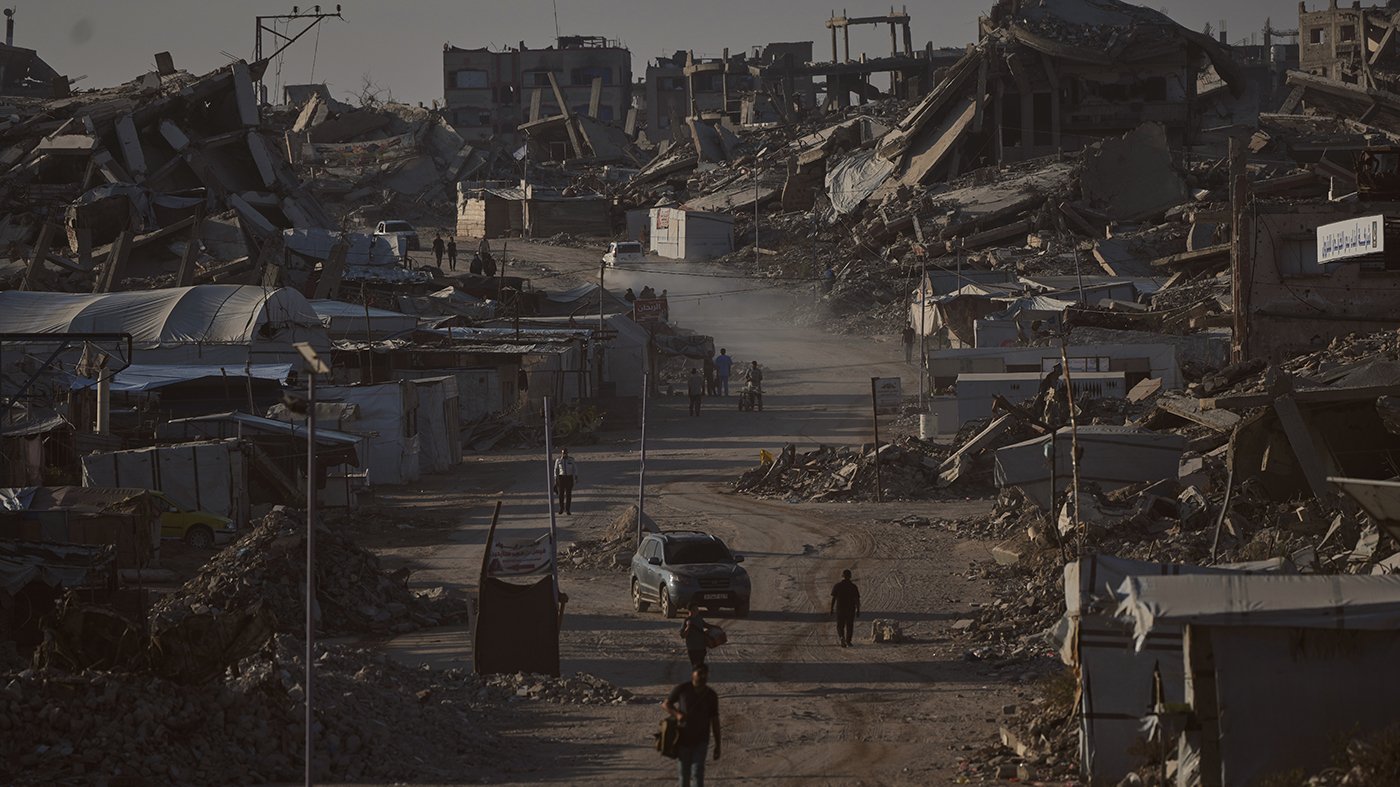
President Trump's announcement of a "historic" agreement to disarm Hamas has been met with widespread skepticism rather than celebration. The deal, which envisions a phased handover of weapons by Hamas and a subsequent Israeli military withdrawal, faces significant hurdles given the deep mistrust between the parties.
Hamas has indicated a willingness to comply, but only if Israel commits to the full withdrawal. Israeli officials, however, remain doubtful, with anonymous sources stating there will be no pullback from the "yellow line" unless Hamas demonstrates genuine disarmament. This standoff has left the roadmap's viability in question.
Experts Question Sincerity
Ghaith al-Omari, a senior fellow at the Washington Institute and a veteran of Israeli-Palestinian diplomacy, expressed pessimism. "The formulation requires conditionality—if you do this, we'll do this—and each side is already signaling they won't start until the other does," he said. He added that Hamas's statements "look more like a diplomatic maneuver" than a genuine commitment to demilitarize.
Michael Rubin, a former Pentagon official and director at the Middle East Forum, was blunt: "The elephant in the room is whether Hamas is sincere or just running down the clock on Trump." He predicted Hamas would be "fighting in the streets with heavy weaponry again long before Trump gets his Nobel Peace Prize."
Mixed Reactions from Allies and Critics
Some international figures offered cautious optimism. Canadian Prime Minister Mark Carney called it "an important step" if implemented, while German Foreign Minister Johann Wadephul termed it "hopeful." However, far-right Israeli politicians, including National Security Minister Itamar Ben Gvir, rejected the deal outright, insisting on continued military action.
Former State Department official Joel Rubin saw an opportunity, urging Democrats to support the effort. "We're witnessing a new window opening," he said, while Rep. Dan Goldman (D-N.Y.) praised the development as "huge."
Political Pressures on Netanyahu
Ben Gvir's opposition underscores the political peril for Prime Minister Benjamin Netanyahu, whose coalition depends on far-right parties ahead of October elections. Analysts suggest Netanyahu may avoid concessions to preserve his base, complicating any implementation.
Anwar Mhajne, a Stonehill College professor, noted Hamas might be exploiting this dynamic. "Hamas can shift blame to Israel by accepting disarmament in principle while attaching conditions Israel is unlikely to meet," she said, adding that Hamas faces pressure from military losses and regional mediators like Egypt and Qatar.
Despite the skepticism, Joel Rubin pointed to the involvement of regional powers as a positive sign, though Michael Rubin dismissed them as "a Trojan horse." The coming weeks will test whether the roadmap can overcome these deep-seated obstacles.