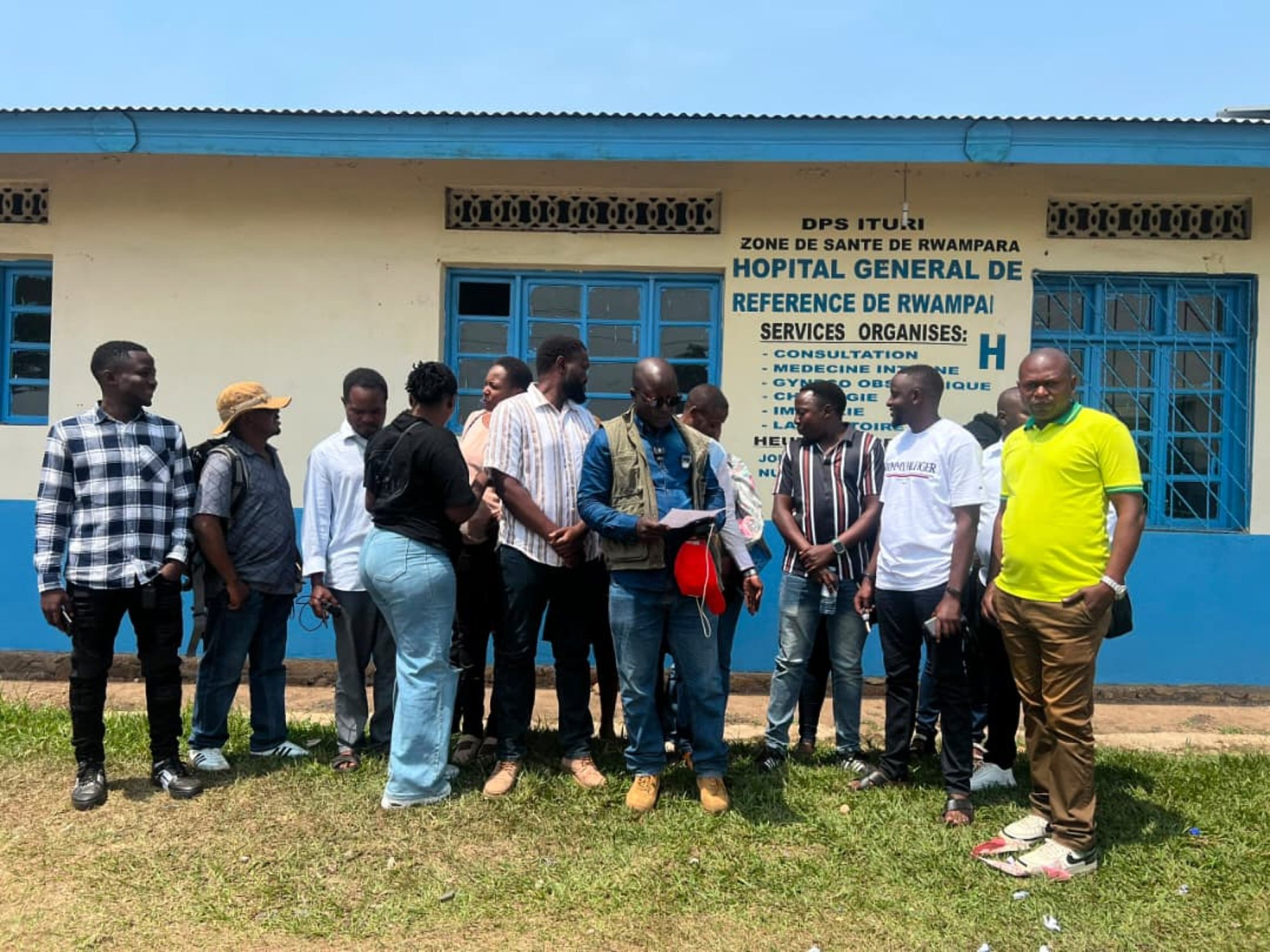
In a rare bipartisan push, Senators Jeanne Shaheen (D-N.H.) and Lisa Murkowski (R-Alaska) have formally requested that the Trump administration unfreeze critical family planning resources to assist women during the ongoing Ebola crisis in the Democratic Republic of Congo (DRC). The two lawmakers sent a letter to Secretary of State Marco Rubio on Thursday, urging him to lift the hold on $608 million in congressionally approved international family planning funds and to release $1.7 million in already-purchased supplies that they warn could otherwise be destroyed.
The senators argue that these resources are essential to protecting women from the devastating effects of Ebola, which is particularly lethal during pregnancy. According to their letter, “Ebola during pregnancy is catastrophic, with a nearly 100 percent fetal loss rate and catastrophic material mortality risk due to severe hemorrhaging.” They stress that by giving women the option to voluntarily prevent unplanned pregnancies and to access clinics safely, the United States can reduce further deaths and prevent the certain death of any fetus exposed to the virus.
The request comes as the DRC grapples with one of its deadliest Ebola outbreaks. The Africa Center for Disease Control and Prevention reported that the outbreak, which began in May, has killed more than 1,000 people. The World Health Organization (WHO) has confirmed 3,532 cases and 1,556 deaths in the DRC as of Wednesday, with an additional 20 cases reported in neighboring Uganda. The spread of the Bundibugyo strain has been worsened by the country’s ongoing humanitarian crisis, according to the WHO.
Shaheen and Murkowski also asked the State Department to consider a “humanitarian exemption” that would allow the U.S. to resume support for the UN Population Fund and restart reproductive health programs in the DRC. Such a move would mark a significant shift in the administration’s stance on international family planning, which has been a contentious issue in recent years.
The senators emphasized the urgency of the situation, writing that the “rapid spread of the virus … leaves no time for delay in providing all possible interventions to save lives and prevent the transmission of the virus.” They also noted that the U.S. response to the outbreak is already approaching $1 billion, making the investment in voluntary family planning “fiscally rational in addition to being morally urgent.”
The letter follows a broader debate over U.S. foreign aid and public health priorities. A bipartisan commission has recently proposed overhauls to U.S. foreign aid amid deep cuts, and this request highlights the tension between budget constraints and humanitarian needs. The senators’ appeal also echoes concerns raised by Democrats pressing the Pentagon on lapses in the Iran drone attack response, underscoring a pattern of lawmakers pushing for accountability in crisis situations.
The State Department has not yet responded to The Hill’s request for comment on the letter. The outcome of this appeal could have significant implications for women’s health in the DRC and for U.S. policy on international family planning.
As the outbreak continues to spread, the senators’ call for action reflects a growing bipartisan recognition that addressing the health needs of women is critical to containing the epidemic. Whether Secretary Rubio will act on their request remains to be seen, but the pressure is mounting.