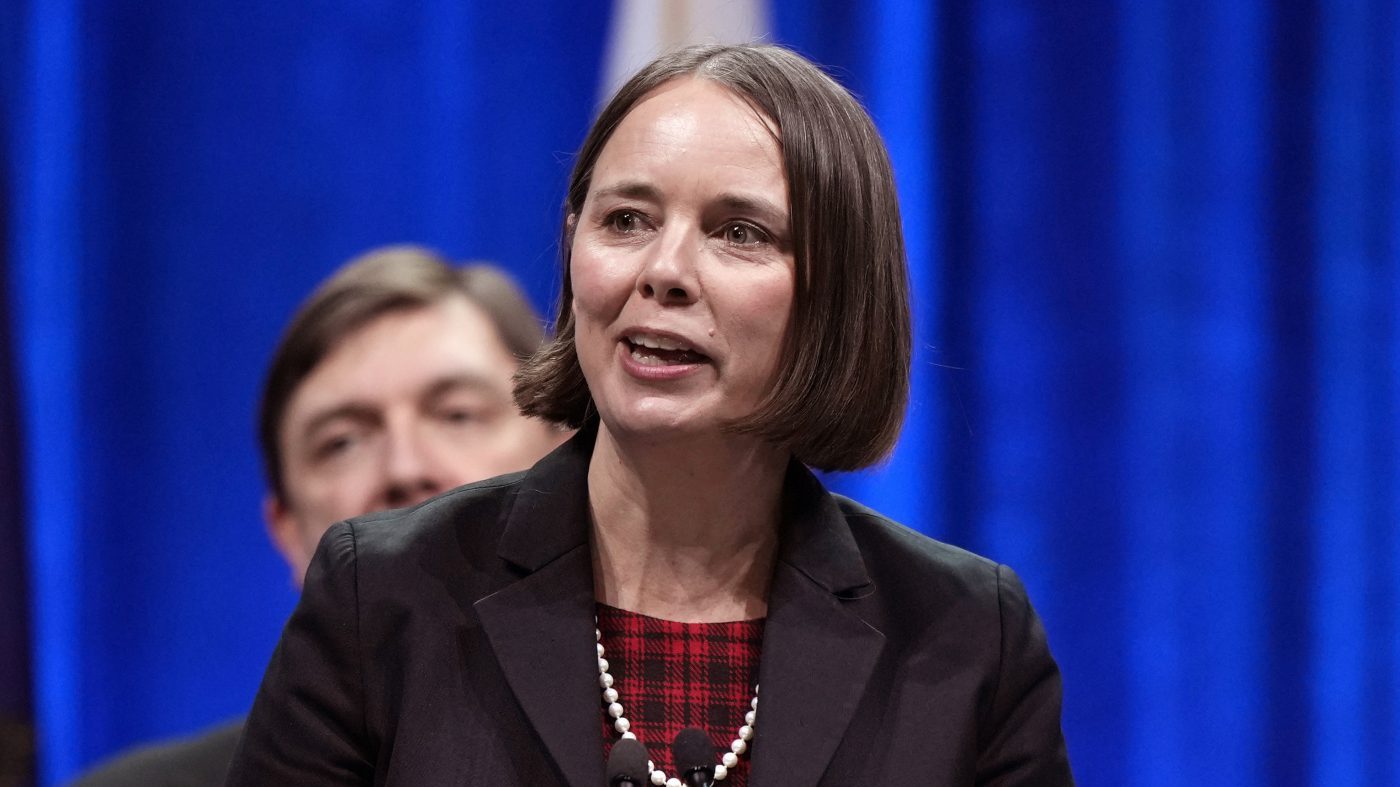
Maine Secretary of State Shenna Bellows (D) announced Sunday that she is dropping out of the Democratic primary for the U.S. Senate, abruptly ending a campaign launched just over a week ago. In a statement posted on X, Bellows cited the accelerating nature of Donald Trump’s attacks on democratic institutions and her responsibility as the state’s top election official as reasons for her withdrawal.
“Today I am withdrawing from the U.S. Senate race. Donald Trump’s attacks on our democracy are only accelerating, and the best way that I can serve our state and country at this moment is by focusing exclusively on my role as Secretary of State,” Bellows wrote.

Bellows’ exit further scrambles an already chaotic primary process in Maine, which was upended when former candidate Graham Platner dropped out amid a series of scandals that drew national attention. Platner faced allegations of rape from two women, had a tattoo resembling a Nazi Totenkopf, and had made racist online comments in prior years. His departure left Democrats scrambling to find a replacement candidate for the seat currently held by Republican Senator Susan Collins.
Bellows, who previously ran for Senate in 2014, thanked volunteers who worked “around the clock” for her brief campaign, adding that the energy she saw “is exactly what we need to beat Susan Collins in November — and Democrats don’t have a day to waste in unifying around that shared goal.”
Her decision to remain as Secretary of State means she will oversee the midterm elections in Maine and preside over any contested recounts. Under state law, Bellows must tabulate all municipal election returns within 20 days and submit a certified copy to the governor. In close races, her office supervises a manual recount process involving state staff and candidate representatives.
The Democratic primary now appears to be led by state Senate President Troy Jackson, who is polling ahead of more than 10 other candidates vying to replace Platner. The party’s special nominating process will conclude on July 25, when 601 delegates vote to select the nominee. A recent debate among candidates highlighted the difficulty Democrats face in consolidating support, as the party continues to struggle to break through in a crowded field.
Bellows’ withdrawal also underscores the broader tension within the Democratic Party over how to balance national concerns about election integrity with the urgent need to field a strong challenger against Collins. Her focus on election administration comes as Republican figures, including Senator Markwayne Mullin, have escalated threats against state election officials, warning of consequences for how they handle voting procedures.
Meanwhile, the race has drawn national attention, including from figures like Senator John Fetterman, who criticized Senator Bernie Sanders for endorsing candidates with controversial histories, including the embattled Maine contender. With Bellows out, the Democratic field remains fluid, and the party faces a compressed timeline to unify behind a candidate capable of challenging Collins in a general election that will be closely watched as a bellwether for control of the Senate.