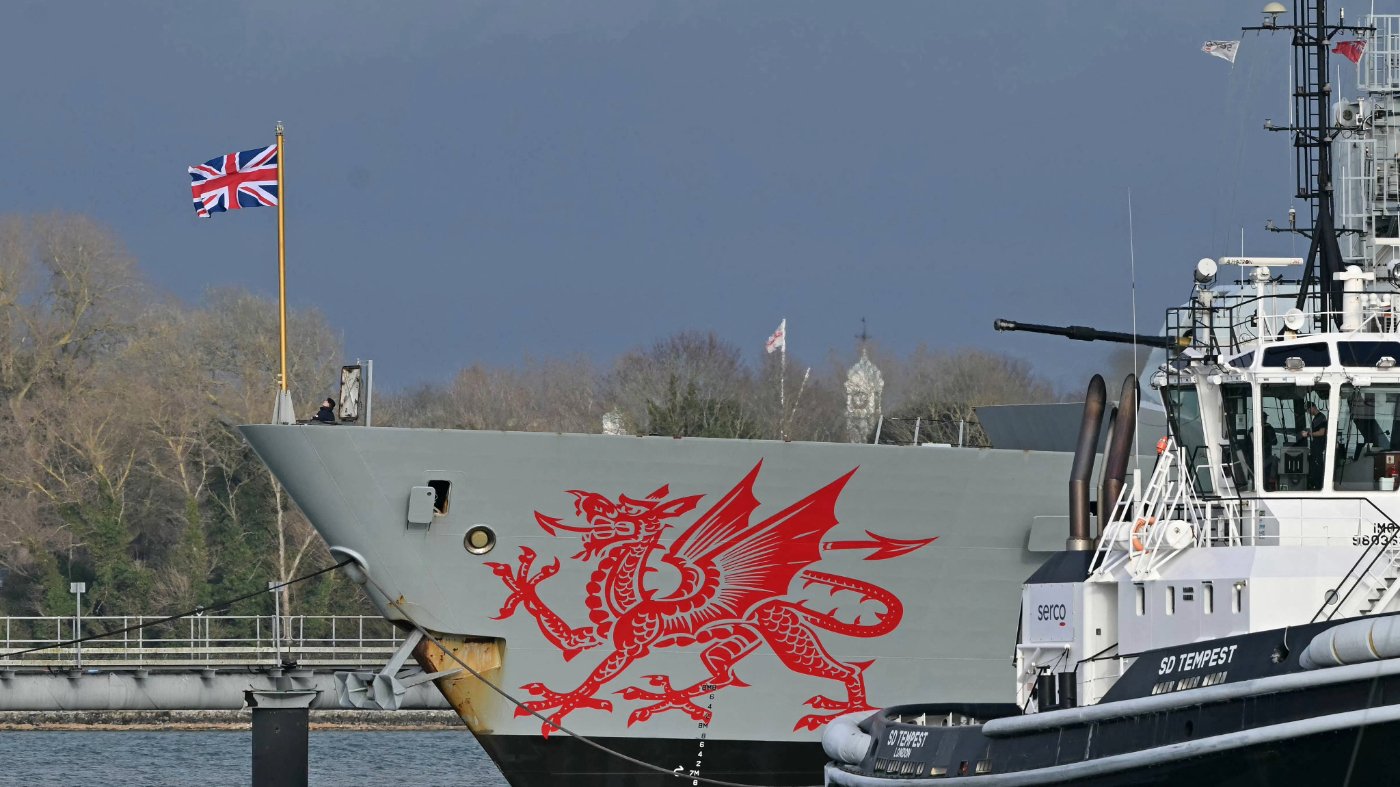
Prime Minister Keir Starmer entered office last year pledging a "defense dividend," committing to raise military spending to 3.5 percent of GDP to rebuild what he termed a "desiccated" force and create hundreds of thousands of jobs. This pledge was a direct response to a comprehensive Strategic Defense Review led by Lord George Robertson, the former UK Defence Secretary and NATO Secretary-General, who notably invoked the alliance's Article 5 collective defense clause following the 9/11 attacks.
A Military in Decline
The review comes at a critical juncture for British defense. A quarter-century after 9/11, the UK's conventional military power has significantly atrophied. The Royal Navy now fields just 15 destroyers and frigates, alongside two aircraft carriers with questionable reliability. A severe shortage of advanced fighter jets has forced reliance on U.S. Marine Corps squadrons to fill gaps, and only one of seven Astute-class nuclear attack submarines is fully operational. Retired General Sir Richard Barrons, a member of the review committee, starkly observed that the British Army is only capable of seizing a small English village.

Leadership challenges compound the material shortfalls. The new head of the Royal Navy is a Royal Marine, not a career sailor, and the Second Sea Lord has been recalled from retirement, pointing to a dearth of senior naval leadership. Furthermore, the critical AUKUS submarine program with Australia and the United States is being led by Royal Air Force officers. While the UK maintains a strategic nuclear deterrent of four ballistic missile submarines, plans for their replacement are plagued by delays and massive cost overruns.
The 'Porcupine Defense' Doctrine
The review's central strategic proposal is a fundamental shift in thinking. Rather than focusing solely on deterrence and defense, the new doctrine emphasizes prevention and disruption of a potential adversary, with Russia identified as the primary pacing threat. Dubbed the "Porcupine Defense," the strategy aims to raise the cost of any aggression to unacceptable levels for Moscow.
This approach is inspired by recent conflicts, notably the war in Ukraine, where a seemingly weaker nation has used disruptive, asymmetric tactics to stymie a more powerful foe. The core mechanism is a massive investment in relatively cheap and plentiful unmanned platforms—drones—operating from the seabed to space, augmented by traditional manned forces. The strategy prioritizes electronic and information warfare, seeking to confuse and disorient enemy commanders through deception, misinformation, and shock tactics.
The Royal Navy is already pioneering this concept with a new "hybrid" force structure. This model inverts traditional procurement, prioritizing investment in unmanned systems while fielding lower-cost manned platforms. The goal is to revitalize naval power within constrained budgets, though its ultimate effectiveness remains unproven.
Strategic Context and Challenges
The review's authors argue that while the character of war evolves, its nature remains constant. The immediate challenge for the UK is to field a credible countervailing force against Russia with the resources available, regardless of whether the promised 3.5 percent spending target is fully met. This effort unfolds against a complex geopolitical backdrop, including the ongoing conflict in Ukraine and tensions with Iran. The latter conflict has already triggered significant political debate in Washington over war powers, as seen when GOP senators hinted at a rebellion if hostilities extended beyond 60 days, a threat that was ultimately neutralized when Senate Republicans blocked a fourth war powers challenge, cementing executive authority.
The conclusion of the defense review is sobering. The era of Britannia ruling the waves is over. However, through a combination of a guaranteed nuclear deterrent and a innovative, disruptive conventional strategy centered on unmanned systems, the United Kingdom can still aspire to maintain a credible and relevant military power in an increasingly dangerous world.