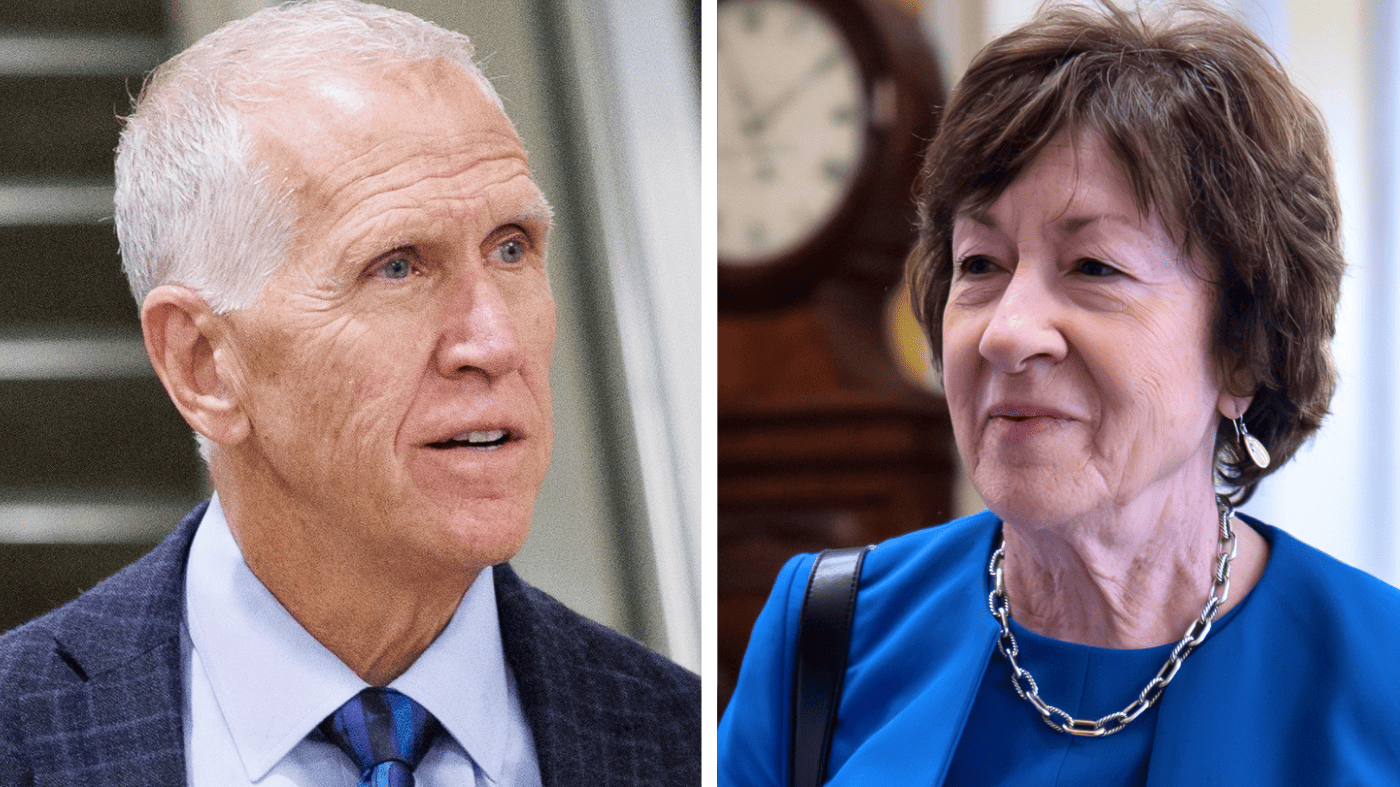
Two influential Senate Republicans have signaled a potential break with President Donald Trump over war authority, indicating they may not support continued military engagement in Iran without explicit congressional approval once operations pass a critical 60-day threshold. The statements from Senators Susan Collins of Maine and Thom Tillis of North Carolina mark a notable shift among some GOP lawmakers who have previously backed the administration's military actions.
War Powers Clock Ticks Toward Deadline
The 1973 War Powers Resolution requires presidents to notify Congress within 48 hours of committing armed forces and limits military engagements to 60 days without legislative authorization. That clock began on February 28 with joint U.S.-Israel strikes against Iranian leadership, military, and nuclear facilities, putting the deadline squarely in late April.

"It is very likely that I would vote not to authorize further hostilities," Collins stated at the Semafor World Economy summit, emphasizing she had "always wanted this operation to be brief but successful." The centrist Republican added, "I have said from the very beginning that if the military hostilities in Iran continue to that 60th day, then I believe the War Powers Act is implemented, and the president would need congressional authorization to continue."
Tillis, who is not seeking reelection, expressed similar reservations in an exclusive interview with NBC News, stating it would be "difficult" to secure his support for continuing the conflict beyond the 60-day mark. "What's concerning me now is we're coming up on the 45-day mark," Tillis noted. "Sixty days is important with respect to the War Powers Resolution, and I'm not quite clear what the strategic objectives are."
Republican Unity Shows Cracks
The military operation has exposed growing divisions within Republican ranks, with some lawmakers becoming increasingly uneasy about the conflict's duration and objectives. This comes as Trump's political strategy faces scrutiny over mixed messaging about the campaign's progress.
Just this Wednesday, Senate Republicans blocked a fourth Democratic-led attempt to constrain presidential war authority in a largely party-line 47-52 vote. Only Senator Rand Paul of Kentucky crossed party lines to support the measure, while Democrat John Fetterman of Pennsylvania opposed it. Republicans have consistently argued that such limitations could compromise national security.
President Trump offered contradictory assessments of the conflict during a Las Vegas speech Thursday, telling supporters, "I will say the war in Iran is going along swimmingly. It should be ending pretty soon," according to The Associated Press. This follows recent regional developments including Iran's reopening of the Strait of Hormuz amid broader ceasefire discussions.
Legislative Maneuvering Intensifies
With the deadline approaching, legislative activity is accelerating. Senator Lisa Murkowski of Alaska has been working with fellow Republicans on a resolution to authorize continued military force against Iran beyond the 60-day window. Murkowski believes Congress must formally authorize the conflict if it continues before considering the administration's request for additional military funding.
Tillis told NBC News he was "not a no" on supplemental funding but would require detailed justification before committing. The funding question adds another layer to the constitutional debate over war powers, creating a potential legislative showdown in the coming weeks.
The emerging Republican skepticism represents a significant development in the congressional oversight of military operations, suggesting that even some of the president's traditional allies may demand greater accountability as the conflict approaches its legal limit. How the administration responds to this congressional pressure could define the next phase of U.S. engagement in the region.