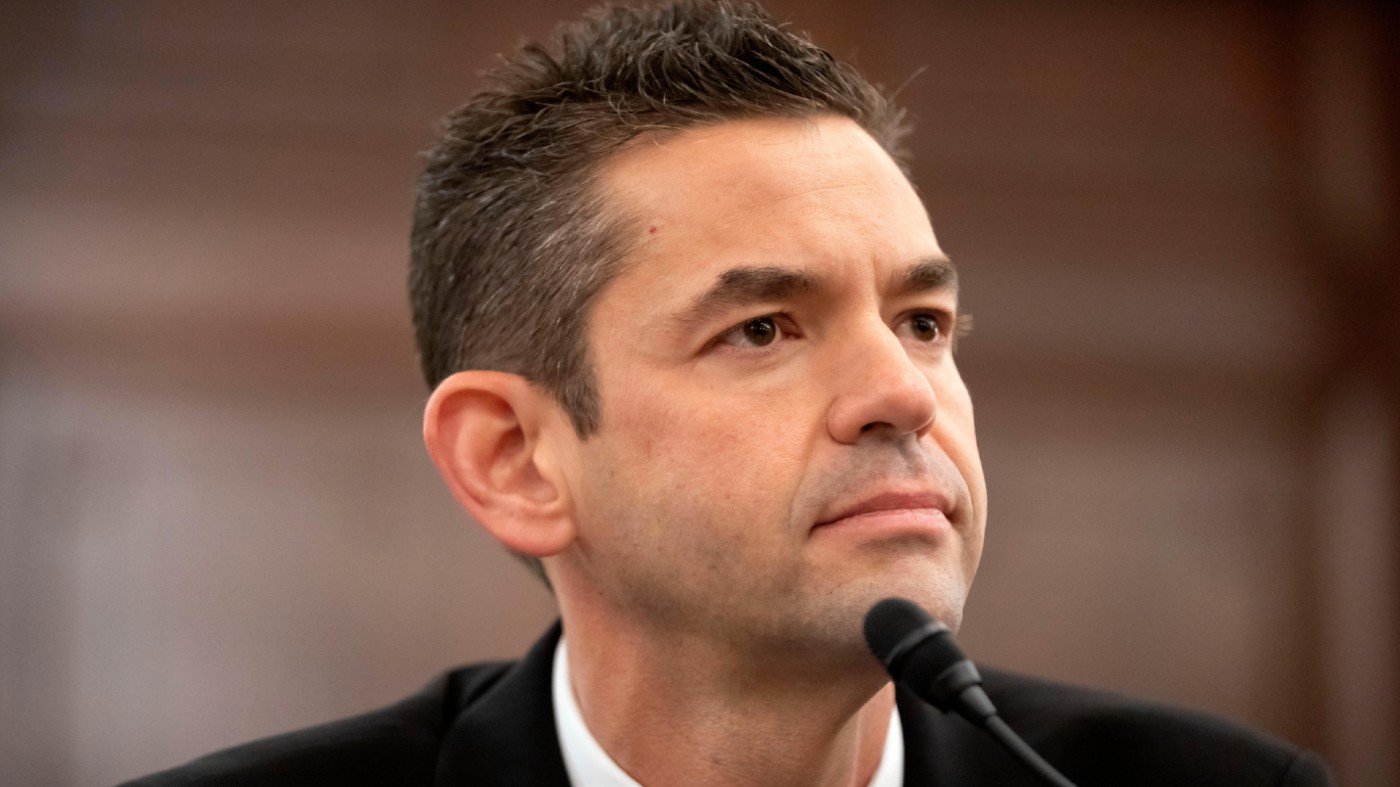
NASA Administrator Jared Isaacman has publicly aligned himself with the Trump administration's proposal to significantly reduce the space agency's budget for fiscal year 2027, arguing the cuts are manageable while core exploration priorities advance. Isaacman made his position clear during a Sunday interview on CNN's "State of the Union," telling host Jake Tapper he supported the budgetary framework despite its substantial reductions.
Proposed Reductions Target Science and Education
The Office of Management and Budget formally requested $18.8 billion for NASA from Congress late last week, representing a $5.6 billion decrease from the agency's 2026 allocation. The proposal makes deep cuts across multiple divisions, most notably targeting the agency's science portfolio. It would eliminate more than 40 missions deemed "low-priority," including the ambitious Mars Sample Return project and the SERVIR program, a $10 million annual climate monitoring partnership with the U.S. Agency for International Development.

Additional reductions include $1.1 billion from International Space Station operations ahead of its planned 2030 retirement, $297 million from space technology development, and $143 million from NASA's STEM Engagement Office. The latter cut terminates a program that directed millions in funding to engineering and data science initiatives at historically Black colleges and universities.
Administrator Defends Strategic Focus
In his defense of the budget, Isaacman emphasized NASA's continued financial dominance. "NASA's budget is greater than every other space agency across the world," he stated, pointing to the One Big Beautiful Bill Act signed by President Trump last July. That legislation provided nearly $10 billion specifically for lunar and Mars missions, infrastructure upgrades, and related projects.
"That allotment gives us the capability to get to the moon with frequency, to build the enduring presence on the moon, the moon base, which in itself is going to afford numerous scientific and technological development opportunities," Isaacman explained. He highlighted specific missions proceeding within the constrained budget, including the launch of the Grace Roman Space Telescope in late 2026 and a nuclear-powered octocopter to explore Saturn's moon Titan in 2028.
Artemis Program Receives Protected Funding
The proposed budget carves out $8.5 billion for the Artemis program, which the OMB stated fully funds lunar landers, spacesuits, surface systems, and astronaut transportation needed to "safely and cost-effectively expand America's presence to the surface of the Moon." This protection for flagship exploration comes as the administration pursues other major bureaucratic reorganizations, consolidating authority in various agencies.
Isaacman used the ongoing Artemis II mission to illustrate progress. The mission, which began last Wednesday, will start its lunar approach imminently. Astronauts Victor Glover, Christina Koch, Reid Wiseman, and Canadian astronaut Jeremy Hansen will soon explore previously unseen regions of the moon. "Essentially, in the next 24 hours, they will be on the far side of the moon," Isaacman said. "We're going to learn an awful lot about the spacecraft, which is pretty paramount to set up for subsequent missions, like Artemis III in 2027, and, of course, the lunar landing itself on Artemis IV in 2028."
Broader Political Context
The budget proposal arrives amid a tense political climate where the administration is setting aggressive foreign policy deadlines, including a public ultimatum to Iran that threatens severe consequences. This focus on reallocating resources toward perceived strategic priorities mirrors the approach taken with NASA's budget, where established science programs are scaled back to fund manned exploration. The move is likely to fuel debate over the nation's scientific and diplomatic priorities, even as the opposition party grapples with its own internal challenges.
Isaacman's endorsement provides political cover for the reductions, framing them not as a retreat from space but as a disciplined shift in focus. Whether Congress accepts this rationale during the appropriations process remains uncertain, setting the stage for a contentious debate over America's future in space as critical missions hang in the balance.