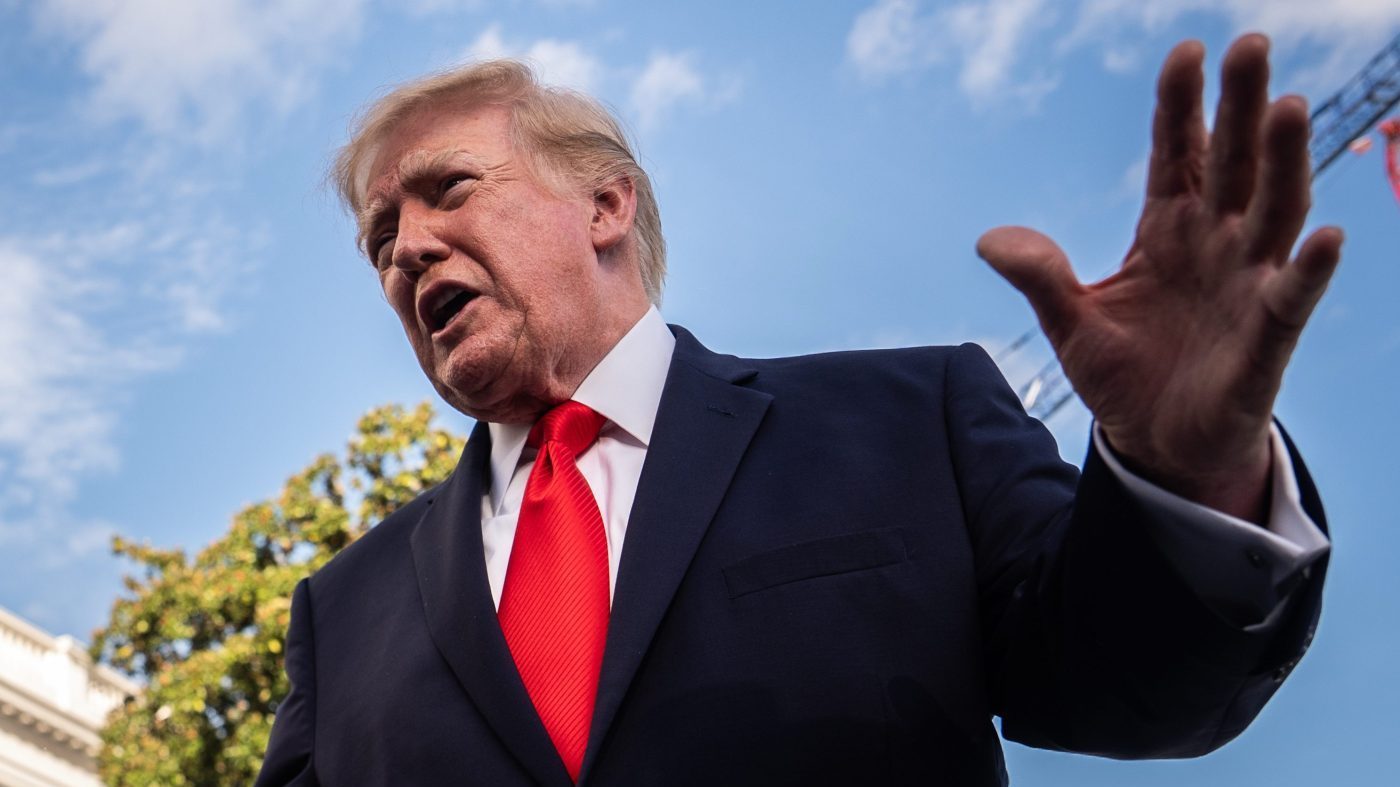
President Donald Trump's political standing has deteriorated significantly, with approval ratings sinking to 36 percent and widespread disapproval of his economic and foreign policies. Recent polling indicates only a quarter of Americans approve of his handling of inflation, while nearly two-thirds believe his policies have worsened the economy. Foreign policy presents similar challenges, with Trump's confrontational approach toward Iran facing substantial public opposition, particularly regarding military deployment.
These vulnerabilities have created electoral opportunities for Democrats, who have flipped numerous state legislative seats since Trump's reelection. Some surveys suggest over twenty percent of his 2024 voters may abandon the Republican ticket next time. Democratic strategist Doug Farrar characterizes this as a "huge opportunity for major strides." However, this potential windfall remains largely theoretical—only 3.4 percent of disillusioned Trump voters currently plan to support a Democratic presidential candidate.
Deep-Seated Discontent with Democratic Brand
The Democratic Party faces its own profound credibility crisis. A March poll revealed 52 percent of Americans hold negative feelings toward the party—a higher disapproval rating than those recorded for Trump, the Republican Party, or Immigration and Customs Enforcement. Only Iran, at 61 percent negative, elicited more hostile sentiment. This disillusionment stems from a perception that Democrats are "woke," "weak," and disconnected from everyday concerns, according to veteran strategist Steve Schale.
Some Democratic candidates are attempting to distance themselves from the national party's image. During her Senate campaign, Michigan Democrat Elissa Slotkin positioned herself as part of "Team Normal," emphasizing plainspoken communication over cultural debates. In Texas, Senate nominee James Talarico explicitly stated he doesn't take "instructions or orders from the national Democratic Party." Alaska's Mary Peltola campaigns on "fish, family, and freedom," while Nebraska Democrats have endorsed an independent candidate, acknowledging their party brand is "toxic" in that state.
Structural Deficits and Short-Term Thinking
The Democratic National Committee's revival of Howard Dean's "50-State Strategy" faces severe financial constraints. With just $10.3 million on hand and $17.4 million in debt, the DNC operates at a staggering disadvantage compared to the Republican National Committee's $109 million war chest. This financial disparity reflects a deeper strategic problem: decades of Republican investment in long-term infrastructure versus Democratic focus on immediate electoral cycles.
Since the 1970s, conservative organizations like the American Legislative Exchange Council, Heritage Foundation, and Federalist Society have developed governing agendas and personnel pipelines. The Heritage Foundation's work directly informed Project 2025, a comprehensive blueprint for a potential second Trump term. The Federalist Society has transformed judicial selection, with five current Supreme Court justices having membership ties.
The Urgent Need for Long-Term Vision
Democratic pollster Stanley Greenberg argues successful 2026 candidates "must run against his own party." Yet electoral victory alone is insufficient. As Professor John Kenneth White notes, "A Democratic victory in 2026 is a starting point, not an end point." The party must develop substantive governing agendas that address voter concerns beyond opposition to Trump.
The demographic clock is ticking. After the next census, eight to twelve congressional seats and electoral votes are projected to shift from Democratic-leaning to Republican-leaning states. This impending redistribution increases the urgency for Democrats to appeal to voters currently unwilling to consider their message.
Midterm elections typically function as referendums on the party in power, but presidential elections require positive vision. In 2027, merely opposing Trump and checking his excesses—while crucial—will not be enough. The Democratic Party must transform into an effective, nimble national political force with coherent long-term strategy. Without this fundamental shift from short-term tactics to sustained institution-building, the party faces an existential crisis that no amount of Republican weakness can solve.