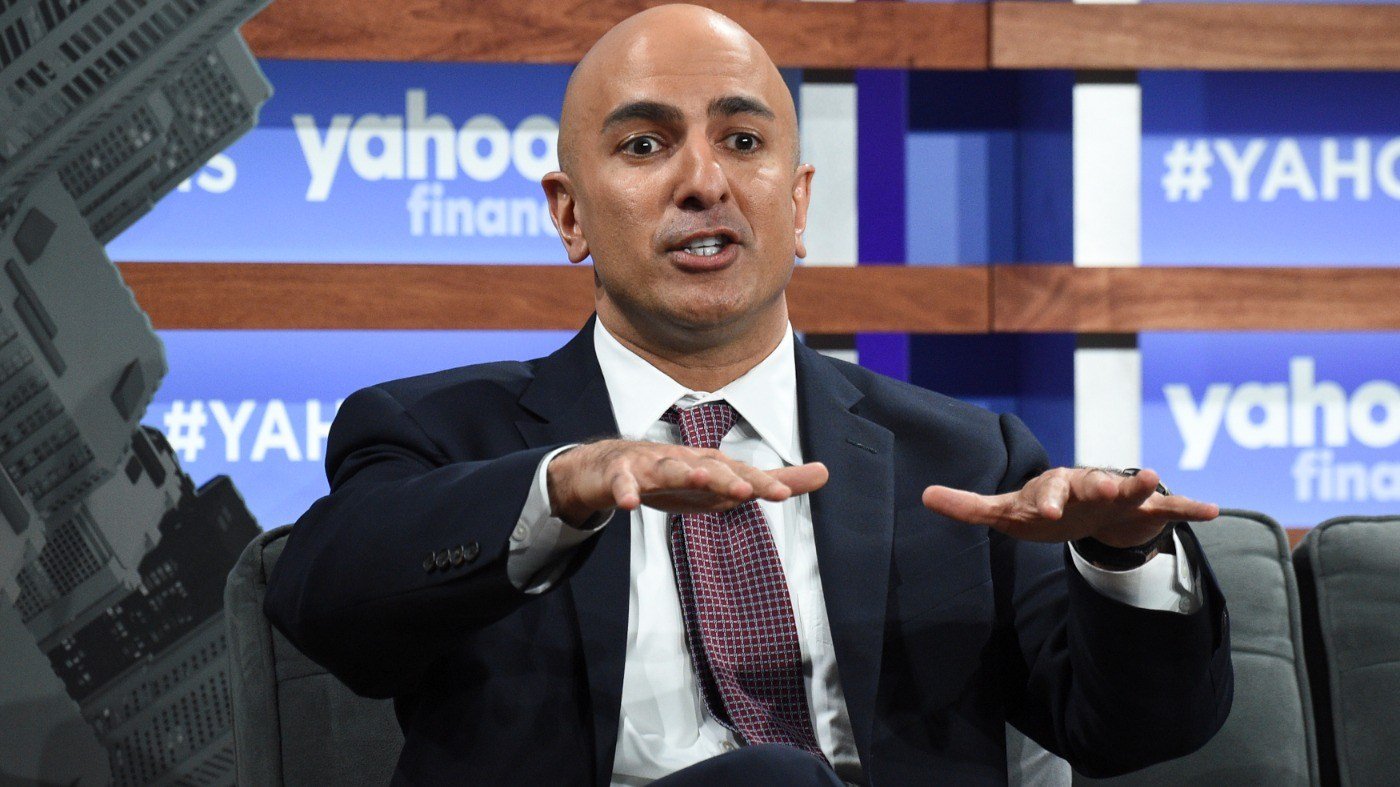
Minneapolis Federal Reserve President Neel Kashkari said Sunday that inflation remains unacceptably elevated, just days after the central bank delivered a surprise interest rate increase. Speaking on Fox News's 'Sunday Morning Futures,' Kashkari stressed that price pressures are not confined to volatile energy and food categories.
'Even if we strip out energy, which is really volatile, and strip out food, they matter a lot, but in terms of where the economy is going, inflation is still too high,' Kashkari told host Jackie DeAngelis. He added, 'The inflation that the American people are feeling every day is much beyond just oil prices. It's in all aspects of the economy.'
His comments come after the Federal Open Market Committee (FOMC) voted unanimously last week to raise its benchmark interest rate by a quarter percentage point, lifting the target range to 3.75%–4%. That move marked the first hike since July 2023, reversing a series of cuts at the end of last year. The decision underscores the Fed's renewed focus on taming price growth that has stubbornly remained above its 2% goal.
Data from the Labor Department shows annual inflation, as measured by the consumer price index, stood at 3.4% in August. Core inflation, which excludes food and energy, was 2.4%—still above target but closer to the Fed's comfort zone. Inflation has now exceeded the 2% threshold for over three years, peaking at a 40-year high of 9.1% in June 2022.
Fed Chair Kevin Warsh defended the rate hike, telling reporters that 'broad financial conditions' are not restrictive enough to bring prices down. 'I would be hard-pressed to describe broad financial conditions as restrictive,' Warsh said. 'This view was widely shared by the committee, so we removed a dose of accommodation.' Warsh, who has led the Fed for just over four months, has repeatedly pledged to deliver 'price stability' for American households.
Kashkari echoed that stance, emphasizing that the Fed has the necessary tools to curb inflation. 'We're going to do our part,' he said. 'And then, hopefully, we will get some help from other sectors of the economy, as things go back to normal.' His remarks suggest the Fed is prepared to act independently, but he also hinted at the need for broader economic cooperation.
The rate hike has drawn criticism from some economists who argue it could stifle job growth, as supply-driven inflation may not respond to higher borrowing costs. Others note that political pressure is mounting, with voter anger over the economy shaping the midterm landscape. Meanwhile, legal challenges to administration policies, such as a federal judge blocking a solar grant cancellation, add to the economic uncertainty.
As the Fed navigates this delicate balancing act, Kashkari's blunt assessment serves as a reminder that price stability remains elusive. With the next FOMC meeting scheduled for December, markets will be watching for signals on whether further hikes are on the table. For now, the central bank's message is clear: inflation is still too high, and the fight is far from over.