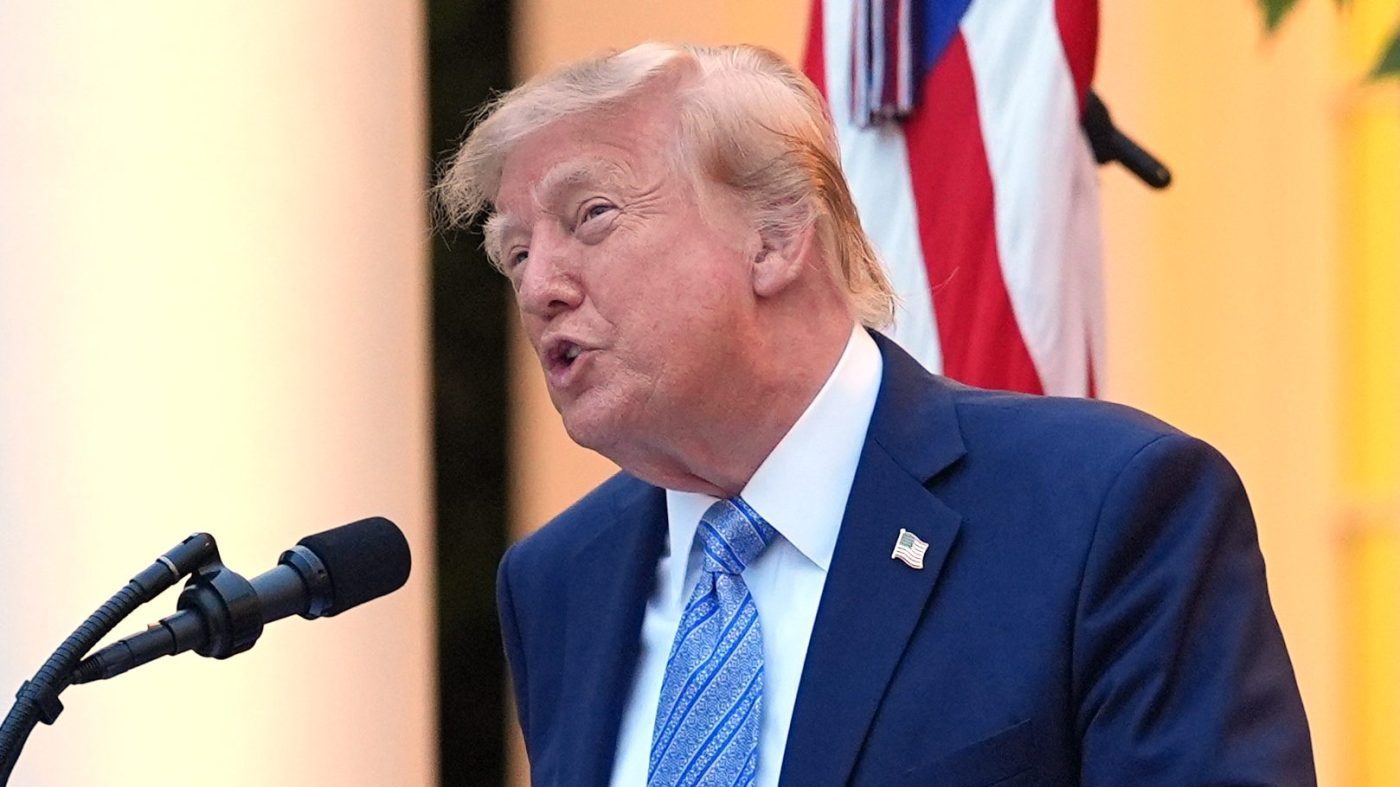
President Trump on Monday conceded that Ukrainian military operations have severely damaged Russia's energy infrastructure, stating that Moscow has effectively lost its grip on diesel production. In a Truth Social post following a Sunday call with Ukrainian President Volodymyr Zelensky, Trump wrote that a significant number of Russian diesel refineries have been destroyed and are temporarily offline.
"Russia has unfortunately lost control of its Diesel Oil Industry due to its War with Ukraine," Trump said, urging an immediate halt to hostilities. He described the conflict as "ridiculous and never ending," noting that roughly 25,000 people, mostly soldiers, are dying each month.
The remarks came after Ukraine launched a massive overnight drone assault, with over 1,600 drones traveling nearly 280 miles into Russian territory, targeting refineries near Moscow. The Institute for the Study of War reported that the strikes caused fires and forced operational pauses at key facilities.
Zelensky, in a separate statement on X, reported Russian attacks on Zaporizhzhia that struck residential buildings, a university, a shopping mall, and a boiler house, injuring five people. A drone strike in Kharkiv killed one woman. "Russia is not backing down from its escalation and is sending many signals that it is ready to expand the war," Zelensky warned.
Trump's acknowledgment comes as his administration juggles multiple crises, including an ongoing U.S. military engagement with Iran that has disrupted global energy flows, particularly through the Strait of Hormuz and Red Sea shipping lanes. The combined pressures have driven oil prices upward, with U.S. diesel prices surging 42 cents in a week to a national average of $6.27 per gallon—a record high that is becoming a political liability for Republicans in competitive midterm races.
Senator Chuck Grassley has urged Trump to halt diesel exports to ease domestic prices, but the administration has so far resisted such measures. The soaring costs are a key issue in several Senate contests, with GOP strategists worried about voter backlash.
To address the war, Trump dispatched top envoys Steve Witkoff and his son-in-law Jared Kushner to Moscow and Kyiv earlier this month. Zelensky thanked Trump for the visit and confirmed plans to meet on the sidelines of the U.N. summit this week. "The peace track is our number one priority," Zelensky said, adding that both sides are exploring de-escalation steps and fundamental security issues, including energy and food security.
Diplomatic channels remain active, with Secretary of State Marco Rubio potentially meeting Russian Foreign Minister Sergey Lavrov at the U.N. summit, according to Ukrainian media citing Russian officials.
The dual crises—Russia's energy losses and U.S. diesel price spikes—are reshaping the political landscape. As Trump pushes for negotiations, his administration faces pressure to address domestic economic pain while managing foreign policy entanglements. The coming weeks will test whether diplomatic overtures can translate into tangible progress or if the conflict continues to ripple through global markets.