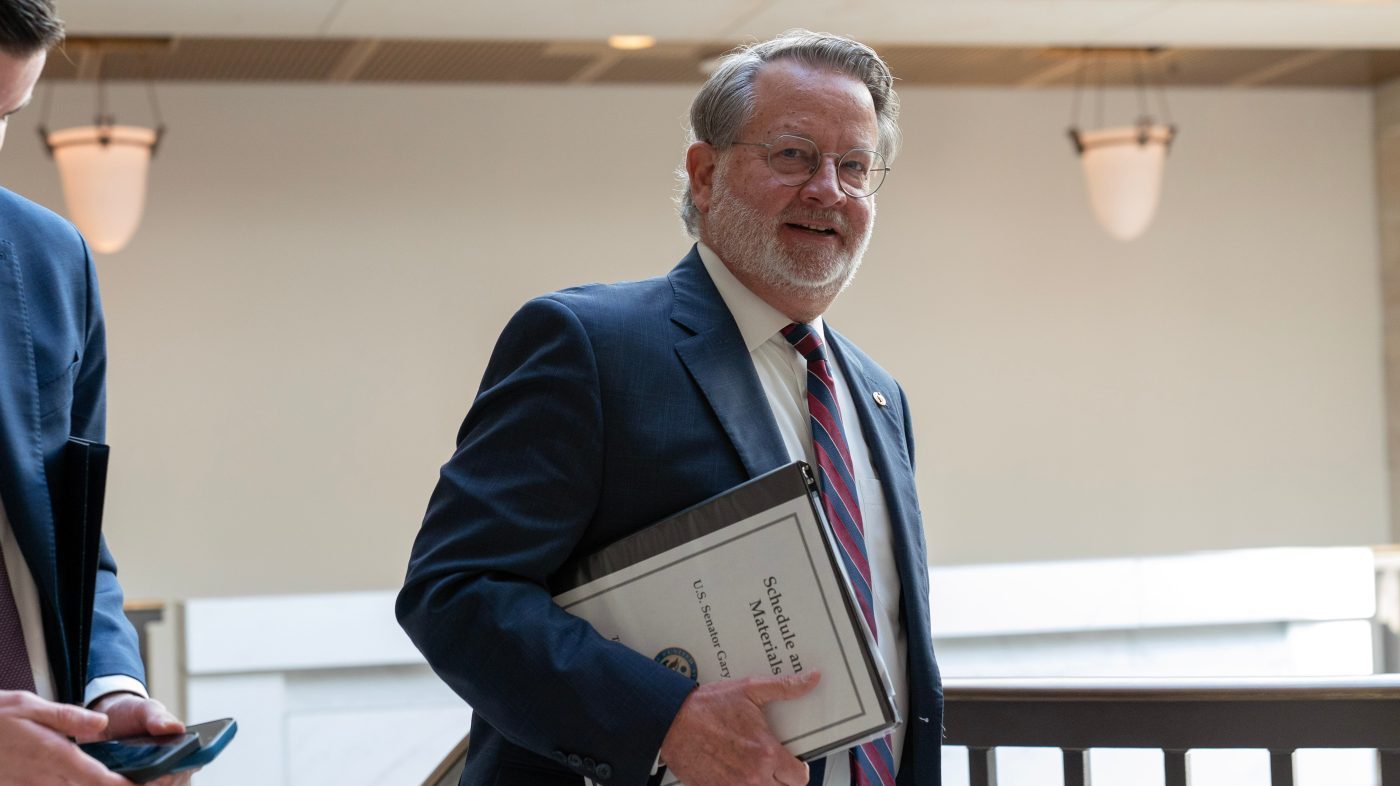
Sen. Gary Peters (D-Mich.), who is stepping down from the Senate at the end of his current term, will take on a new role at the University of Southern California, the school announced Tuesday. Peters will serve as a professor and co-director of the university's Center for the Political Future (CPF), a nonpartisan initiative aimed at fostering civil dialogue and preparing students for careers in politics.
Peters will work alongside Mike Murphy, a veteran Republican strategist who has led the center since its inception. The duo will split their time between USC's main campus in Los Angeles and the university's satellite facility near Dupont Circle in Washington, D.C., where they will oversee the center's expansion and programming.
Before entering Congress in 2009, Peters taught political science at a Michigan college, giving him a background in academia that aligns with USC's mission. In a statement, Peters expressed enthusiasm for the new role, emphasizing the importance of bipartisan cooperation and civil discourse in today's political climate.
"CPF has done a terrific job bringing people with different perspectives together," Peters said. "I look forward to working with Mike Murphy to ensure we continue to have a forum where people can discuss tough issues, find common ground and actually accomplish something."
The center, which focuses on restoring civility and practical reasoning to politics, offers students internships, study groups, professional development, and events with policymakers. Peters will also teach classes on politics and policymaking, drawing on his legislative experience.
USC highlighted Peters's record of bipartisan legislative achievements, noting that 19 of his stand-alone bills were signed into law during the last Congress. That track record, the university said, makes him a fitting addition to a center that prizes practical results over partisan posturing.
Murphy, who has been a prominent voice for centrist politics, welcomed Peters's arrival. "I very much look forward to working with him as we grow the center's mission to teach and inspire USC students to embrace the idea that civility and reasoned compromise are far from the enemy of politics; they're essential to turning political disagreement into practical results," Murphy said in the announcement.
Peters's move comes as other retiring lawmakers have sought roles in academia and think tanks, reflecting a broader trend of former officials shaping the next generation of political leaders. His appointment also underscores the growing importance of bipartisan forums in an era of deep partisan divides, a theme that resonates with ongoing debates about reform strategies and political civility.
The center's work has drawn attention from both sides of the aisle, and Peters's addition is expected to bolster its credibility among Democrats while Murphy maintains ties to Republican circles. As the 2026 midterms approach, the center's efforts to model constructive dialogue may offer a counterpoint to the often-heated rhetoric dominating national politics.