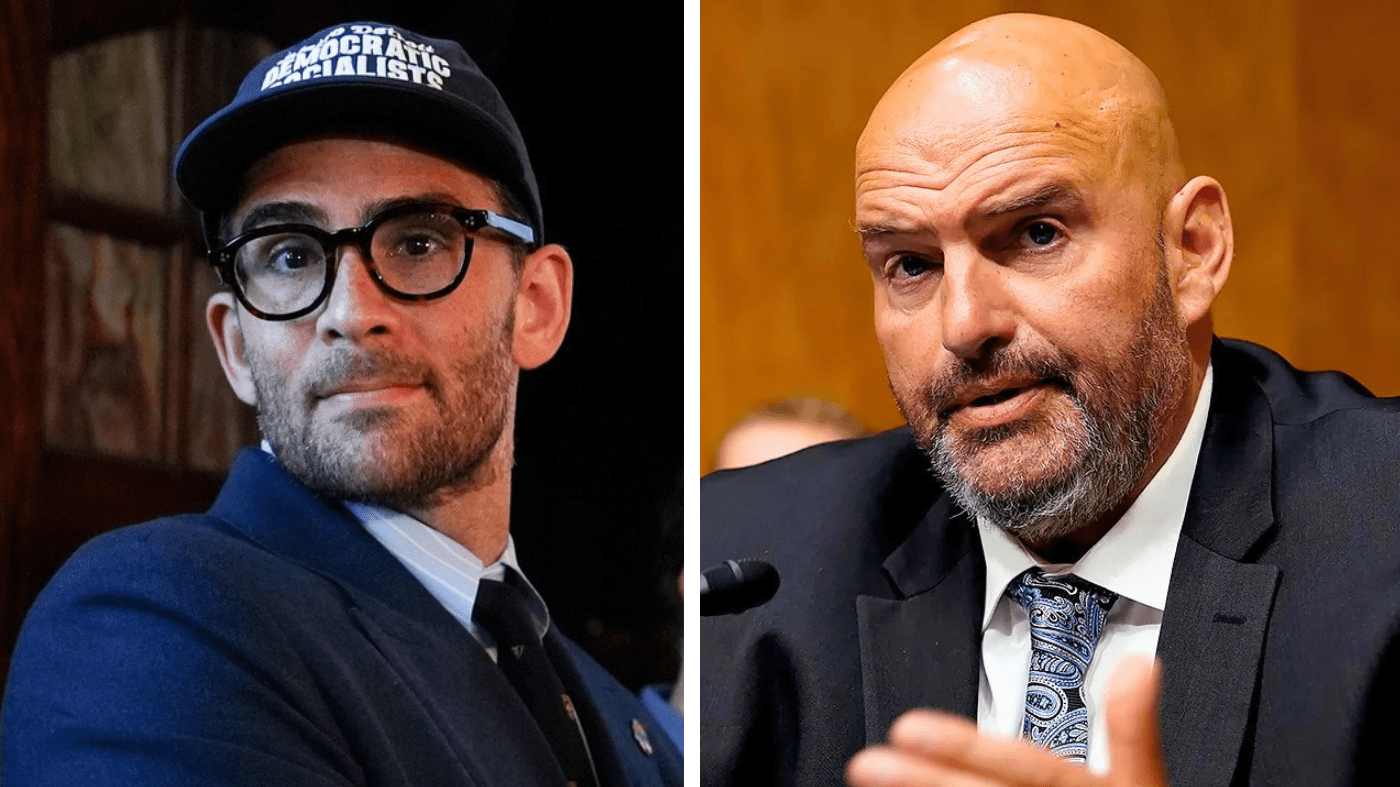
The center-left is in a bind. Squeezed between right-wing and left-wing populists, mainstream parties like the Democrats are struggling to articulate a compelling vision that resonates with working-class voters. While populists on both flanks offer bold, if flawed, prescriptions, the center-left often appears as a fuzzy, out-of-touch establishment more comfortable with incrementalism than with the structural changes voters demand.
The populist pull
MAGA and the Democratic Socialists of America have no shortage of transformative ideas, even when those ideas are economically dubious or politically toxic. President Trump's inflationary tariffs, for instance, have alienated many, while progressive calls to abolish private health insurance and fund a litany of "free" public goods through wealth taxes collapse under scrutiny. Yet these movements earn credit for their conviction. The center-left, by contrast, suffers from an identity crisis: voters do not know what it stands for, and many lump Democrats with center-right parties as defenders of affluent elites and entrenched interests.

The case for bold reform
Moderation, compromise, and civility have their virtues, but they do not constitute a governing philosophy. This is no time for tinkering. Working families are angry about unfair economic arrangements, a fractured national identity, and a federal government that cannot deliver big things. They want structural fixes for structural problems, not half-measures.
Democrats are not doomed to vapid centrism. They can draw on their own rich history of bold, modernizing reform rooted in America's liberal tradition. That legacy includes Woodrow Wilson's progressive-era reforms that helped the federal government adapt to industrialization, Franklin Roosevelt's New Deal experimentation to combat the Great Depression, Harry Truman's post-war security architecture, Lyndon Johnson's landmark civil rights laws, and Bill Clinton's "New Democrat" innovations in welfare reform, crime reduction, and government reinvention.
The leftward pull
The question is whether Democrats will replicate that fusion of pragmatic means and liberal ends or continue drifting left. This summer's primary challenges from democratic socialists have intensified pressure to move in that direction. But the populist left's complaint that mainstream Democrats are not fighting hard enough against Trump is ironic: their own ideas have contributed to the party's minority status by alienating working-class voters. When you are out of power, you have few weapons to fight with.
Some party leaders hope to harness leftist energy while distancing themselves from ideas that excite white college liberals but leave swing voters cold. But U.S. liberalism and socialist-style anti-capitalism are fundamentally incompatible. Blending them only deepens the center-left's blurry profile.
Drawing the line
Democrats must not only argue that left-wing ideas are electoral losers; they must explain why those ideas are wrong on the merits. Otherwise, they project a weak center-left unwilling to defend its principles. For example, they should unequivocally reject abolishing ICE, which would amount to open borders and violate Americans' right to control immigration. They should also oppose Medicare for All, which carries a staggering price tag of at least $35 trillion over a decade.
Instead, the center-left should offer targeted tax relief for working families, such as cutting payroll taxes and offsetting the cost with a progressive consumption tax. It should avoid "slopulist" schemes that promise benefits supposedly paid for by soaking the rich.
Technology and AI
On technology, Democrats should not let anti-AI populists dictate the agenda. Rather than joining the stampede to block data centers, as some state-level freeze proposals suggest, they should focus on building a public safety framework that mandates human control over self-improving AI. The risks of a break-out are real, but so are the rewards of turbo-charging productivity and scientific discovery. The debate over data center development is a case in point, where the center-left can offer a balanced path.
Way forward
By defining itself clearly as a liberal force for fundamental reform, the center-left can help move America past the current populist polarization. It has the historical playbook; it just needs the courage to use it.