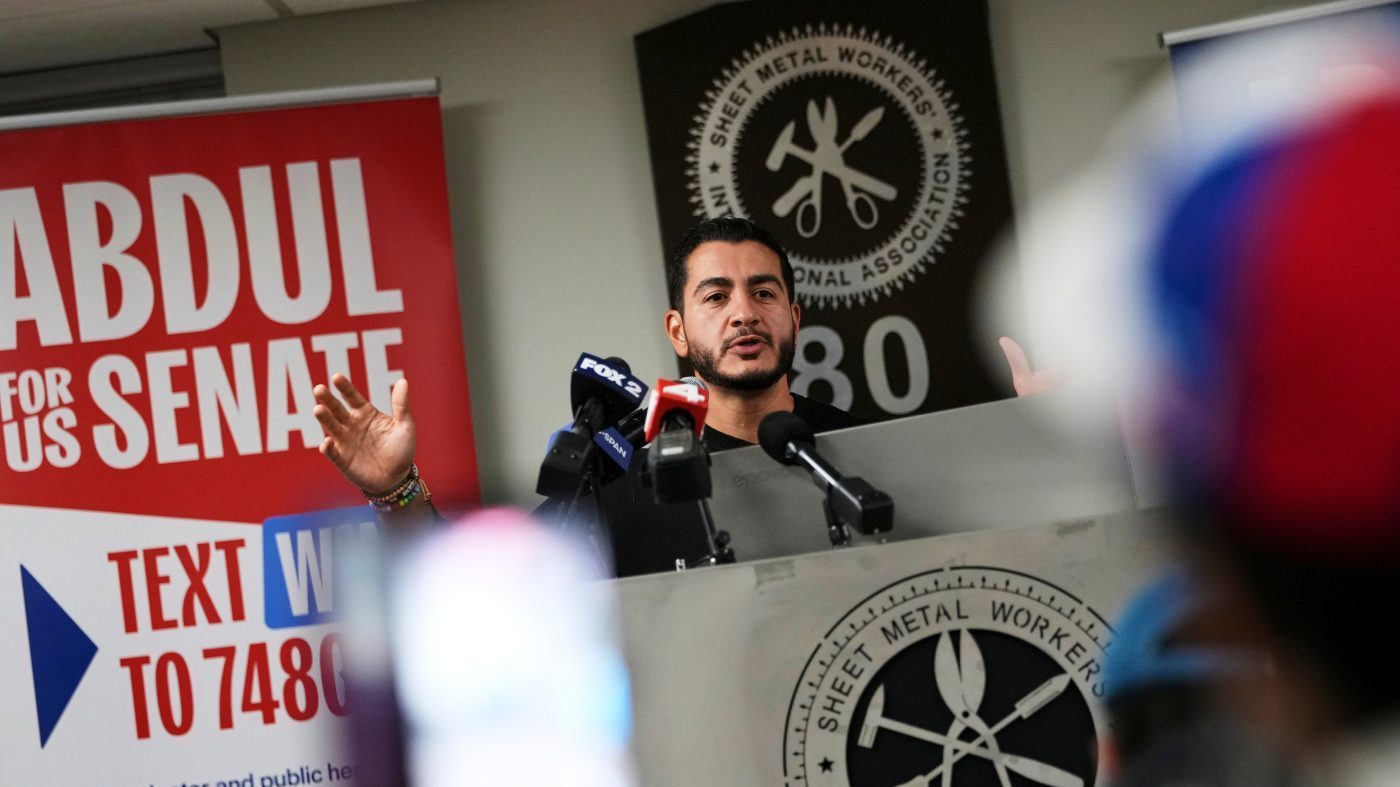
Michigan Democratic Senate nominee Abdul El-Sayed pulled in $1.2 million in just four hours after his former primary rival, Rep. Haley Stevens (D-Mich.), threw her support behind Republican Mike Rogers in the state's pivotal Senate race, according to figures first reported by Politico and confirmed by The Hill.
The fundraising surge—El-Sayed's second-best single-day haul since winning the Democratic nomination in August—came as Stevens's endorsement sent shockwaves through the party just two days before Election Day. The joint fundraising email from El-Sayed and the Democratic National Committee, sent Sunday evening, carried the subject line: “Who this election is actually about?”
“Some people would love for the last days of this race to be about politicians,” El-Sayed wrote in the email. “I will not be distracted.”
Stevens's endorsement of Rogers, a former congressman and FBI agent, marks a stunning break from party lines in a race that could determine control of the Senate. The seat is being vacated by retiring Sen. Gary Peters (D-Mich.), and Democrats are fighting to hold it as they seek to expand their narrow majority. Stevens, who lost to El-Sayed in the August primary, had initially endorsed him after her defeat, but tensions escalated last week when she demanded he apologize for past comments about Israel and disavow a campaign ad that some critics viewed as antisemitic.
El-Sayed refused to apologize and subsequently barred Stevens from a Sunday campaign event where other Democrats had hoped to reconcile the two. In a video posted online Sunday, Stevens confirmed the rift: “As you may have seen, our Democratic nominee for U.S. Senate, Abdul, said that I was no longer welcome in his campaign, and that I should stay away. And he's right. And that's why I am endorsing Mike Rogers for the United States Senate today.”
The move has ignited fury within the party. At least eight House Democrats have called for Stevens to be removed or disciplined by party leadership, according to Politico. Rep. Pramila Jayapal (D-Wash.) criticized Stevens for “supporting a candidate for Senate that is a rubber stamp for [President] Trump's disastrous and dangerous administration.” The backlash has also drawn sharp rebukes from other Democrats, including Senate Majority Leader Chuck Schumer, who called the endorsement a “despicable betrayal.”
Stevens's fiancé, who is Jewish, had earlier said he would back Rogers in the general election, adding a personal dimension to the political feud. The endorsement has also become a flashpoint in the broader national debate over Israel and antisemitism, with Stevens citing El-Sayed's refusal to distance himself from progressive activist Hasan Piker, a move that further inflamed the dispute.
The Democratic National Committee and El-Sayed's campaign have sought to turn the controversy into a fundraising boon, with the joint email framing the race as a battle against political distractions. El-Sayed's team said the $1.2 million haul reflects grassroots energy, even as Stevens's endorsement threatens to peel away moderate Democratic voters in a state that remains a critical battleground.
Republicans, meanwhile, have seized on the endorsement as evidence of Democratic disarray. The RNC issued a statement urging Michigan voters to “note Stevens backing Rogers,” and President Trump welcomed the cross-party support. But Democrats are hoping that the backlash against Stevens will galvanize their base, with several House Democrats calling for her expulsion from the caucus.
As the race enters its final hours, the fallout from Stevens's move continues to reverberate. El-Sayed has brushed off the endorsement, telling supporters that his campaign is focused on the issues that matter to Michigan families. “I will not be distracted,” he reiterated in the fundraising appeal, a message that appears to be resonating with donors who have poured money into his campaign in response to the controversy.
The Michigan Senate race remains one of the most closely watched contests in the country, and Stevens's endorsement has injected a new layer of unpredictability into an already volatile political landscape. Whether the fundraising surge will translate into votes on Election Day remains to be seen, but the drama has underscored the deep divisions within the Democratic Party as it fights to hold the Senate.