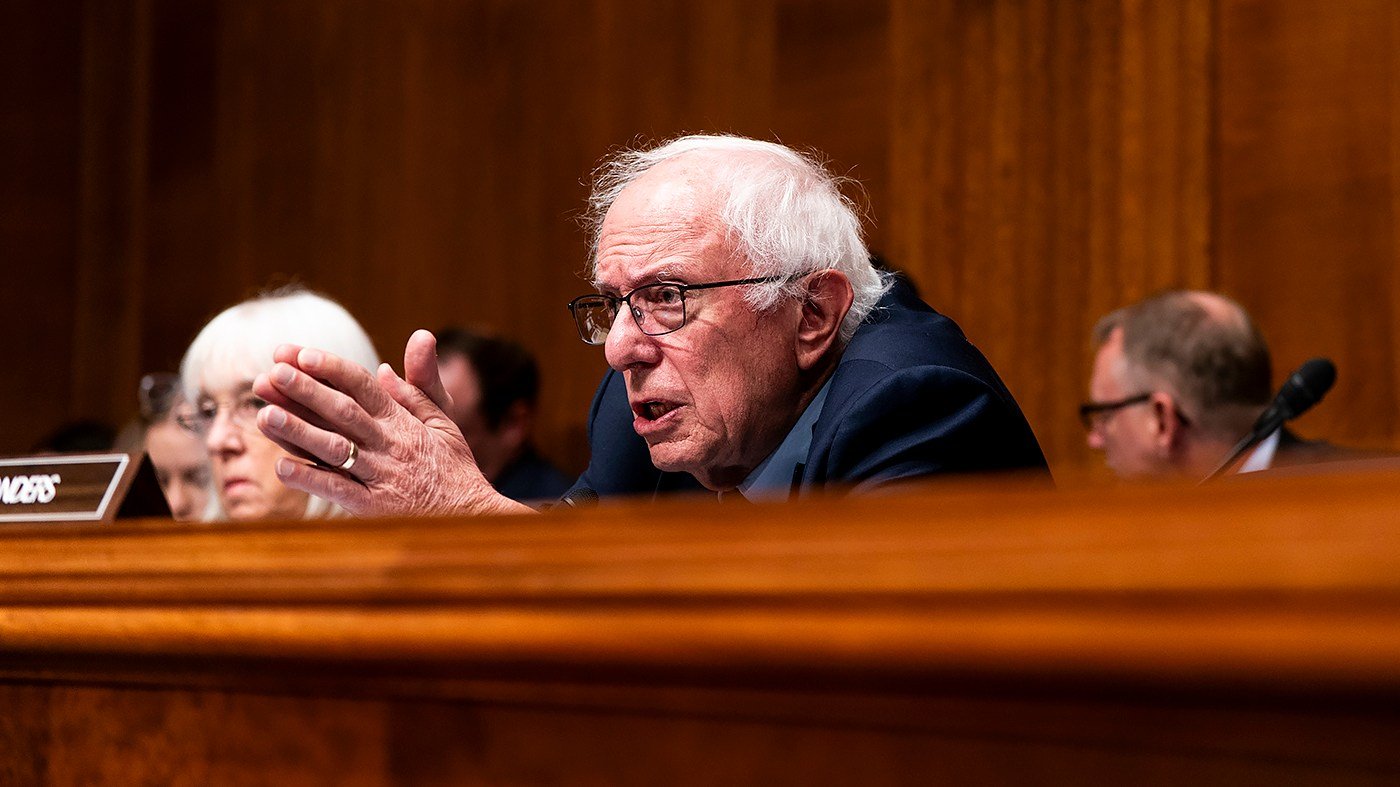
Sen. Bernie Sanders (I-Vt.) on Sunday dismissed the Democratic Party's controversial ballot maneuver in Alaska as "pretty dumb," even as he defended its legality and rejected calls for federal intervention.
During an appearance on CBS's "Face the Nation," Sanders was asked about reports that Democrats helped recruit a candidate sharing the same name as incumbent Sen. Dan Sullivan (R-Alaska) to siphon votes away from the Republican. "Yeah, frankly what the Democrats did in Alaska seems to be pretty dumb but...it's not illegal," Sanders said.
The Vermont senator, who has built a career on criticizing political gamesmanship, drew a parallel to Republican tactics in Ohio, where a super PAC aligned with the GOP has spent heavily to boost a socialist candidate in the Senate race. "It's what happens in every election. Right now in Ohio there is a gentleman who is running who is, as I understand it, don't know him, claiming to be a socialist fine and Republican super PAC is putting money into his election," he said.
Sanders was referring to a Politico report that found "Enough Promises Ohio," a Republican-backed super PAC, spent over $2.7 million to elevate Greg Levy, a Party for Socialism and Liberation candidate, while also opposing former Sen. Sherrod Brown (D-Ohio), who is challenging incumbent Sen. John Husted (R-Ohio). "So why in Ohio is a Republican right-wing super PAC funding a socialist? The answer is obviously obvious. They want to take votes away from Sherrod Brown. Is this a good thing to do? No, it is not a good thing to do. It's a stupid thing to do," Sanders added.
When host Margaret Brennan asked whether the Alaska matter warranted a federal investigation, Sanders demurred, saying, "No, that's a decision the federal government does not get involved in state elections. And you have a president who in fact denied that he lost the election in 2020 against Biden for him to be deciding what is a fair election or not is a little bit absurd. People of Alaska can make that decision themselves."
Sanders' comments come as the controversy escalates. Rep. James Comer (R-Ky.), chair of the House Oversight Committee, told Fox News earlier Sunday that there was a "big possibility" Democratic nominee Mary Peltola would not be seated even if she wins Alaska's Senate race. Comer has launched a probe into Peltola's involvement in the decoy-candidate operation, scheduling transcribed interviews with Elisa Rios, Peltola's former campaign manager, and Jerid Kurtz, a Democratic operative.
The practice, known as ballot "stacking," is not illegal, according to GOP strategists who spoke to The Hill. It is a common tactic in Alaska's unusual nonpartisan top-four primary system, where candidates from all parties compete on the same ballot.
Meanwhile, the federal investigation into the alleged Alaska ballot scheme continues to expand, with questions mounting over the involvement of Democratic-aligned legal firm Elias Law Group, as reports tie the firm to the decoy candidate.
The episode has also drawn attention to broader concerns about election integrity. Sen. Rick Scott (R-Fla.) has so far sidestepped a pledge to accept Alaska's Senate result if Peltola wins, while Sullivan has vowed to accept the outcome despite a separate Department of Justice lawsuit.
As the 2024 election cycle heats up, the Alaska controversy highlights the growing use of decoy candidates and the blurred lines between legal strategy and political ethics. With control of the House hinging on a handful of toss-up races, both parties are likely to continue testing the limits of election law.