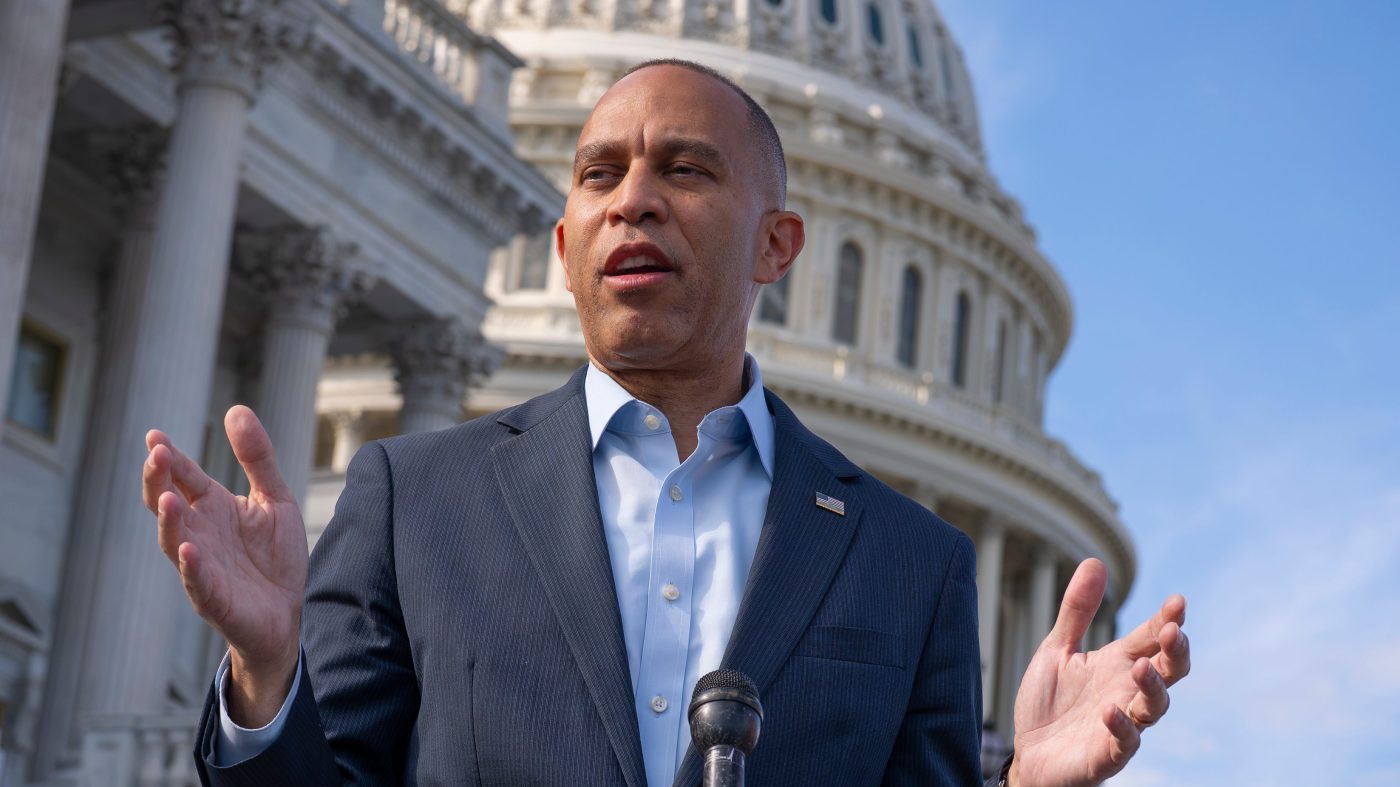
The Michigan Senate race took an unexpected turn this week when Democratic Rep. Haley Stevens announced she is backing Republican Mike Rogers over her party's nominee, Abdul El-Sayed. The endorsement has sent ripples through the state's political landscape, raising questions about Democratic unity and the broader fight for control of Congress in the 2026 midterms.
Stevens, who represents a competitive district in the Detroit suburbs, cited Rogers's record on infrastructure and national security as reasons for her decision. "Mike has always put Michigan first," she said in a statement, adding that she believes he will "deliver results" for the state. The move has been met with sharp criticism from El-Sayed's campaign, which called it a "betrayal" of Democratic values.

El-Sayed, a public health expert and former Detroit health director, has sought to position himself as a progressive champion, focusing on economic fairness and healthcare access. He downplayed the endorsement, telling supporters that "voters in Michigan are smarter than any political insider." However, the cross-party endorsement has undeniably shifted the dynamics of the race, with national Democrats now scrambling to contain the fallout.
The endorsement has also drawn attention from the White House. President Trump, who has been actively campaigning for Rogers, welcomed Stevens's support, calling it "a great sign" for the GOP's chances in Michigan. Meanwhile, California Governor Gavin Newsom, a prominent Democrat, described the endorsement as "sub-optimal" for the party's prospects, according to reports from the campaign trail.
This development comes as Democrats are already facing an uphill battle in the Senate, where they are defending several vulnerable seats. Recent polling shows Democrats leading in seven key Senate races, but most are statistical dead heats, and the Michigan contest is no exception. The RNC has seized on Stevens's endorsement, with Chairwoman Ronna McDaniel arguing that Michigan voters should take note of a Democrat crossing party lines to support Rogers.
The discord in Michigan is part of a broader pattern of Democratic infighting as the party grapples with its post-election strategy. Democrats are wrestling with how to handle Trump-related investigations and whether to focus on economic messaging or cultural issues. The Michigan race has become a flashpoint for these tensions, with some progressives accusing moderates of undermining the party's base.
Looking ahead, the outcome of the Michigan Senate race could have significant implications for the lame-duck session following the November elections. If Republicans gain control of the Senate, they are likely to push for conservative judicial appointments and block Democratic legislative priorities. Conversely, a Democratic hold would give the party a stronger hand in negotiating with the White House on issues ranging from government funding to debt ceiling legislation.
Political analysts note that Stevens's endorsement may not be as damaging as it appears. "Voters often separate endorsements from their own choices," said one strategist. "But it does signal that the Democratic coalition is not monolithic, and that could hurt turnout among progressives." Indeed, early voting data shows Democrats surging in early turnout, but the RNC has conceded that the GOP faces a turnout gap that could be decisive.
As the campaign heats up, both parties are watching Michigan closely. The state, which narrowly went for Trump in 2016 and Biden in 2020, remains a bellwether for national trends. With the Democrats' unity event in Michigan fracturing and Trump reviving rallies in other battlegrounds, the race is far from settled.
The Hill's editors and Senate reporter Helen Huiskes will host a live discussion on the Michigan Senate race and the midterm landscape at noon EDT. Viewers can submit questions through the chat feature on the right side of the screen. The conversation will also cover what to expect in the lame-duck session after Election Day, including potential legislative battles and the future of key policy initiatives.