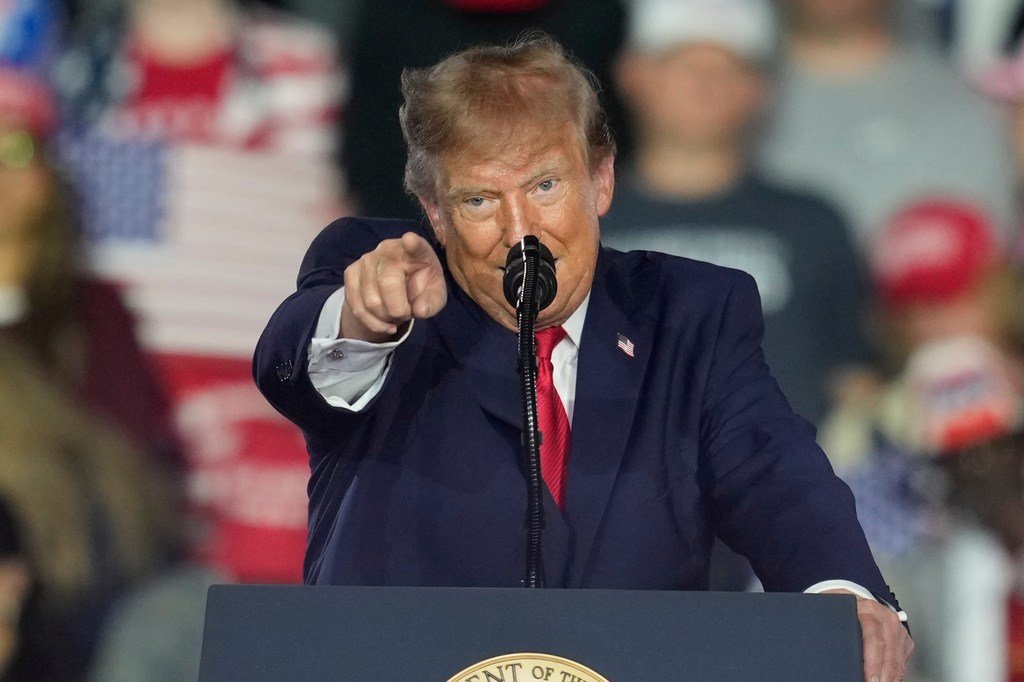
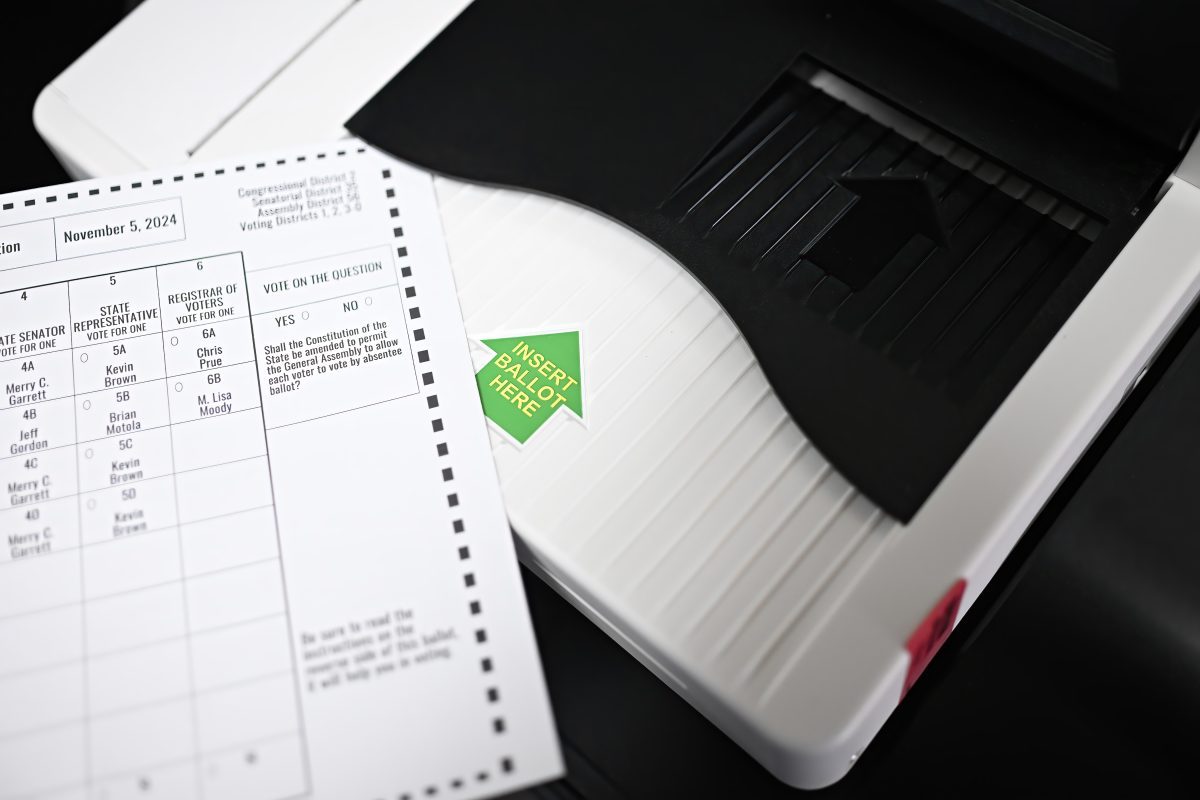
As Americans cast their ballots tomorrow, Republicans are scrambling to find a compelling closing argument—one that goes beyond unwavering fealty to Donald Trump. The party's struggles are evident in the messages emerging from its own candidates, who are grappling with corruption scandals, economic discontent, and the president's persistently low approval ratings.
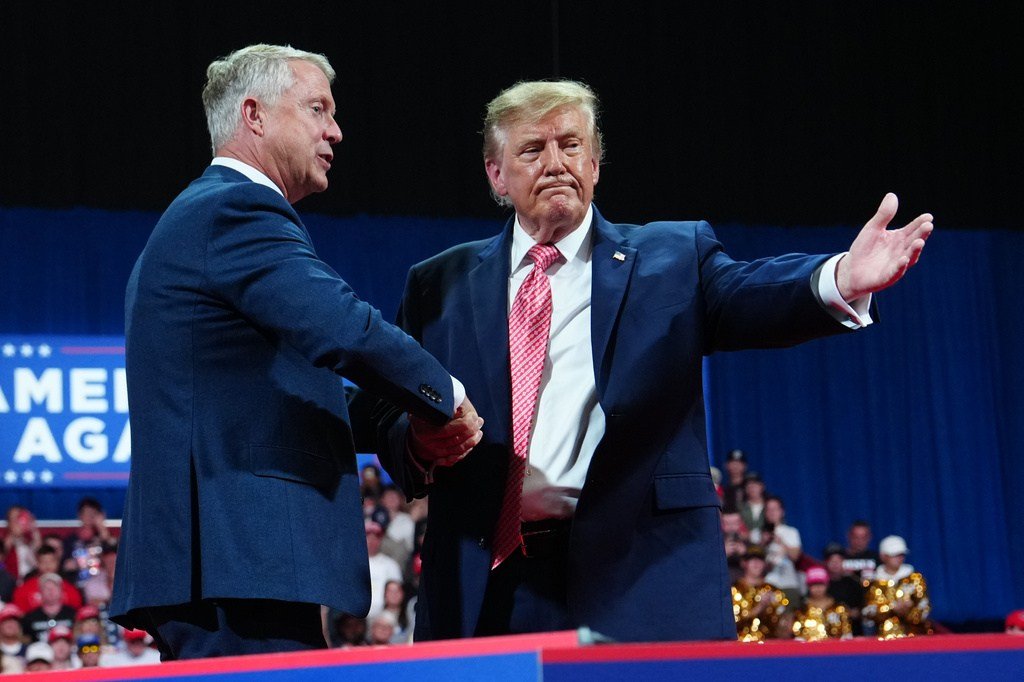
Perhaps the most striking example came from Sen. Roger Marshall (R-Kan.), who told Bloomberg TV last week: "Bankruptcies are up, suicides are up but nonetheless [our hope is that President Trump]…can take us to victory here." The comment, which seemed to acknowledge the dire state of affairs while still urging voters to stick with the president, underscores the GOP's messaging dilemma.
Marshall is not alone. Across the country, Republican candidates are essentially asking voters who supported Trump to close their eyes, hold their noses, and remain loyal—despite a litany of negative outcomes. But that appeal faces a steep climb. An NPR/PBS Marist poll found that 44 percent of registered voters plan to vote out of opposition to Trump, citing corruption, high prices for gas and groceries, and the specter of another "never-ending" war in the Middle East.
The challenge is particularly acute on corruption. How can GOP candidates criticize Democratic malfeasance when the president is reportedly making billions from cryptocurrency ventures, and when a Russian oligarch allegedly picked up the tab for his son's wedding reception? Republicans in Congress have conspicuously turned a blind eye to these issues, acquiescing to Trump's economic policies and foreign affairs missteps, calculating that it was smart politics given Trump's iron grip on the party.
But in a general election, every Republican congressional candidate bears the weight of a president with negative approval ratings on corruption, the economy, inflation, and the war. So the party's default strategy has been to try to divert voters' attention away from Trump, instead lashing Democrats as radicals, extremists, and elitists who lack Christian faith, patriotism, and family values.
That approach got a boost from riots in France, which GOP candidates used to stoke fears of unrest in the U.S. if Democrats win control of Congress. Culture war messaging has also been prominent. In Iowa, one Republican ad attacked a Democratic opponent as "just plain dangerous to kids" for "voting to let grown men in girl's lockers rooms" to accommodate transgender student athletes. But that ad backfired when the narrator was revealed to have a 2017 child endangerment guilty plea related to drunk driving.
On the economy, Republicans have offered little more than expressions of "strong concern." Sen. Susan Collins (R-Maine) touted her efforts to limit Trump's tariffs on Canadian road salt, only to be skewered by her Democratic opponent, Troy Jackson, who noted that Mainers "can't eat road salt" amid high food prices.
As a last resort, many candidates are banking on Trump's rallies to boost turnout. Trump has tried various messages, including a promise to send $5,000 to each voter if the GOP retains control of Congress—a proposal widely criticized as an attempt to buy votes and a likely violation of federal bribery laws. At a rally last week, Trump joked that $5,000 wouldn't even cover a hamburger at Mar-a-Lago, a comment that offered little comfort to Kansas farmers facing bankruptcy and rising suicide rates.
The president's tactics have drawn sharp rebukes. Former President Obama, stumping for Michigan Senate candidate Abdul El Sayed, compared Trump's gold-plated White House decor to "Saddam Hussein opened a Cheesecake Factory." MAGA spinmeisters tried to frame this as a culture war attack, but Obama noted that Trump didn't protest being likened to an Iraqi dictator.
Even influential voices who once favored Trump are wavering. Podcaster Joe Rogan, who previously spoke favorably of the president, said, "What Trump stood for, some of it turned out to not be real. Like one of [Trump's 2024 promises] was the no wars. Well, look, we're at war with Iran. So that wasn't real."
Political prognosticator Charlie Cook has described this election as less a "blue wave" than a "red undertow," suggesting that Republicans never found a coherent message, leaving Democrats positioned for victory. As the polls close, the GOP's reliance on loyalty over policy may prove to be its undoing.