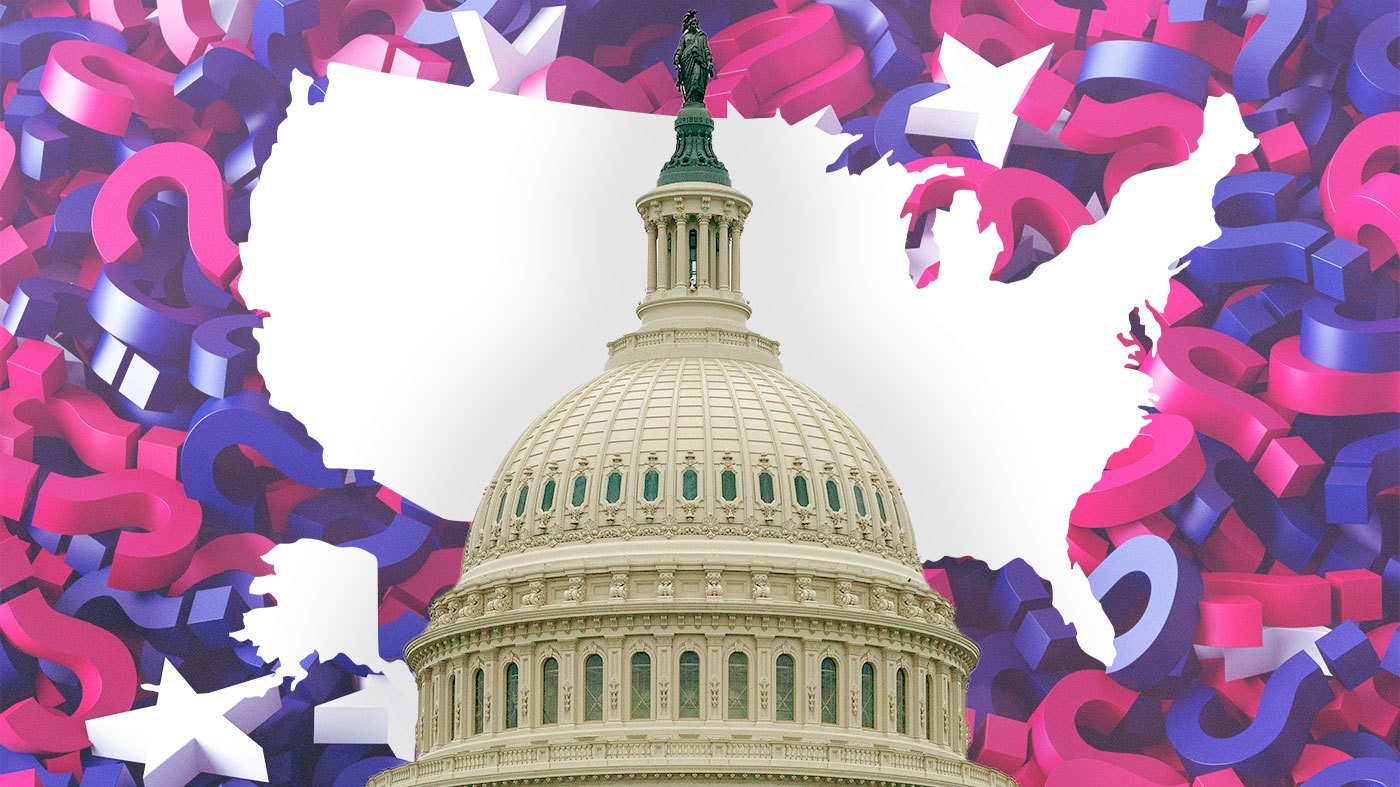
Six months before the midterm elections, senators from both parties say the Senate battleground map has expanded dramatically, placing the Republican majority in greater peril. Once reliably GOP states like Kansas and Nebraska are now viewed as competitive, according to lawmakers, while Democrats are also defending New Hampshire, a state they had hoped would be safer.
The widening map is fueling anxiety among Republican incumbents, even as they remain favored in many races. A GOP senator, speaking on condition of anonymity, described internal polls showing very tight contests in Kansas and Nebraska, calling the overall environment "grim" for the party. The senator cited voter anger over the economy and the Iran war as the driving force behind the shift.
"Energy prices are way too high. The war, people don't like. And the real reason they don't like the war is it's making everything more expensive. Voters are not in a good mood," the senator said. "In farm states like Nebraska and Kansas, farmers are just irate about the beef issue, they're irate about energy prices. It's a tough environment."
Democrats are eager to capitalize on the discontent. Senate Democratic Leader Chuck Schumer told The Hill that Democrats are expanding the map "big time," and Senator Sheldon Whitehouse (D-R.I.) said, "I think we have nine Senate pickups possible and need to put our resources into making sure we win as many of those that we can."
The surge in diesel prices to record levels has become a major political liability for Republicans. Senator Lisa Murkowski (R-Alaska) acknowledged the pain: "People are feeling it, and they don't like it. They don't like it at all. And what kind of response are we seeing from the White House? Is there a recognition that there's a connection here? If there is, I'm not hearing anybody enunciate it."
The Iran conflict, which President Trump initiated in February without congressional approval, has compounded the economic anger. A Fox News poll found 71% of Americans say the administration lacks a plan to end the war, and 34% rate the cost of living as the top issue this year.
In the Midwest, farmers are particularly upset over Trump's trade policies and his decision to allow 300,000 metric tons of foreign beef imports. Senator Mike Rounds (R-S.D.) said the move "really hurt" producers, who "love the president" but feel betrayed. "They're frustrated and they're hurt," Rounds said, adding that this backlash is "absolutely" giving Democrats a chance in Kansas and Nebraska.
Recent polling supports the expansion. A Hill/Emerson College survey in Kansas showed Democrat Adam Hamilton leading incumbent Senator Roger Marshall, 45% to 43%, and private polls reportedly show a similar edge. In Nebraska, independent Dan Osborn is within a few points of Senator Pete Ricketts, with some surveys even showing Osborn ahead.
Ricketts acknowledged the race is now in play, saying, "I've been taking my race seriously for over a year." Meanwhile, Democrats see potential pickups in Maine, Ohio, Iowa, Texas, and Alaska, with their candidate pulling ahead in North Carolina.
Senator Peter Welch (D-Vt.) summed up the Democratic optimism: "Donald Trump is doing everything he can to sabotage the campaigns of Republican incumbents. This could be a big blue wave, absolutely."