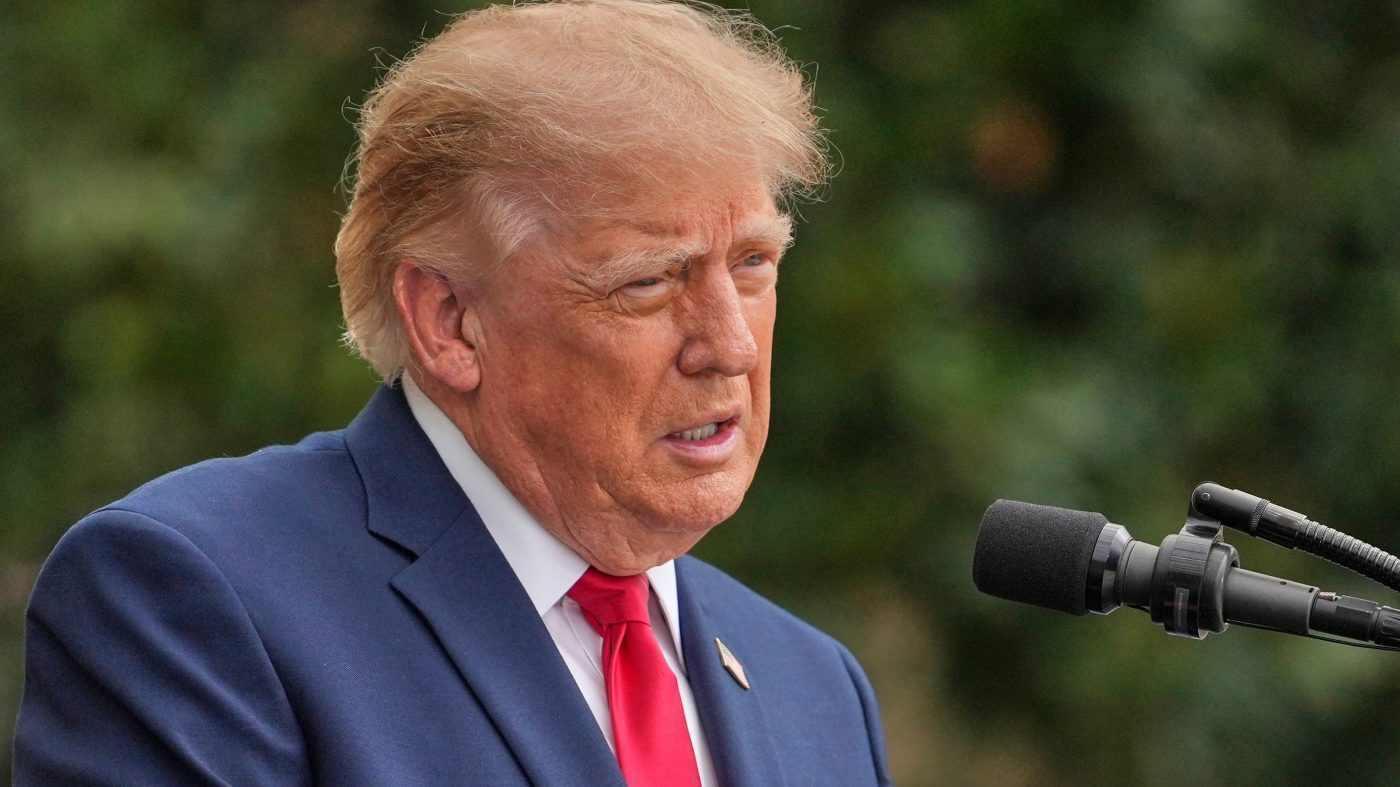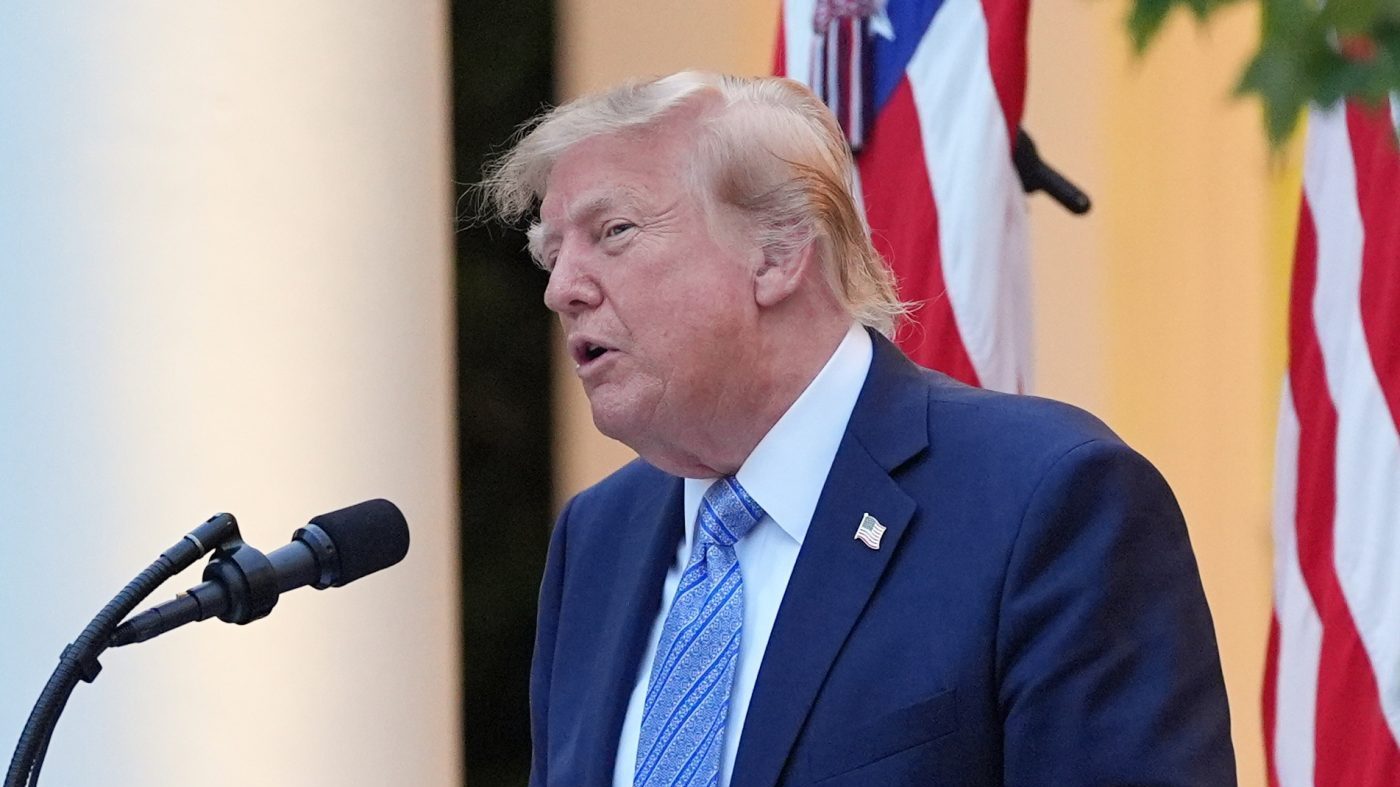
President Donald Trump on Monday pushed back against accusations that his administration is waging a campaign against the media, after three major news organizations announced legal action over their exclusion from White House coverage.
In a post on Truth Social, Trump wrote: “The White House is not instituting an assault on the Free Press, something which I cherish.” He pivoted to argue that the move is instead “instituting an assault on the FAKE NEWS,” which he described as “corrupt, purposeful, pervasive, fully coordinated, and totally out of control.” He added that such reporting “is a threat to our National Security, and must be stopped, NOW!”
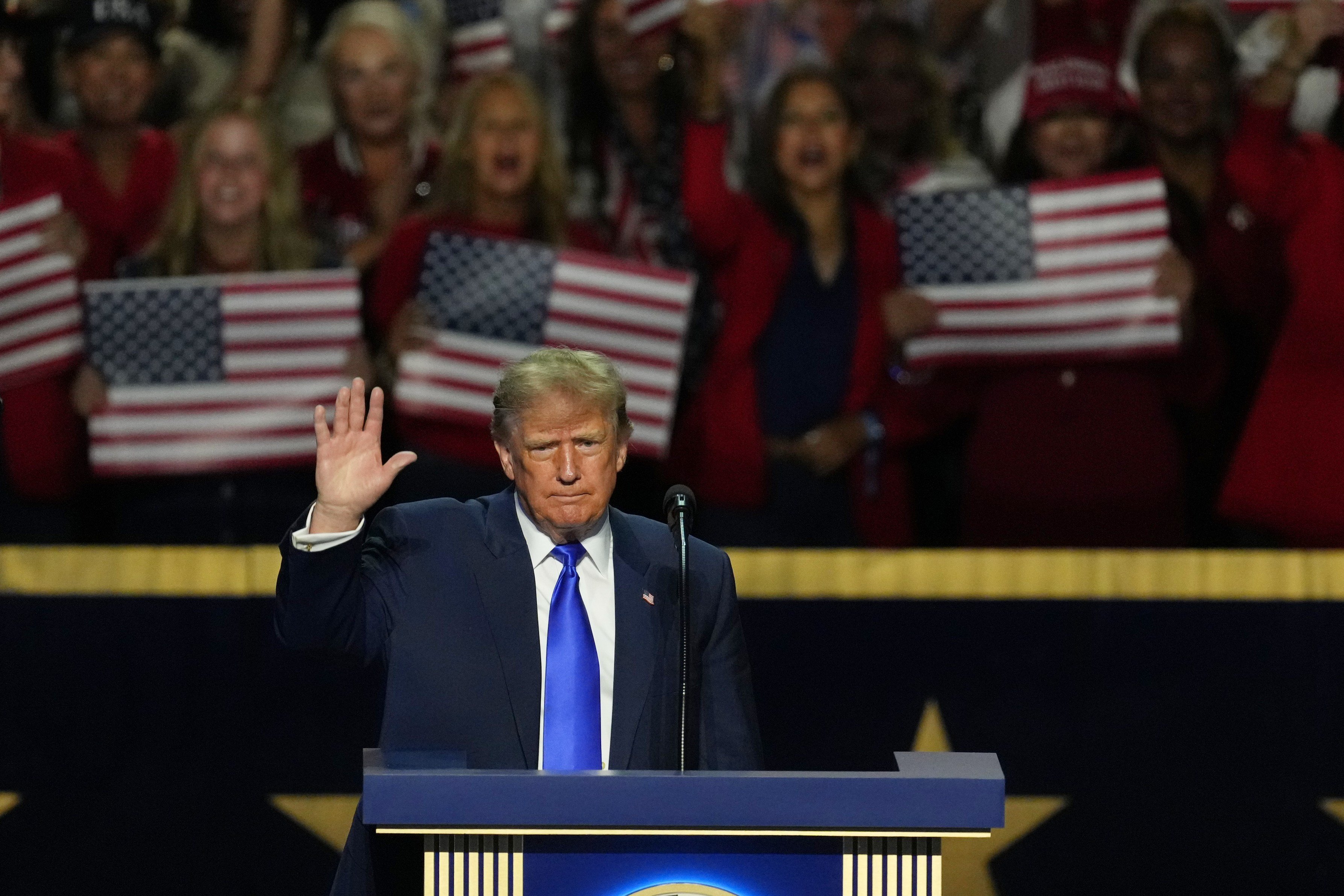
The president’s remarks come after his team barred CNN, MSNOW, and Politico from White House grounds over the weekend, revoking their press credentials without prior notice. The outlets’ journalists were denied entry on Saturday and had their passes confiscated.
In a joint statement, the three organizations confirmed they are suing the administration. “This morning, we notified the government that we are filing a lawsuit today to protect our First Amendment rights and defend the principle that the government does not decide what the press reports or publishes,” they said. “Without notice or process, the White House revoked our journalists’ credentials because it objected to our reporting. Left unchallenged, this threatens press freedom and the public’s right to independent journalism free from government interference.”
The move has drawn bipartisan criticism, with lawmakers and press advocates arguing it violates the First Amendment. Some Republicans, however, have backed the ban, including national security adviser Mike Waltz, who called the excluded outlets “bad-faith actors.” The controversy is unfolding as Trump heads to the United Nations General Assembly, where the press ban is likely to be a topic of international scrutiny.
This is not the first time the Trump administration has clashed with the press. Earlier this year, the White House imposed similar restrictions on other outlets, and legal challenges have followed. The latest lawsuit is expected to test the limits of presidential authority over press access, a question that has been litigated in the past but never fully resolved by the Supreme Court.
Meanwhile, public opinion on press freedom appears increasingly polarized along partisan lines. A recent Pew Research study found that Americans’ views on press freedom shift dramatically depending on which party controls the White House, with supporters of the sitting president more likely to see restrictions as justified.
The administration’s defenders argue that the ban is a legitimate response to biased reporting, while critics warn that it sets a dangerous precedent. “The government does not get to pick which journalists can cover the president,” said a media law expert. “This is a core First Amendment issue.”
As the legal battle unfolds, the White House shows no sign of backing down. Trump’s latest statement suggests he views the fight as a central part of his broader political strategy, framing the dispute as a battle against “fake news” rather than a violation of press freedom.
For now, the three outlets are barred from the White House, and their lawsuit will determine whether that ban stands. The case could have lasting implications for how the press covers the presidency, and for the balance of power between the executive branch and the media.