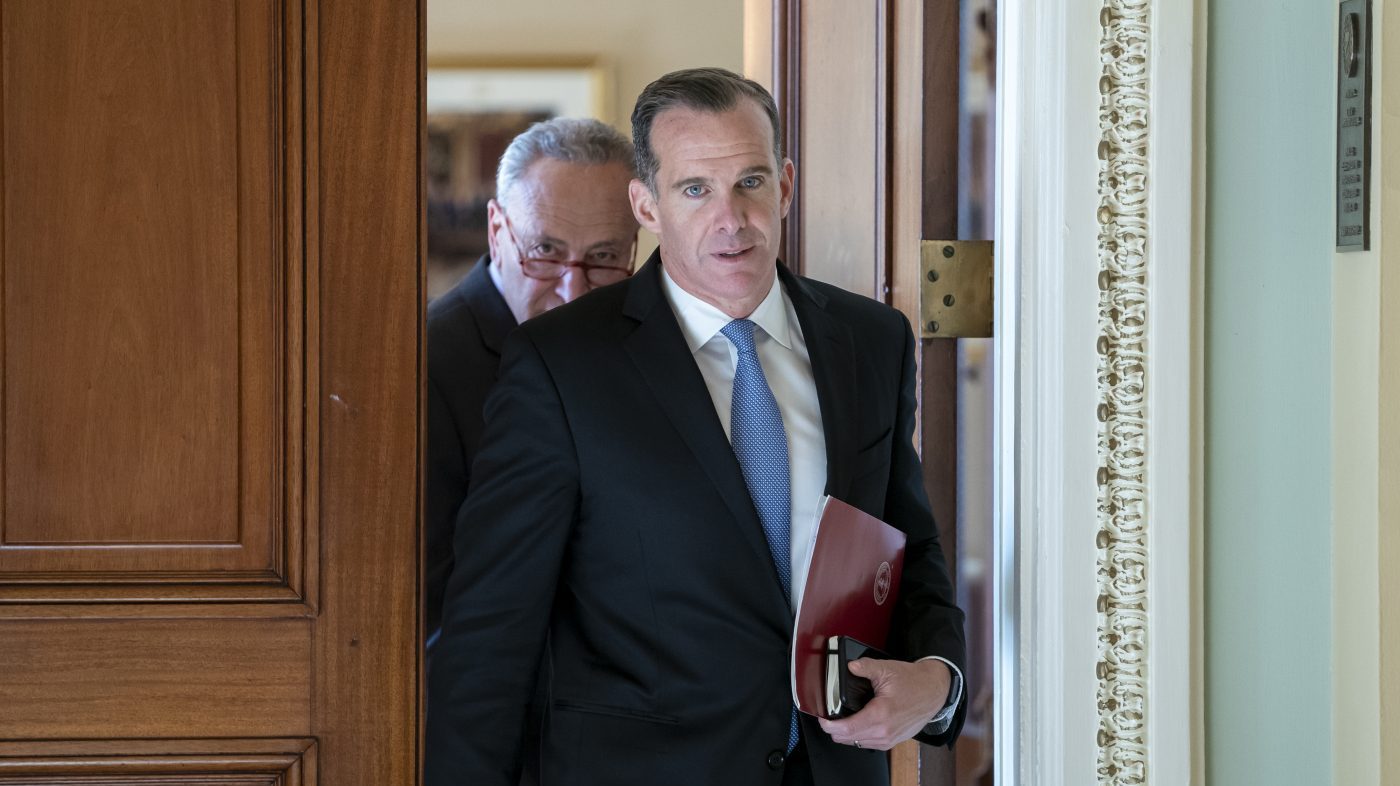
Brett McGurk, a senior national security official who served in the Trump administration, has publicly criticized President Trump's latest threats against Iran, arguing they will fail to achieve their stated goal of forcing Tehran to reopen the Strait of Hormuz. McGurk, who has also held positions under Presidents Biden, Obama, and Bush, characterized the strategy as a self-defeating escalation.
"This is an escalate to try to get a deal that's not going to get a deal," McGurk told CNN's Jake Tapper on "State of the Union." He suggested the administration lacks a clear objective, noting the president "is just kind of shifting objectives in terms of what exactly we're trying to achieve here."
Trump's Profane Ultimatum
The criticism follows a provocative social media post from Trump on Sunday, in which he issued a profanity-laced ultimatum ahead of a self-imposed Monday deadline. The president threatened to target Iranian civilian infrastructure, specifically naming power plants and bridges, if Tehran did not reopen the strategic waterway. The Strait of Hormuz has been effectively closed since U.S. and Israeli strikes on Iran in late February, contributing to a spike in global oil prices.
Trump's approach has drawn criticism from various quarters, including figures like Stephen A. Smith, who labeled the profane ultimatum a diplomatic liability. Despite the bellicose rhetoric, Trump told Fox News on Sunday that he believed a deal to reopen the strait could be reached by Monday, claiming talks were ongoing between Washington and Tehran.
Diplomatic Challenges and Strategic Stakes
McGurk, who has been a consistent critic of Trump's handling of the Iran conflict, highlighted the inherent difficulties of negotiating with Iran, especially under public threats. "With diplomacy, with Iran, a lot of it is secret back channel, because they publicly posture [and the way] we publicly posture makes it very hard to actually, I think, achieve what he's trying to achieve," he explained.
The former adviser emphasized the high strategic stakes, warning that a resolution which leaves Iran in control of the strait would be "a very bad outcome." The closure has frustrated U.S. allies, who have expressed concerns about Washington's preparedness to secure the vital shipping lane. In a recent national address, Trump stated the strait would reopen only when the broader conflict concludes, a position seemingly at odds with his latest deadline-driven demands.
The situation remains tense, with Iran having already dismissed the latest U.S. ceasefire plan as unrealistic. Military pressure continues alongside the diplomatic stalemate, as Israeli forces recently struck Iran's largest petrochemical facility just as Trump's deadline approached.
McGurk's assessment underscores a deepening rift between the current administration's tactics and the counsel of experienced national security professionals. His warning suggests that public threats targeting civilian infrastructure may harden Tehran's position rather than compel concessions, potentially prolonging a crisis with significant implications for global energy markets and regional stability. The coming days will test whether Trump's gamble on escalation can yield a diplomatic breakthrough that experts like McGurk deem unlikely.