President Trump's tariff strategy aims to revive traditional manufacturing, but private capital is flowing overwhelmingly into data centers — the physical backbone of the artificial intelligence economy. The United States now hosts nearly 40 percent of the world's 4,000-plus data centers, far outpacing China's 368, according to industry figures. But this digital gold rush is generating a growing political backlash at the local level.
In Virginia, home to the nation's largest concentration of data centers with 570 facilities, public sentiment has flipped. Three years ago, 69 percent of residents welcomed new data centers; today only 35 percent do, with 59 percent expressing discomfort. Prince William County recently scrapped plans for a 1,700-acre campus near the Manassas Civil War battlefield that would have housed dozens of facilities.

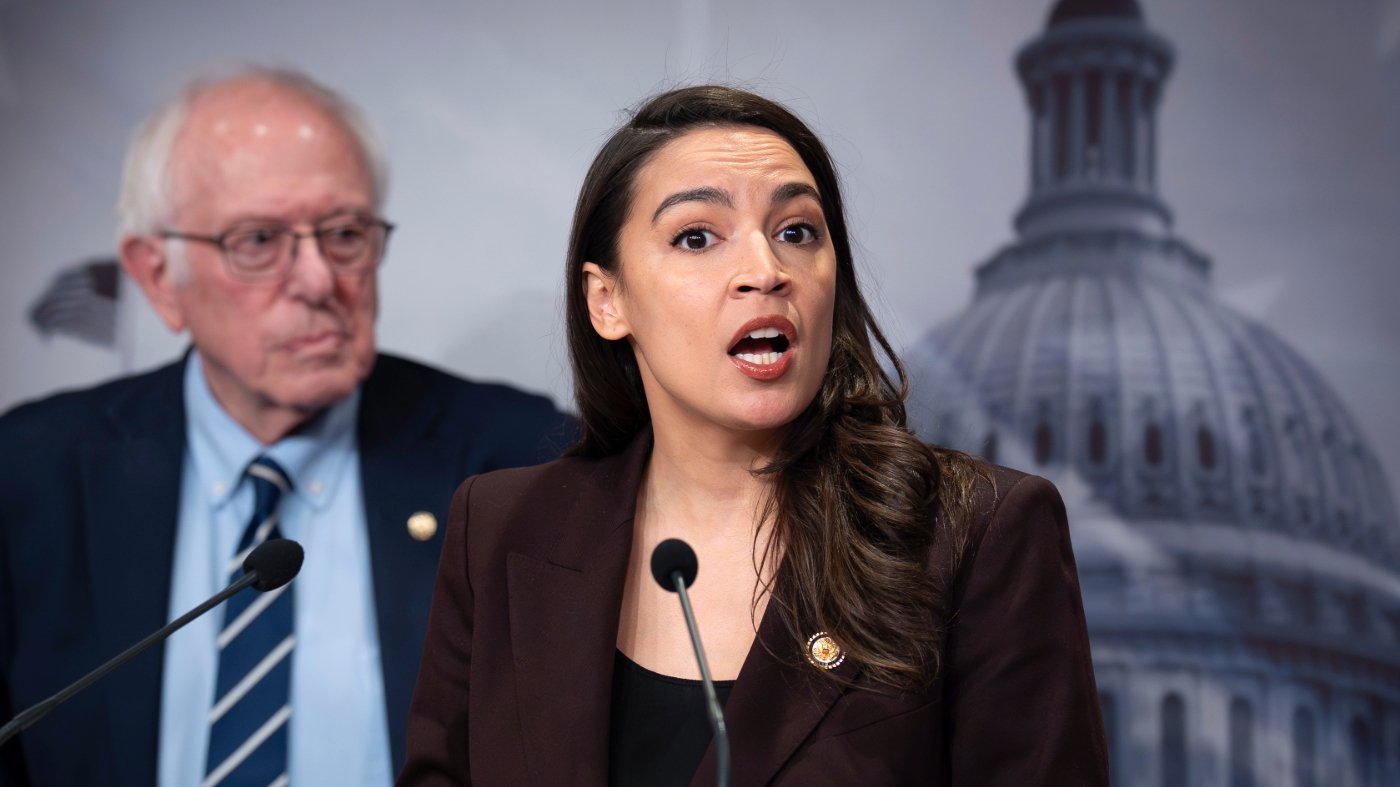
Maine became the first state to impose a pause on large data center construction pending a study of energy needs. On Capitol Hill, Senator Bernie Sanders (I-Vt.) and Representative Alexandria Ocasio-Cortez (D-N.Y.) have introduced legislation calling for a national moratorium. But centrist Democrats like Senator John Fetterman (D-Pa.) oppose such a halt, arguing, I refuse to hand the lead in AI to China.
The debate mirrors broader tensions over congressional gridlock on technology policy.
The backlash stems from three primary concerns. First, data centers consume enormous amounts of electricity, driving up utility costs for households already facing inflation. They also require significant water for cooling servers, sparking particular controversy in arid Western states. Second, while data centers create construction jobs and generate property tax revenue, they employ relatively few permanent workers — roughly 200 per facility on average — fueling anxiety about AI-related job displacement. Third, climate activists oppose new natural gas infrastructure to power these centers, and the populist left warns that AI will enrich tech oligarchs while devastating working-class employment.
On the political fringe, anti-AI extremism has turned violent. Federal authorities recently charged a suspect in the firebombing of OpenAI CEO Sam Altman's San Francisco home, following shots fired at the house of an Indiana city councilman who voted to approve a data center.
Rather than a simplistic yes-or-no debate, communities should negotiate better terms with tech investors. States can follow Virginia's lead by creating a separate rate class for large power consumers, ensuring hyperscalers pay for the new generation capacity they require. Local governments should end sales tax abatements used to lure data centers and instead demand transparency on resource needs, noise mitigation, and job creation. Corporate citizenship
compacts could include earn-and-learn partnerships with schools and businesses to train workers in AI skills.
Center-left leaders should reject apocalyptic narratives about AI while affirming America's competitive interest in leading technological innovation. They should also challenge climate activists to accept that meeting energy demands will require a mix of natural gas, nuclear power, and renewables — a point underscored by global shifts toward energy security. The model of the Clinton-Gore administration, which nurtured the internet's commercial birth in the 1990s, offers a template for turning disruptive change into broad-based opportunity.
The stakes are high. Hyperscalers — Amazon, Microsoft, Google, Meta, Oracle, and OpenAI — poured $425 billion into data centers last year, a figure expected to exceed $600 billion in 2025. This investment has propelled stock markets and cemented American leadership in the AI race. But without a smarter policy framework, local resistance could slow the very infrastructure that underpins the next economic era.