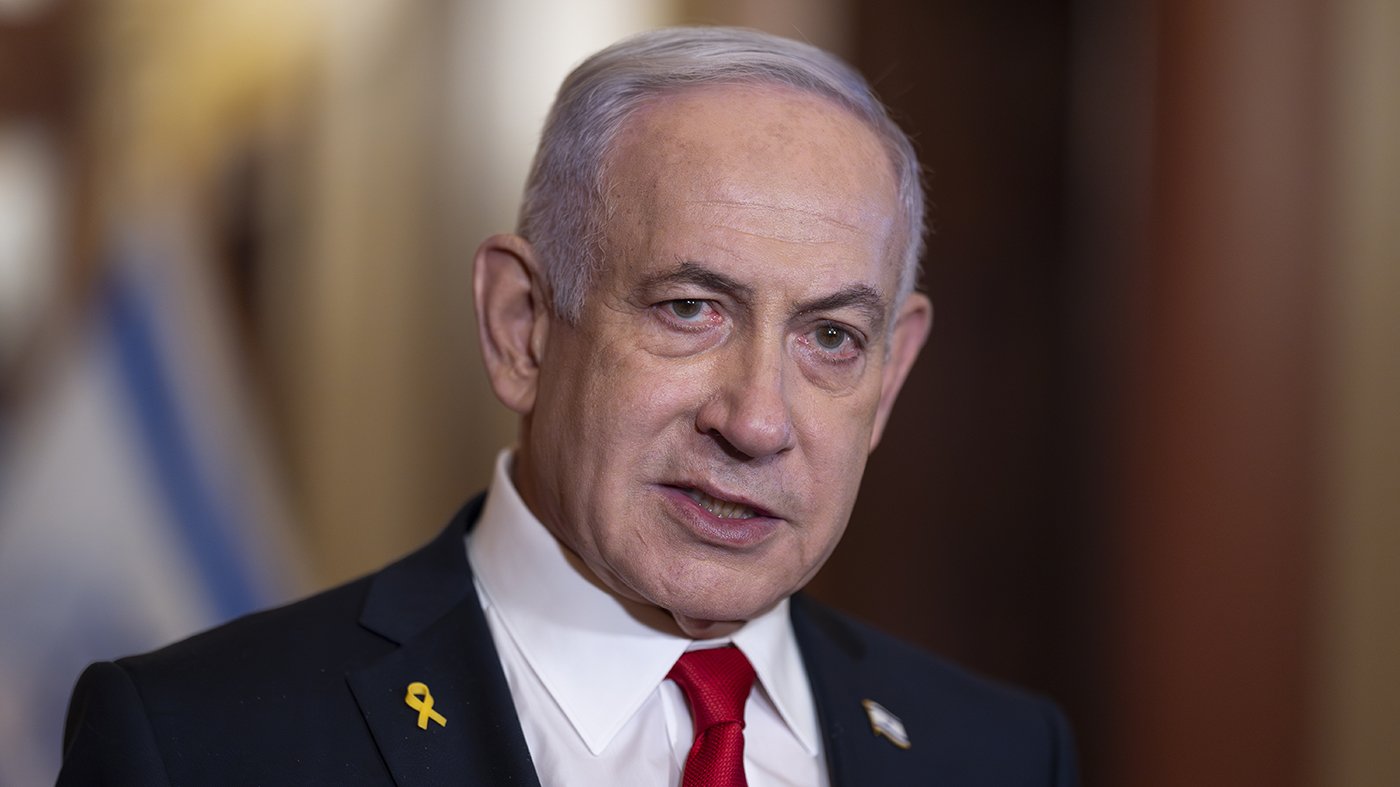
Israeli Prime Minister Benjamin Netanyahu disclosed on Friday that he underwent treatment for prostate cancer, acknowledging he delayed making the diagnosis public during the peak of joint U.S.-Israeli military operations against Iran earlier this year.
In a post on X, Netanyahu said doctors identified a malignant tumor at a “very early stage” that had not spread “whatsoever.” He opted for “targeted treatment,” which he described as requiring only a few short follow-up sessions.
“Today, my annual medical report was published. I requested to delay its publication by two months so that it would not be released at the height of the war, in order not to allow the Iranian terror regime to spread even more false propaganda against Israel,” Netanyahu wrote.
The prime minister noted the follow-up monitoring came roughly a year and a half after a “successful surgery” for an enlarged benign prostate. Doctors discovered a spot less than a centimeter during routine checkups.
Netanyahu used the announcement to highlight the prevalence of prostate cancer among men his age. “The doctors told me that this is very common among men my age, and that there are two options — monitor closely or undergo treatment and remove the problem,” he said. “You already know me. When I’m given information in time about a potential danger, I want to address it immediately. This is true on the national level and also on the personal level.”
The disclosure comes as Netanyahu faces mounting political pressure. Democratic senators have signaled a foreign policy shift with growing opposition to Israeli arms sales, and Israelis are set to go to the polls in October. According to an April 11 survey by Hebrew University, only 10 percent of Israelis viewed the war against Iran as successful, while Netanyahu’s approval rating dropped to 34 percent from 40 percent at the war’s start in late February.
Netanyahu’s decision to delay the announcement underscores the delicate balancing act between personal health and national security. The timing of the revelation also coincides with Trump’s announcement of a 10-day Israel-Lebanon ceasefire, claiming a personal mediation role that adds another layer to the region’s volatile politics.
Health experts note that prostate cancer is highly treatable when caught early, and Netanyahu’s case appears to fit that profile. Yet the political fallout from his delayed disclosure — and the broader context of a war with Iran — could further erode public trust as election season approaches.