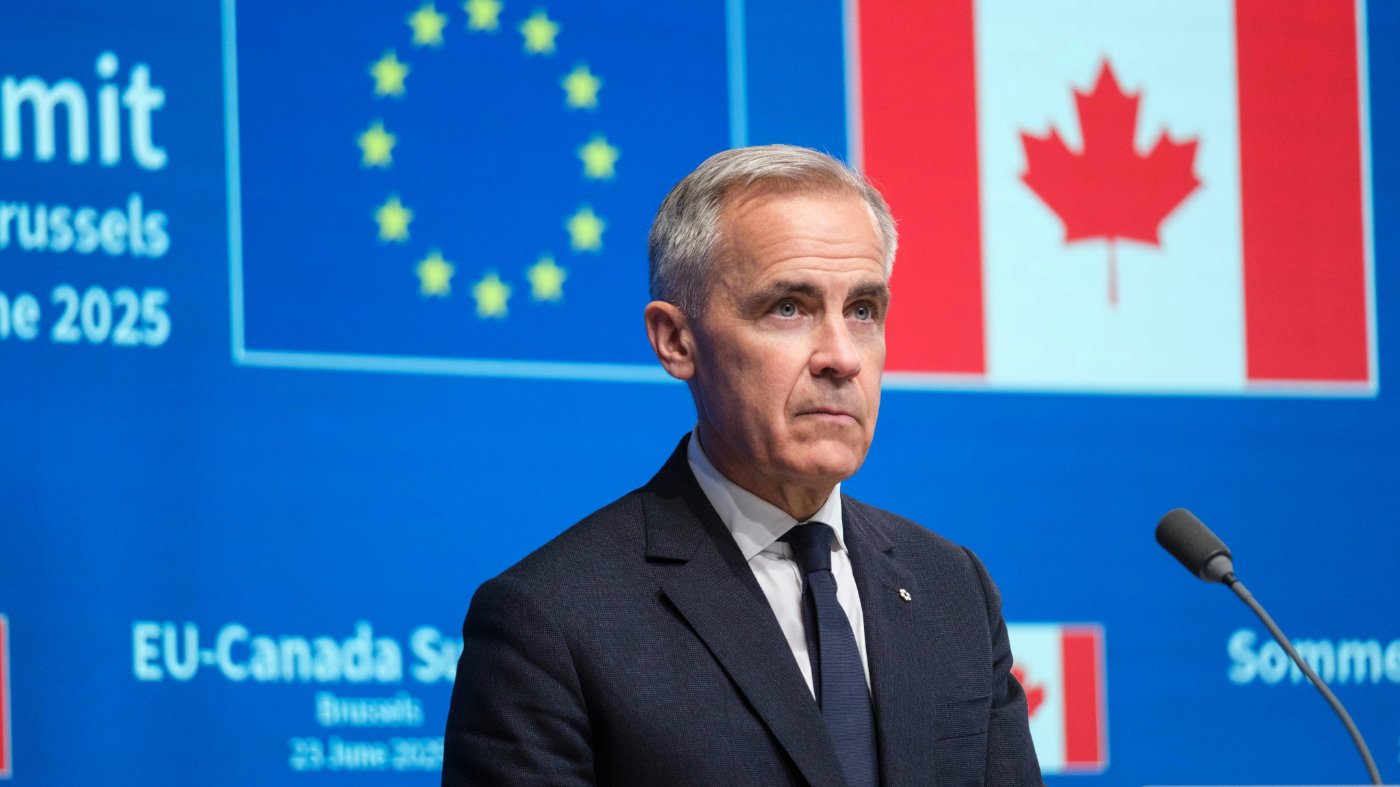
For the first time, a majority of Canadians—over half—say they support joining the European Union. This isn’t a casual opinion poll; it’s a serious policy proposal that has largely flown under Washington’s radar. That’s a dangerous oversight.
On the surface, Canada’s bid for EU membership is legally far-fetched. EU treaties limit membership to European nations, and Canada is not one. Unanimous approval from 27 member states, each with its own political hurdles, would take decades. So it’s tempting to dismiss this as a hypothetical with no real legs. But that misses the point.

The debate isn’t really about EU accession—it’s about Canada’s strategic drift away from the United States. And that’s a problem for Washington, whether or not Canada ever formally applies.
Economic Implications
Start with economics. The U.S.-Canada trade relationship is the world’s largest, with deeply integrated supply chains that rely on a shared regulatory environment. EU membership would require Canada to adopt the entire body of European law, pulling its regulations toward Brussels. Over time, even marginal divergence would disrupt industries like auto manufacturing, energy, and agriculture that currently operate seamlessly across the border.
Proponents argue EU membership offers better market access, but Canada already has that through the Comprehensive Economic and Trade Agreement (CETA), which eliminated most tariffs years ago. The real driver isn’t trade—it’s political sentiment. Canadians want to signal they have options beyond a difficult neighbor. That’s understandable as a mood, but it’s not a coherent strategy. It’s an argument for institutional realignment dressed up as an economic conversation.
Defense Concerns
The defense angle is harder to dismiss. NORAD isn’t just a treaty; it’s a fused operational structure built on 60 years of shared doctrine and trust. Canada’s Arctic border is effectively America’s Arctic border. If Ottawa starts filtering its strategic calculus through Brussels, that trust erodes. Canada has already signed a formal defense cooperation agreement with the EU under the Permanent Structured Cooperation (PESCO) framework, which aims for European strategic autonomy from the U.S. What begins as partnership could lead to convergence, leaving Washington with a Canada that hedges between continental and transatlantic commitments.
This drift comes at a time when Canada is already falling behind on its core obligations. NATO burden-sharing has accelerated, but Canada only recently reached the two-percent defense spending benchmark, and capability gaps remain. NORAD modernization has suffered years of underfunding and delays, even as threats grow. The submarine replacement program, critical for Arctic and North Atlantic coverage, is still unresolved.
An ally stretched thin on continental defense doesn’t serve its interests by taking on a second institutional master. Engagement with the EU doesn’t plug those holes—it drains the political will needed to fix them.
Washington shouldn’t wait for accession talks to begin before engaging. By then, the underlying drift will be well advanced. The signal itself is the problem. The U.S. doesn’t need a transatlantic Canada; it needs the one next door.