Even as the United States and Iran engage in their own volatile confrontation, a secondary conflict is unfolding in the Middle East: a proxy war between Russia and Ukraine. Moscow is retaliating for Tehran’s drone support by supplying Iran with Russian-made replicas of the same unmanned systems used against Ukrainian forces, while Kyiv is deepening its military ties with Arab Gulf states under Iranian missile and drone threat.
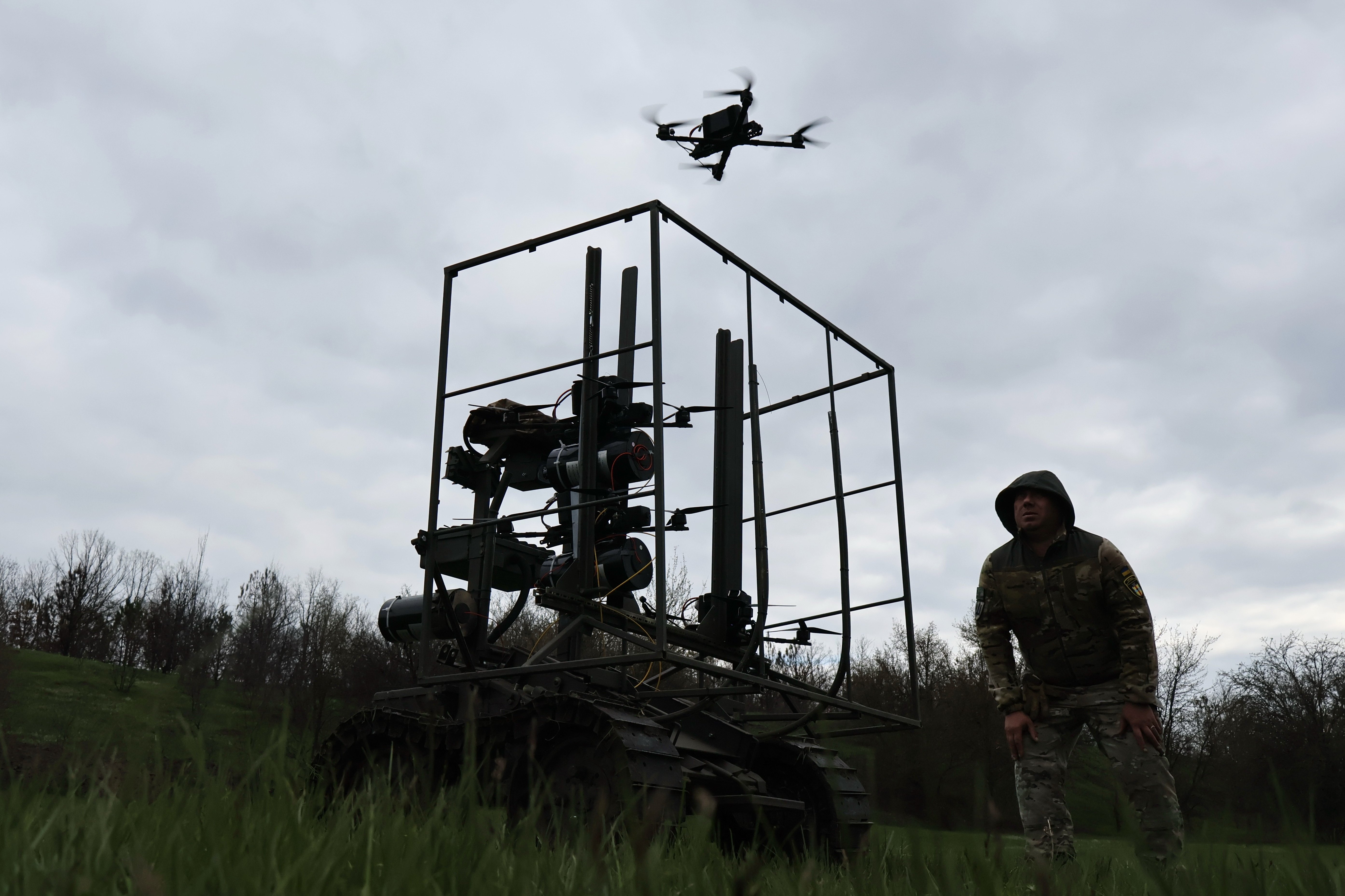
According to Ukrainian officials, Russia has provided Iran with copycat versions of the Shahed-16 drones, along with components for over 1,300 additional units. Tehran has also received intelligence from Moscow, including targeting data for strikes against U.S. vessels and aircraft, as well as humanitarian aid. This arrangement mirrors the earlier flow of Iranian drones to Russia, which bolstered Moscow's strike capabilities in Ukraine.
In response, Ukraine has dispatched roughly 200 military advisors to Saudi Arabia, Qatar, and the United Arab Emirates to help these nations defend against missile and drone attacks. Kyiv is leveraging its battlefield experience to develop low-cost drone interceptors that it can produce at a rate of at least 2,000 per day with sufficient funding—a capability that has already reduced the damage from Russian drone strikes on Ukrainian soil.
In late March, President Volodymyr Zelensky announced ten-year defense agreements with Saudi Arabia, the United Arab Emirates, and Qatar. Under these deals, Ukraine will supply each nation with a complete air defense system, including interceptors, software, electronic warfare tools, and co-production facilities. “We are taking a systemic approach to this,” Zelensky said, highlighting provisions for joint manufacturing lines and multi-year financing.
Ukraine’s innovations extend to maritime operations. A drone launched from an unmanned surface vessel successfully downed a Shahed drone—a first in naval military history. This achievement underscores the technological edge Kyiv is bringing to its Gulf partners. The so-called “drone deal” framework comprises ten separate arrangements that include annual funding commitments for fixed volumes over set periods.
Kyiv has also responded swiftly to a U.S. request for help defending American bases in Jordan against drone attacks. Zelensky noted that a Ukrainian team was dispatched the day after Washington made the request. “We reacted immediately,” he said, reflecting the growing operational cooperation between the two allies.
On the battlefield in Ukraine, the situation remains a stalemate. Ukrainian forces claim to have recaptured about 400 square kilometers in recent months, including most of the Dnipropetrovsk region and gains in Zaporizhzhia, complicating Russia’s spring offensive plans. Moscow, however, asserts far larger advances. Russia’s Chief of General Staff Valery Gerasimov claimed his forces seized over 1,700 square kilometers and all of Luhansk Oblast since January. But the Institute for the Study of War estimates actual Russian gains at less than half that figure, with only 60 square kilometers since March 1.
The reality is that neither side is achieving decisive breakthroughs. Ukrainian advances are not a full rollback of Russian forces, and Russian gains fall far short of Kremlin ambitions. This is why continued U.S. support is vital. Although Ukraine now produces over half its own armaments, it still relies on Western supplies, particularly air defense systems. European industrial capacity remains constrained, making American production essential.
As Washington diverts resources to the Middle East, the Pentagon has deployed three carrier strike groups to the region in a show of force against Iran, a move that underscores competing priorities. Yet Kyiv’s immediate response to defend U.S. troops in Jordan demonstrates the two-way nature of this alliance. The U.S. must reciprocate with sustained arms deliveries, serving as the arsenal of democracy that Ukraine needs to hold the line.