When Rudina Hajdari was a child in Albania, her father was killed for helping dismantle one of Europe's most brutal communist regimes. He believed that building democratic institutions would protect those who built them. He was right about the dream, she says, but wrong about its durability.
Hajdari, now acting program director at the Institute for Global Affairs, came to the United States carrying his sacrifice and a question that has shaped her life: What does democracy actually deliver, and under what conditions does it fail? Her answer, informed by experience in the Albanian Parliament and the U.S. House Foreign Affairs Committee, is that democracy is not failing because its ideals are wrong—it is faltering because its implementation has been too rigid and detached from the societies it is meant to serve.

For decades, democracy promotion has followed a single script: write constitutions, hold elections, build institutions. The assumption was that what worked in one context could be transferred to another. That assumption was flawed from the start, Hajdari argues. The traditional playbook consistently misses the hardest variables: political culture, historical grievance, informal power structures, ethnic tensions, and collective memory.
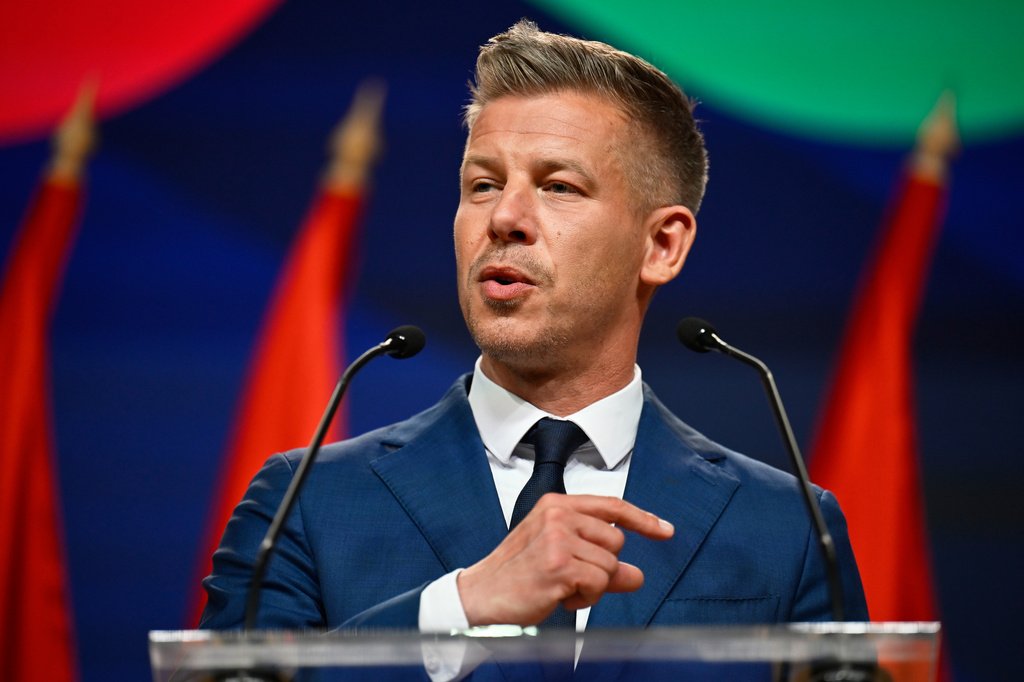
Hungary's recent election illustrates the point. Peter Magyar is not the kind of democrat the traditional playbook instinctively champions—a conservative, nationally rooted figure advancing democratic renewal in recognizably Hungarian terms. But that is precisely the lesson: democracy endures when it is rebuilt through the language, memory, and political realities of the societies it serves.
These types of local knowledge and culture are not secondary details; they are the terrain democracy must operate on. When ignored, institutions become fragile or performative. As Swedish analysts have warned, even the U.S. is no longer considered a liberal democracy under current pressures, underscoring the global scope of the challenge.
The answer, Hajdari insists, is not to repeat the old model more loudly but to rethink who defines solutions. The most useful knowledge is not abstract; it is lived. The most valuable support for a leader under strain is another leader who has faced something similar and found a way through. When an official in Romania defends electoral systems from foreign interference, the most relevant insight comes from someone who has done it. When a reformer in Egypt navigates restricted information environments, the most useful guidance comes from someone who has survived the same constraints.
This is what Hajdari's organization is trying to build: structured peer exchange grounded in lived political experience. Not a framework or a communiqué, but a network of trust between people who understand the pressures of governance and can share what actually works. This kind of infrastructure is slower to build and harder to measure, but far more resilient.
Hajdari grew up between two worlds: the one her father died trying to create, and the one his sacrifice helped make possible. Her generation has lived through enough crises to know that democracy is neither inevitable nor self-sustaining. What we owe the next generation is not rhetoric about its strength, but the work required to make it stronger. Even something small, placed carefully and built patiently, can carry more weight than expected—and right now, that is exactly what democracy needs.