The Republican Party traces its origins to 1854, born from a fierce opposition to slavery's expansion. Its early platform condemned the African slave trade as a "crime against humanity" and labeled efforts to extend slavery westward a "dangerous political heresy." Historian Fergus M. Bordewich notes that opposition to slavery was the party's soul, with Republicans viewing it as morally repugnant and economically backward.
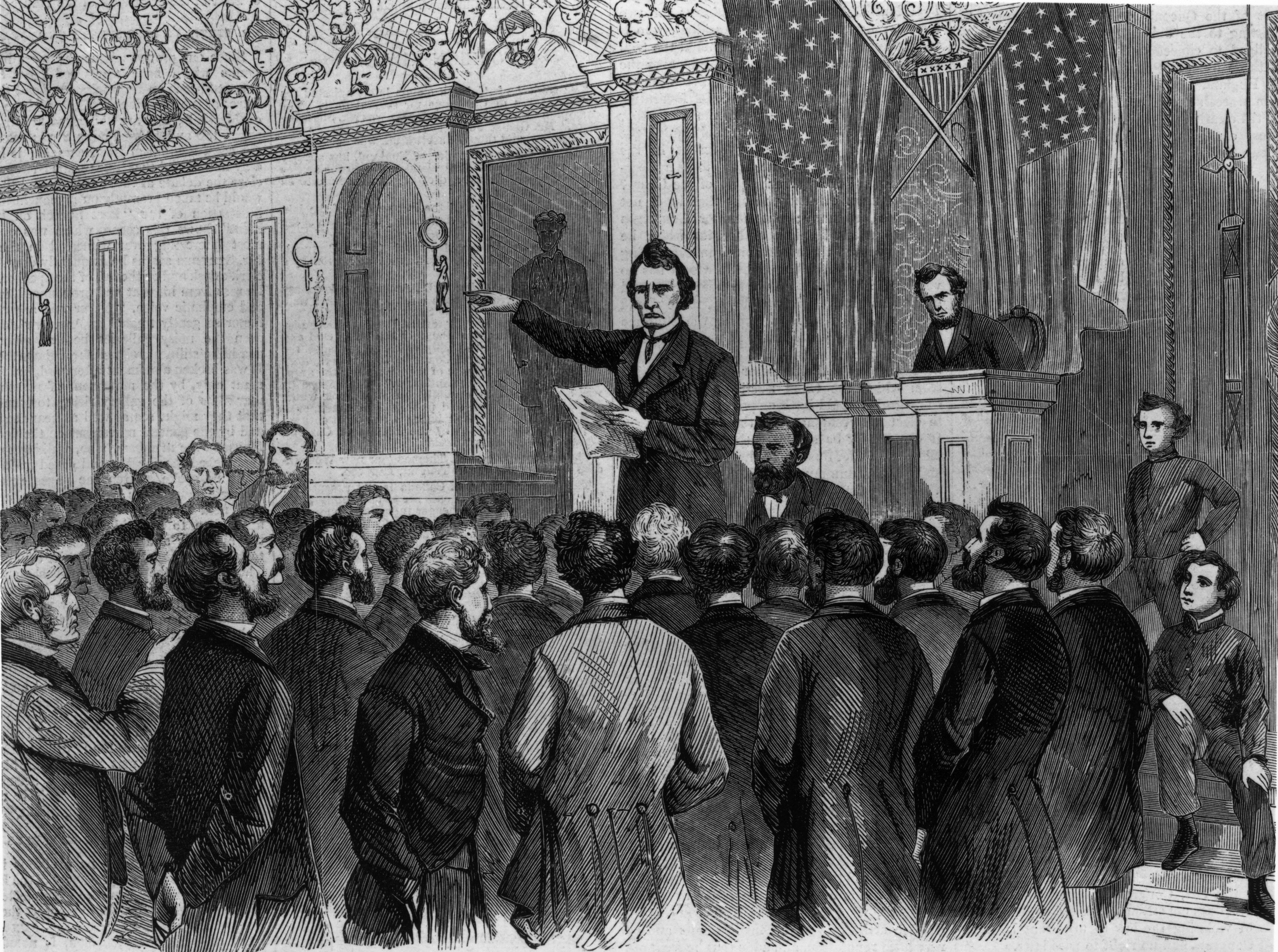
Among the party's most influential founders was U.S. Congressman Thaddeus Stevens of Pennsylvania. Bordewich describes Stevens as one of the most effective political abolitionists in the country, someone who viscerally loathed slavery, harbored no color prejudice, and tirelessly argued for racial equality. Stevens even refused to be buried in a racially segregated cemetery.

During the Civil War, Stevens pushed aggressively for prosecution of the conflict. Afterward, he became a leading voice for radical Southern Reconstruction. Now, his legacy is being honored with the opening of the Thaddeus Stevens and Lydia Hamilton Smith Center for History and Democracy in Lancaster, Pennsylvania, on May 1. The center, located in Stevens's home and law office, features 25,000 square feet of modern exhibition galleries. Lydia Hamilton Smith was Stevens's mixed-race housekeeper and collaborator.
Robin Sarratt, president and CEO of LancasterHistory, notes that Lancaster County was on the front line of the antislavery fight in the 1850s. Stevens, from his Lancaster home, became a powerful voice for freedom and equality. Sarratt argues more Americans should understand how Stevens's legacy impacts their lives today.
Stevens engineered passage of the 13th Amendment, which abolished slavery, and supported the 14th Amendment in the House, but died before the 15th Amendment passed. President Ulysses S. Grant used federal power to protect the political rights Black Southerners gained through these amendments. However, the 1876 contested presidential election marked a turning point. The Republican Party, by then controlled by Gilded Age plutocrats, participated in a great betrayal.
Bordewich explains that by 1876, the idealistic Republican Party of Abraham Lincoln had become the party of big money and power. Republican leaders ended federal military Reconstruction, giving racist "Redeemer" Democrats free rein to reassert control, often through terror. President Rutherford B. Hayes, like Grant, accepted that using the military to protect Black Southerners was no longer politically viable. Hayes wrote that "too much politics, too little attention to business" was the South's bane.
Despite this betrayal, most Black Southerners remained loyal Republicans, partly due to patronage when the party held the White House. But the 1932 election saw Black voters begin shifting to Democrat Franklin D. Roosevelt, a trend that accelerated after the 1964 Civil Rights Act and 1965 Voting Rights Act. In response, strategist Lee Atwater helped develop the Southern Strategy, using code words like "forced busing" and "states' rights" to appeal to white, conservative Southern Democrats leaving the party over integration. Atwater later admitted the strategy was a coded appeal to racism.
The strategy worked incrementally. In 1964, Barry Goldwater, who opposed civil rights legislation, carried five Southern states despite a landslide defeat. The new Republican Party emerged as a mirror image of the old Democratic Party—the "white man's party." This shift starkly contrasts with the legacy of Thaddeus Stevens, a founder who championed racial equality. The new center in Lancaster aims to remind Americans of that foundational commitment.