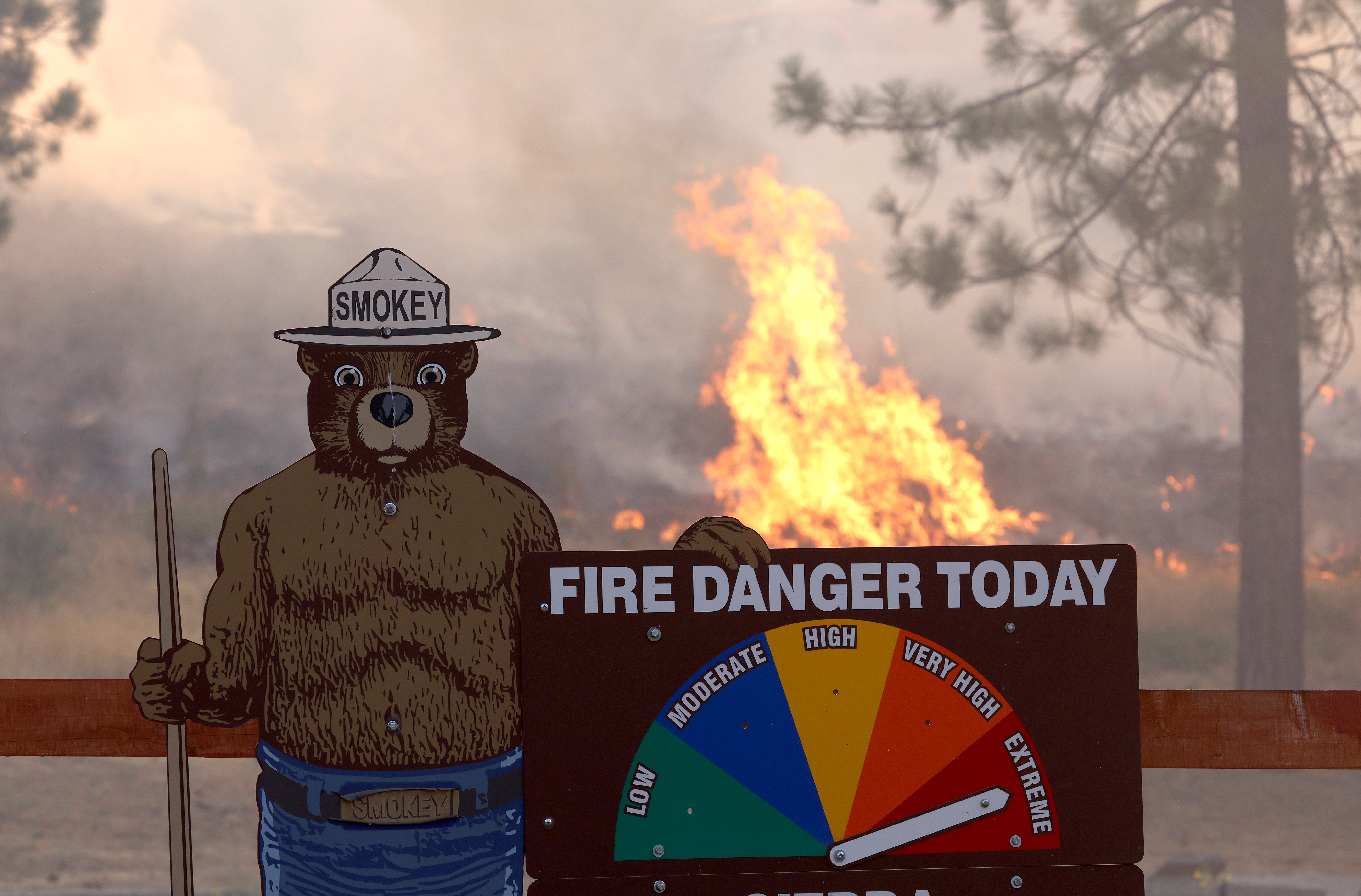
Nearly a year after ash and smoke darkened Los Angeles skies, destroying homes and claiming 31 lives in the Eaton and Palisades fires, families are still struggling to recover. The crisis, however, is not confined to California. Across the American West, fire seasons are growing longer and more intense. In 2025, Utah saw its highest fire activity since 2020, with nearly 165,000 acres burned—more than the previous three fire seasons combined.
Despite repeated promises to learn from these disasters, wildfire prevention and suppression policy remains stuck in 20th-century thinking, according to Sens. Alex Padilla (D-CA) and John Curtis (R-UT). In a joint op-ed, they argue that the threat of megafires demands an urgent, year-round response—not a seasonal one.

Megafires Fuel a Vicious Cycle
The senators highlight a dangerous feedback loop: wildfires produce massive greenhouse gas emissions—California’s 2020 fires alone offset 20 years of the state’s emission reductions—which in turn worsen heat and drought, creating conditions for even larger fires. This is not just an environmental issue; it is an economic one. Utah’s 1,161 wildfires last year cost an estimated $192 million to suppress, paid by federal, state, and local taxpayers. Rising insurance premiums and housing costs are further squeezing Americans in high-risk areas.
As Trump threatens to probe insurers over wildfire claims, the senators note that the status quo is fiscally unsustainable. They point to the Fix Our Forests Act, a bipartisan bill recently passed by the Senate Agriculture Committee, as a solution.
Three Pillars of the Fix Our Forests Act
The bill focuses on three key areas. First, it cuts red tape for active forest management, streamlining permits for selective thinning and prescribed burns. Research shows that when wildfires reach treated areas, burn severity drops by up to 72% in western conifer forests. Second, it establishes a Wildfire Intelligence Center to provide real-time data and decision support to first responders across all levels of government. Third, it creates a centralized program to help homeowners retrofit with fire-resistant materials and simplify grant applications.
“Some critics argue this bill goes too far. Others claim it doesn’t go far enough,” Padilla and Curtis write. “What’s clear is that the cost of inaction is far greater than the cost of compromise.”
The bill now awaits a vote on the Senate floor. With broad bipartisan support, the senators argue that the science and technology are ready—only political will remains.
Meanwhile, Bass secured Trump’s commitment on FEMA aid for LA wildfire recovery, but Padilla and Curtis insist that prevention must be the priority. “We cannot afford to wait for another anniversary to realize we should have acted today,” they conclude.