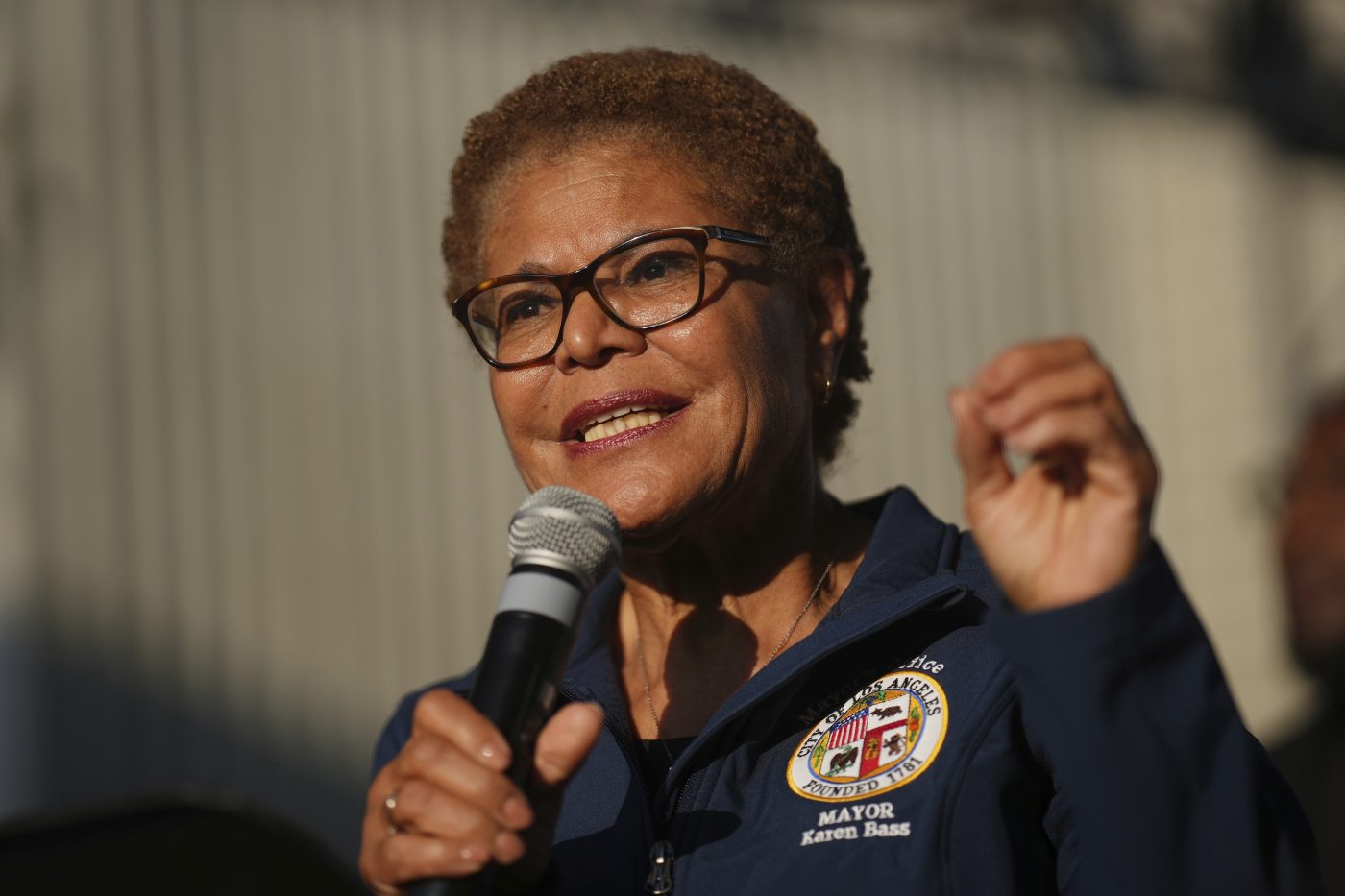
Los Angeles Mayor Karen Bass, a Democrat, reported a constructive meeting with President Donald Trump on Wednesday, centered on securing federal disaster assistance for communities still rebuilding from last year's devastating Palisades and Eaton wildfires. The discussion at the Oval Office focused on accelerating Federal Emergency Management Agency funding and coordinating pressure on insurance companies to settle claims.
Bass was joined by Los Angeles County Supervisor Kathryn Barger, whose district was heavily damaged by the Eaton fire. Also present were White House Chief of Staff Susie Wiles and Office of Management and Budget Director Russell Vought. In a joint statement, Bass and Barger said they advocated for "families who lost everything" during the session.
"We had a very positive discussion about FEMA and other rebuilding funds as well as the support of the President to continue joining us in pressuring the insurance companies to pay what they owe – and for the big banks to step up to ease the financial pressure on L.A. families," the officials stated. They emphasized that federal partnership is essential for the recovery and expressed gratitude for the president's engagement.
Broader Political Context of Disaster Funding
The meeting occurs against a backdrop of ongoing tension between California's Democratic leadership and the Trump administration over disaster response and climate policy. Governor Gavin Newsom and other state Democrats have repeatedly called for the release of approximately $33.9 billion in FEMA funds to rebuild schools, homes, and critical infrastructure destroyed in the blazes.
FEMA announced $3 billion in assistance for affected homeowners and businesses in June 2025, five months after the fires caused widespread destruction. However, state officials argue this amount is insufficient. Newsom recently urged the Department of Homeland Security to redirect $220 million from a controversial ad campaign featuring former Homeland Security Secretary Kristi Noem toward recovery efforts. This push came after congressional clashes over executive authority highlighted broader disputes about administration priorities.
Trump and congressional Republicans have frequently blamed California's state leadership and its environmental policies for exacerbating the wildfire crisis. The president has also taken aim at major insurance providers. Earlier this month, on his Truth Social platform, Trump criticized companies like State Farm for being "absolutely horrible to people" who paid premiums for years only to face resistance when filing claims.
Insurance Industry Response and Ongoing Challenges
State Farm, in response to previous inquiries, directed attention to a webpage detailing its wildfire response. The company reported paying more than $5.7 billion across approximately 13,700 claims related to the fires, with total potential payments estimated to reach $7 billion. Despite these figures, many policyholders and public officials contend the claims process has been slow and contentious.
The political dynamics of disaster recovery intersect with other administration controversies. For instance, public concern over environmental policy remains high as the administration continues to emphasize fossil fuel development. Meanwhile, the White House faces scrutiny over other spending decisions, such as potential federal bailouts for private corporations, which critics contrast with perceived delays in disaster aid.
Bass's direct engagement with Trump represents a pragmatic approach by a local Democratic leader navigating a divided federal landscape to secure essential resources. The outcome of this discussion will be closely watched as a test of whether political friction can be set aside for disaster recovery, or if it will become another flashpoint in the ongoing conflict between the White House and blue-state governors.