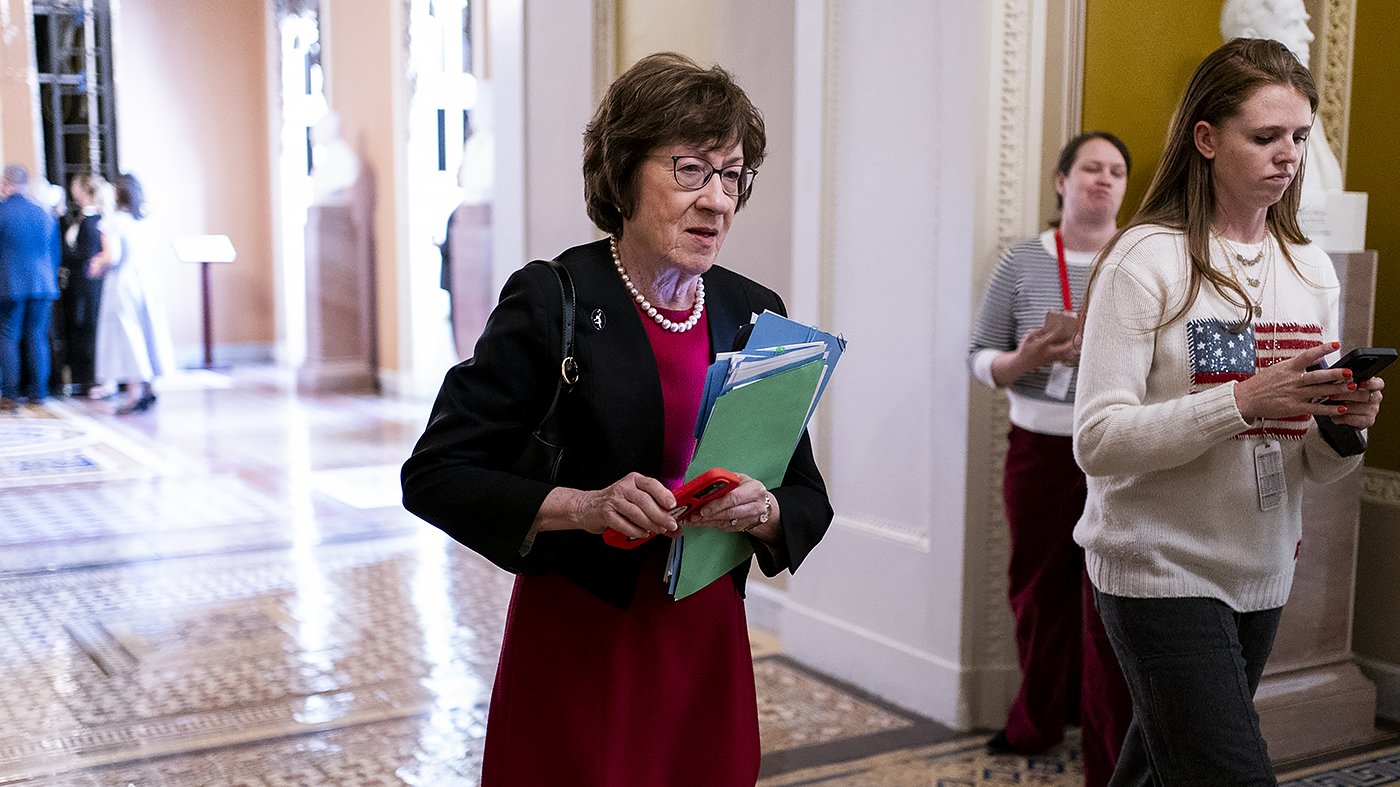
Two Republican senators facing competitive re-election battles broke with their party's leadership on Wednesday, siding with Democrats on a failed attempt to restore funding to the nation's primary food assistance program. Sens. Susan Collins of Maine and Dan Sullivan of Alaska voted in favor of an amendment that sought to reverse an estimated $187 billion in cuts to the Supplemental Nutrition Assistance Program (SNAP) enacted by last year's major budget legislation.
Amendment Falls Short Despite Bipartisan Support
The amendment, sponsored by Sen. Ben Ray Luján (D-N.M.), proposed creating a budgetary reserve fund aimed at lowering grocery costs and undoing the SNAP reductions. It failed on a nearly party-line vote of 47-50, falling short of the 60 votes needed to overcome procedural hurdles. Luján's motion to waive budget rules was formally objected to by Senate Agriculture Committee Chairman John Boozman (R-Ark.), who raised a point of order against the measure.

In floor remarks before the vote, Luján sharply criticized his Republican colleagues for the prior cuts. "Instead of working to address the affordability crisis and help Americans across the country struggling to afford their bills, what have Republicans done? Cut $187 billion from the best tool America has to address hunger," he stated. The amendment, even if adopted, would have been a symbolic adjustment to the Senate's non-binding budget resolution rather than possessing the force of law.
Political Calculus for Vulnerable Republicans
The votes from Collins and Sullivan represent a notable departure from unified GOP opposition. Both senators are considered politically vulnerable in their upcoming re-election campaigns, suggesting their support for the amendment may reflect constituent pressure over food security issues. Their defections mirror other instances where lawmakers have reversed course on politically sensitive policies.
The broader legislative context involves a high-stakes partisan standoff over government funding. Senate Republicans are advancing a budget resolution to establish the procedural framework for a future reconciliation package. This maneuver is designed to fund Immigration and Customs Enforcement (ICE) and Border Patrol operations through 2029, circumventing the need for Democratic support in the narrowly divided Senate.
Broader Budget and Border Impasse
Democrats have blocked direct appropriations for ICE and Border Patrol through the standard annual spending process, leading Republicans to pursue the reconciliation path—a tactic that allows certain budget-related measures to pass with a simple majority. This procedural gambit sets the stage for a major political clash over immigration enforcement funding later this year.
The failed SNAP amendment highlights the deepening partisan divisions over social safety net spending and fiscal priorities. While the Democratic effort to spotlight the food assistance cuts was unsuccessful, it forced a recorded vote that exposed fissures within Republican ranks, similar to internal GOP tensions seen in debates over issues like redistricting strategies that could affect party control.
The outcome underscores the challenging legislative environment where symbolic amendments serve as political messaging tools rather than viable policy vehicles. With Congress increasingly resorting to reconciliation to bypass opposition, substantive changes to programs like SNAP appear unlikely in the current session, barring a significant shift in the political landscape.
As the budget process moves forward, attention will shift to whether other moderate Republicans feel pressure to break ranks on social spending issues, and whether Democratic leadership can leverage these divisions in future negotiations. The episode also reflects the ongoing tension between fiscal austerity goals and the political realities of supporting popular assistance programs, a dynamic that will likely intensify as the election season approaches.