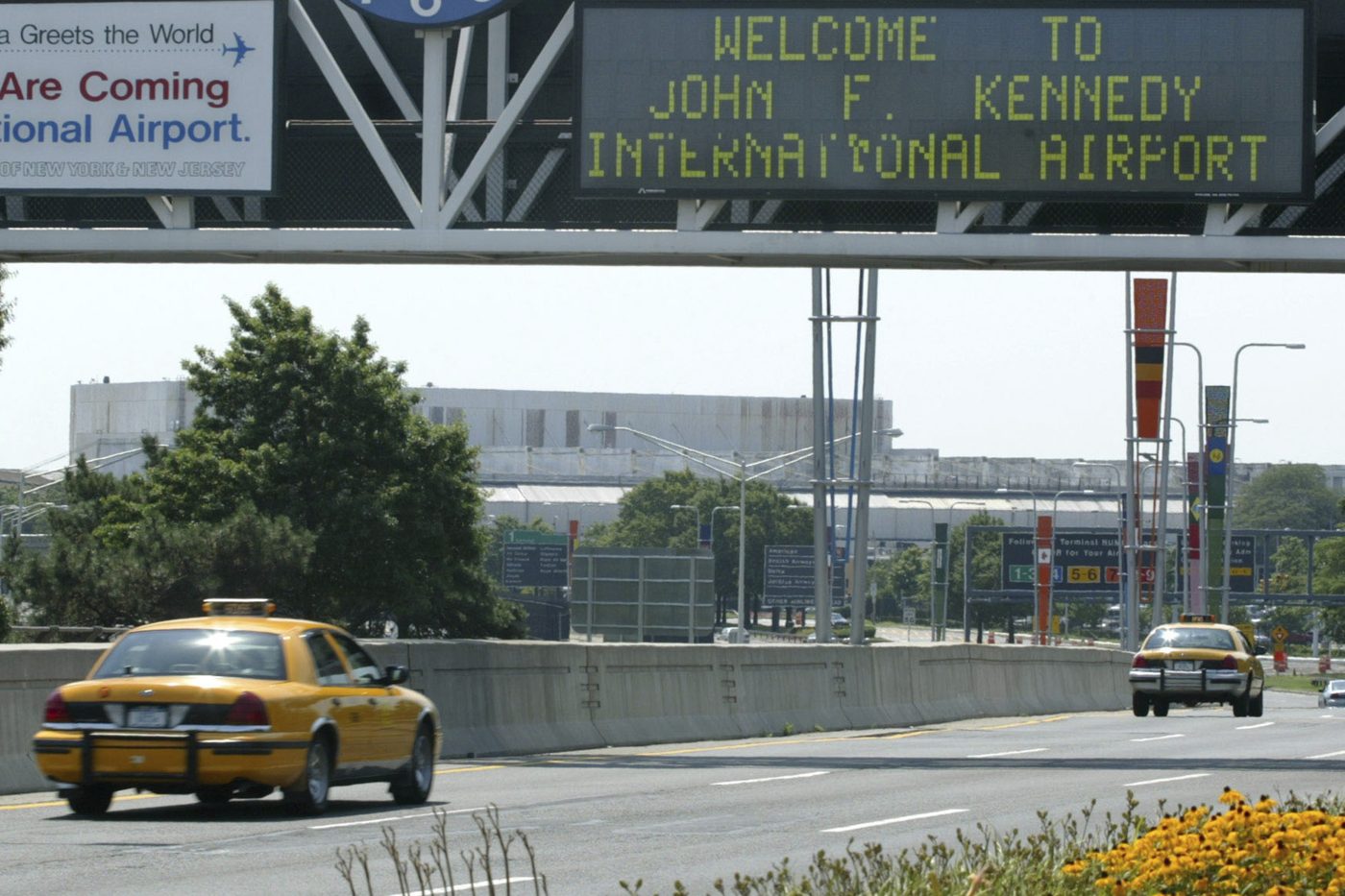
The Federal Aviation Administration has opened a formal investigation into a serious runway incursion at New York's John F. Kennedy International Airport, where two commercial aircraft came dangerously close to colliding on Monday afternoon. The incident adds to a growing list of aviation safety concerns under scrutiny by federal regulators.
According to an agency statement, Republic Airways Flight 4464 was forced to execute a go-around maneuver during its final approach after it strayed from its designated flight path. The aircraft flew too close to Jazz Aviation Flight 554, which was simultaneously preparing to land on a parallel runway. The event occurred at approximately 2:35 p.m. local time on April 20.
Pattern of Safety Concerns
This investigation marks at least the second major FAA probe into an airspace safety breach in recent weeks. Just last month, the agency announced it was examining an incident in California where a Sikorsky Black Hawk helicopter crossed directly in front of United Airlines Flight 589 as it approached John Wayne Airport in Santa Ana.
The shadow of a far more tragic event looms over these inquiries. In January of last year, a catastrophic mid-air collision between an American Airlines passenger jet and a Black Hawk helicopter near Reagan Washington National Airport resulted in 67 fatalities. That disaster, along with subsequent incidents, has ignited a sustained national debate about the adequacy of current aviation safety measures and regulatory oversight.
Regulatory Response and Policy Shifts
In response to mounting pressure, the FAA has implemented stricter protocols for managing air traffic, particularly concerning helicopter operations. Last month, FAA Administrator Bryan Bedford and Transportation Secretary Sean Duffy jointly announced that the administration was eliminating the practice of visual separation between airplanes and helicopters in controlled airspace. The new mandate requires air traffic controllers to use radar surveillance to actively maintain specific lateral or vertical distances between these aircraft.
This policy shift represents a significant operational change and highlights the federal government's reactive posture to safety lapses. It echoes other areas where federal agencies have recently reversed or tightened regulations, such as when the Education Department reversed course to include Graduate PLUS loans under a new federal borrowing cap, or when a federal judge blocked Trump administration rules perceived as impediments to renewable energy projects.
The JFK incident will test the efficacy of these new protocols. Investigators will likely focus on whether communication failures, controller error, pilot deviation, or systemic gaps in procedure contributed to the near-miss. The findings could prompt further regulatory adjustments, a process familiar in federal governance, as seen in the push for real-time transparency in the federal hospice system to combat fraud.
Broader Political and Operational Context
Aviation safety sits at a complex intersection of federal policy, technological implementation, and workforce management. The FAA's actions are being closely watched by Congress, the aviation industry, and the traveling public. The agency's credibility is on the line as it balances the imperative for safety with the operational demands of the nation's congested airspace.
These investigations occur against a backdrop of other high-profile federal actions and personnel changes, such as the resignation of Labor Secretary Chavez-DeRemer amid multiple federal probes. They also underscore the continuous challenge of managing risk in critical national infrastructures, whether in the skies or in other sectors like water management, where the federal government has sued DC Water over a major Potomac River sewage disaster.
The outcome of the JFK probe will be a key indicator of whether recent regulatory tightening is sufficient or if more fundamental reforms are required to prevent a future catastrophe. For now, the incident serves as a stark reminder of the persistent vulnerabilities in even the most advanced aviation systems.