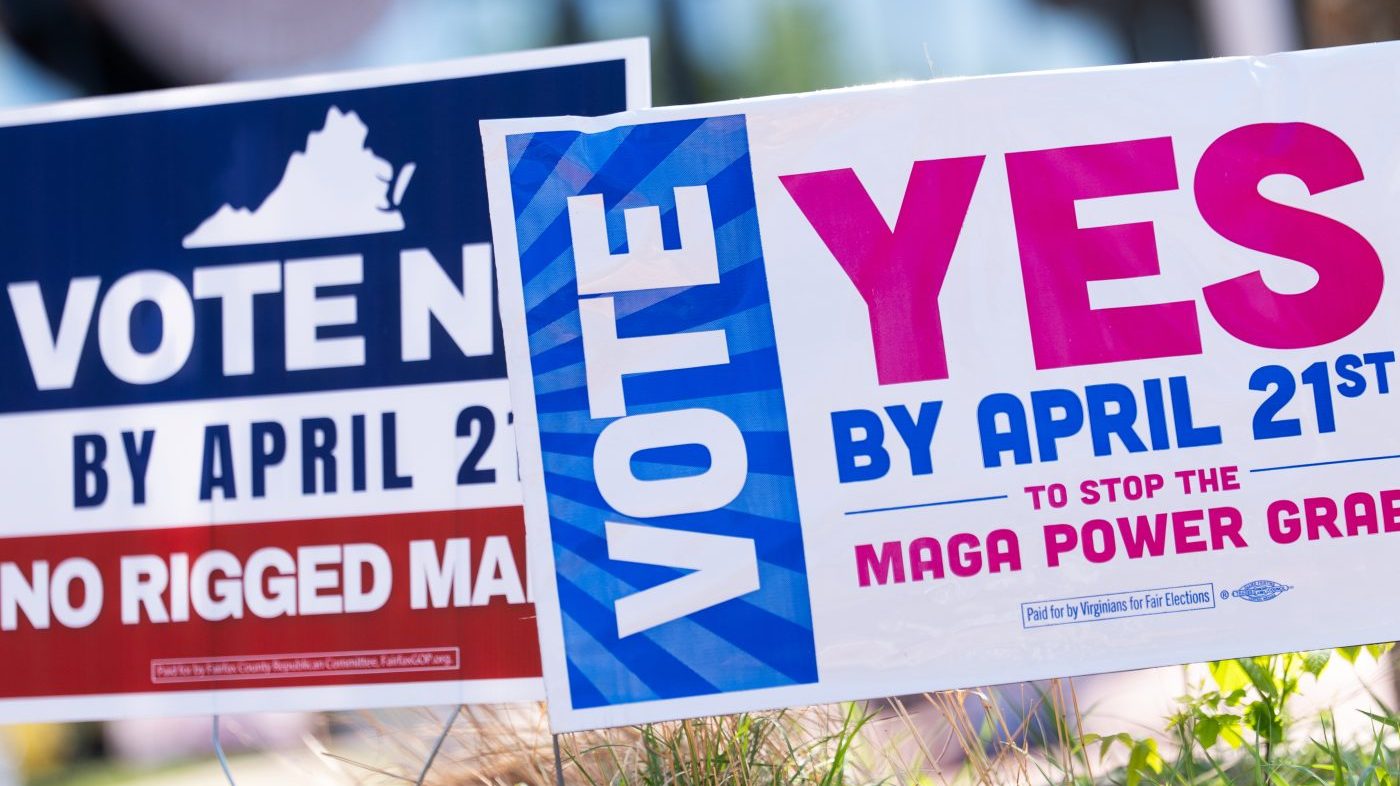
Virginia voters have approved a constitutional amendment granting state Democrats temporary authority to redraw congressional district boundaries, a move with immediate implications for the battle to control the U.S. House of Representatives. The measure passed by a narrow margin of approximately 51% to 49%, according to Decision Desk HQ, and could allow Democrats to secure up to four additional seats from Virginia's current 6-5 delegation split. The new map will remain in effect until the post-2030 Census redistricting process reverts to a bipartisan commission.
A Costly and Contested Political Fight
The referendum became a multi-million dollar proxy war in the national redistricting conflict. Pro-amendment group Virginians for Fair Elections raised over $64 million, with nearly $40 million coming from House Majority Forward, a nonprofit aligned with Democratic leadership. Opposition group Virginians for Fair Maps raised about $21 million, receiving funds from groups linked to prominent GOP donor Peter Thiel. The financial disparity underscores the high stakes for both parties as they vie for a House majority.

National figures weighed in heavily. Former President Barack Obama urged support for the measure, while former President Donald Trump made a last-minute call for its rejection. The campaign unfolded against a backdrop of similar partisan map-drawing efforts in states like Texas, highlighting how redistricting has become a central front in the political war ahead of the midterms. As seen in our coverage of the high-stakes referendum, the outcome was viewed as a critical test of Democratic strategy.
Republican Pushback and Legal Uncertainty
Despite the loss, Republicans pointed to the tight margin as evidence of strong opposition to what they call a partisan power grab. "Even in defeat, this is a powerful message," said Brian Cannon, co-chair of the advisory council to the bipartisan group No Gerrymandering Virginia. "Despite being outspent by well over $60 million and facing biased ballot language, over a million Virginians stood up against a partisan power grab."
Richard Hudson, chairman of the National Republican Congressional Committee, argued the close vote "reinforces that Virginia is a purple state that shouldn’t be represented by a severe partisan gerrymander." He maintained Republicans would hold their House majority regardless, but called on Virginia courts to intervene. A potential ruling from the Virginia Supreme Court could still invalidate Tuesday's vote, representing a final hurdle for Democrats seeking to lock in the new lines. This legal uncertainty mirrors other contentious political battles, such as the scrutiny over financial disclosures involving major donors.
A Political Win for Key Democrats
The result delivers a significant victory for prominent Democrats, including House Minority Leader Hakeem Jeffries and Virginia Governor Abigail Spanberger. For Spanberger, the win helps deflect criticism that her early months in office have been consumed by partisan redistricting fights. A recent poll showed a dip in her approval ratings, which some attributed to the contentious political environment.
In a statement, Spanberger framed the vote as a rebuke to efforts to secure more Republican congressional seats without voter input. "Virginia voters have spoken, and tonight they approved a temporary measure to push back against a president who claims he is 'entitled' to more Republican seats in Congress," she said. She emphasized her commitment to reinstating the bipartisan redistricting commission after the 2030 Census. The governor's focus will now likely shift to other pressing state issues and the broader national midterm landscape, where Democrats face challenges on multiple fronts, including internal party scrutiny over foreign policy.
Immediate Impact on the Midterm Landscape
The newly approved maps are expected to create several districts more favorable to Democratic candidates, potentially shifting the balance of Virginia's House delegation from 6-5 Democratic to as lopsided as 8-3 or 9-2. This represents one of the most significant single-state shifts in the 2024 redistricting cycle and provides Democrats a crucial cushion in their difficult fight to reclaim the House majority.
The victory demonstrates the party's willingness to aggressively pursue structural advantages through ballot measures and state-level actions, a strategy being employed nationwide. However, the narrow margin of victory suggests the move remains politically polarizing within the state. The outcome sets the stage for intense campaigning in newly drawn districts and will likely influence candidate recruitment and resource allocation for both parties in the final months before November. As the political battlefield is redrawn, both parties are also grappling with how other international and economic issues, like the concerns some GOP senators have about Middle East conflict, might impact the national message.