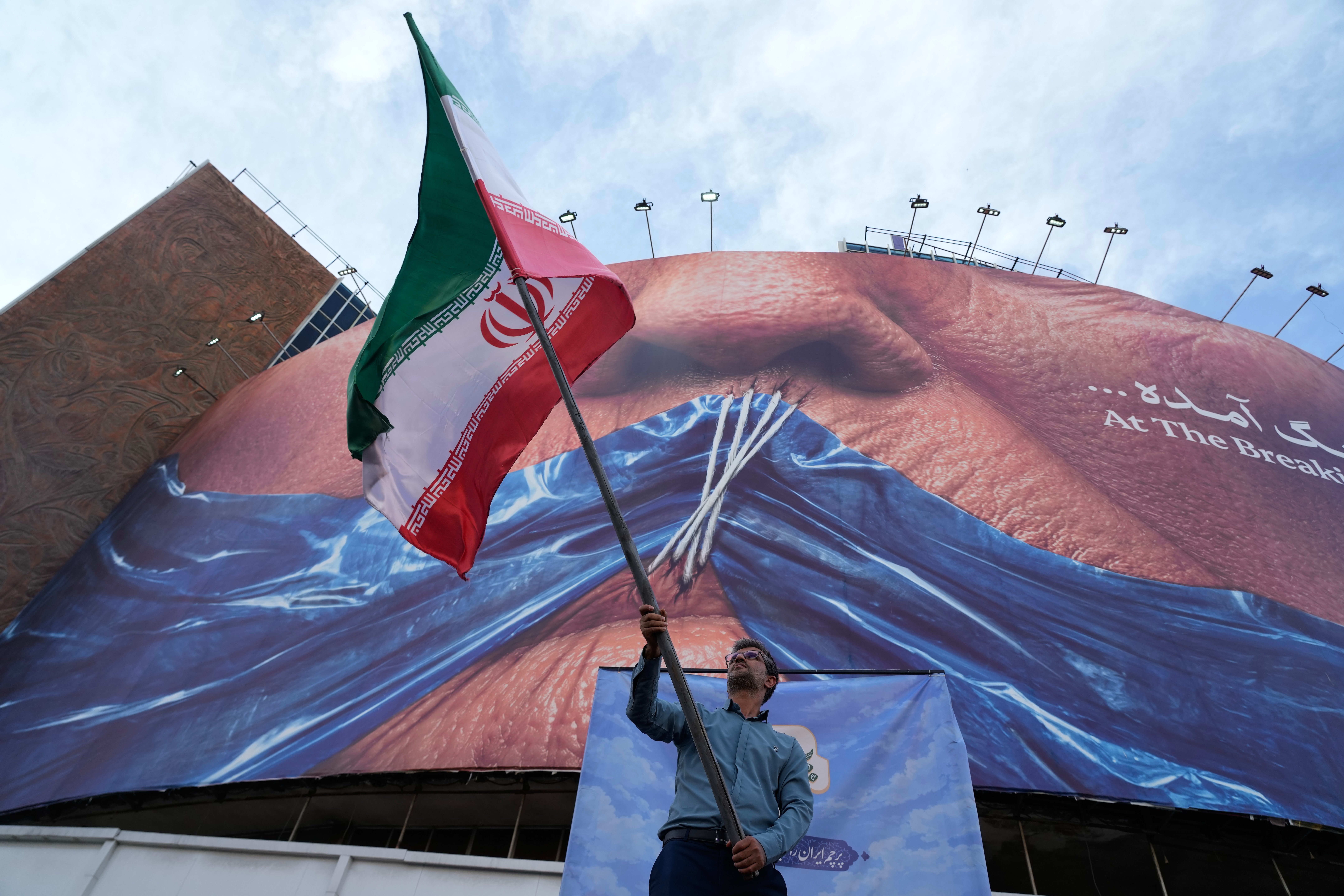
The late Fred Ikle, a Reagan-era defense official, once wrote that wars often end not because one side is crushed, but because domestic politics and outside powers reshape the battlefield. His words, penned during the Vietnam War, now eerily describe the standoff between the United States and Iran over the Strait of Hormuz, Israel’s campaign in Lebanon, and Tehran’s nuclear ambitions.
The Trump administration appears to have been caught off guard when Iran closed the strategic waterway. Officials had expected either a swift Iranian collapse under American and Israeli airstrikes, or a quick capitulation on demands to dismantle nuclear activities, halt ballistic missile programs, and cut support for regional proxies. Instead, Iran rejected all three conditions—even after an airstrike killed the Supreme Leader. The Islamic Revolutionary Guard Corps now calls the shots, and its commander, Major General Ahmad Vahidi, has refused to negotiate.

Russia and China tilt the balance
Ikle’s warning about outside intervention has also proven prescient. Moscow and Beijing have bolstered Tehran’s resolve, while the administration, facing an unpopular war and midterm elections, has little appetite for a full-scale conflict. Iran’s closing of the Strait was a masterstroke—one that should not have surprised planners, given that Iraq mined the same waters during the 1991 Gulf War.
By shutting the Strait, Tehran reframed the talks. Instead of debating Iran’s nuclear or missile programs, the focus narrowed to reopening the waterway. Then, just as a deal seemed possible—lifting the U.S. blockade in exchange for reopening—Iran shifted again, demanding that Israel cease its offensive against Hezbollah in Lebanon.
A win-win for Tehran
This latest move is a classic win-win for the regime. If Washington forces Israel to halt its Lebanon operation, Hezbollah survives, and the issue of Iranian proxy support becomes moot. Talks on reopening the Strait would then proceed, but only after the Israeli offensive ends. That delays any serious discussion of Iran’s nuclear and missile programs—and the 60-day timeline the administration set for talks looks increasingly unrealistic.
If Israel defies Washington and continues its incursion, Tehran simply keeps the Strait closed. President Trump’s testy phone call with Prime Minister Benjamin Netanyahu revealed the growing rift. Israel has not pulled back, and Tehran has already achieved a notable victory: driving a wedge between the United States and its closest Middle Eastern ally.
Few options, high stakes
Iran has left the U.S. with limited choices. Washington could relaunch airstrikes, but the Strait would remain closed, domestic opposition would swell ahead of November, and Tehran’s hard-liners show no signs of backing down. Alternatively, the U.S. could threaten to withhold military support from Israel unless it withdraws from Lebanon. That might let Netanyahu blame Washington for halting the operation, freeing him from responsibility before Israeli elections. But if he defies the threat and pushes on, Israel could reallocate its budget to fund the war effort while scaling back West Bank spending—a shift some might welcome.
The impasse underscores the limits of American power. As Ikle understood, wars end not when one side crushes the other, but when the ground shifts beneath their feet. Iran has shifted that ground, and the administration is still scrambling to find its footing. For more on the unraveling of Washington’s approach, see our analysis of the nuclear threat as talks stall. And for a broader look at the regional dynamics, read how the U.S. Gulf strategy has created a dependency trap.