Retired Air Force Lieutenant General David Harris is urging the Pentagon to overhaul how it integrates messaging into military operations, warning that tactical victories on the battlefield are increasingly undercut by failures in the information domain. Drawing on firsthand observations from Gaza and analysis of Iran's recent conflict with Israel, Harris argues that the U.S. military must treat strategic communication as a core component of combat power—not an afterthought.
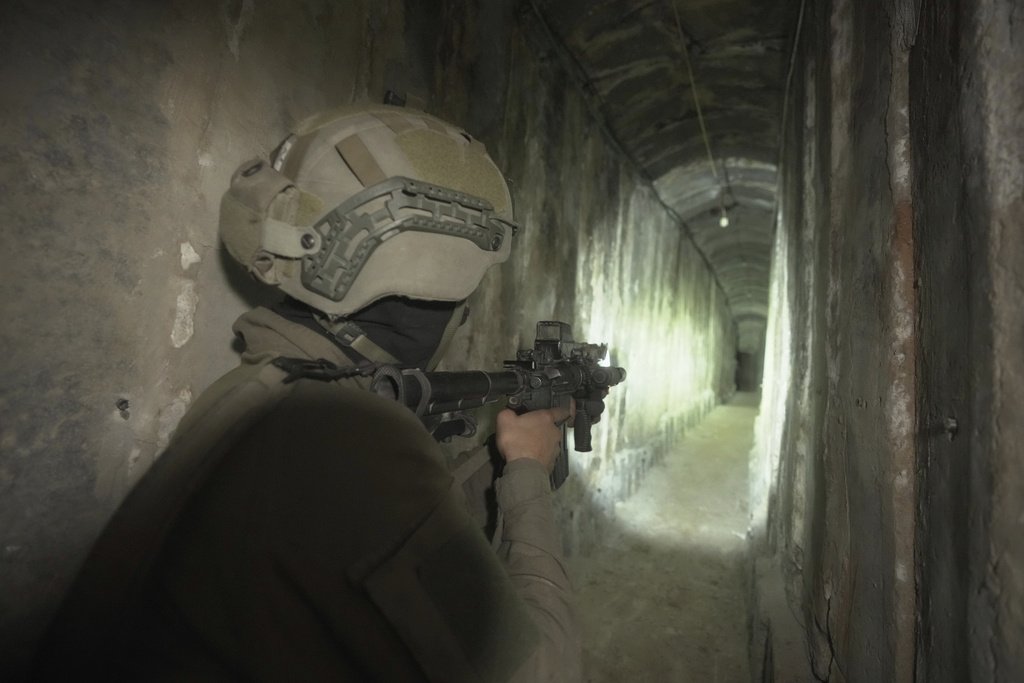
In a detailed assessment, Harris recounts a visit to Gaza with the Israeli Defense Forces' 99th Division, where he witnessed sophisticated combined arms operations designed to dismantle Hamas's tunnel network. The IDF synchronized ground maneuvers, intelligence, precision airstrikes, and engineering to force fighters above ground. Yet even as those tactics succeeded, a parallel battle played out across international media, social platforms, and college campuses—one where narratives outpaced facts and tactical wins failed to translate into strategic gains.
“The tactical scheme of maneuver was complete. The strategic scheme of maneuver was not, because the information environment had become part of the battlefield,” Harris writes. The disconnect, he argues, is a systemic flaw the U.S. can no longer afford to ignore—especially as tensions with Iran escalate and adversaries weaponize information at machine speed.
Harris points to Iran's June 2025 war with Israel as a case study. Tehran paired missile salvos with coordinated information operations, including an AI-generated image of a downed Israeli F-35 and fake Western personas amplifying claims of heavy losses. Analysts described the effort as synchronizing kinetic and narrative operations at machine speed—a deliberate strategy to offset conventional military weakness. Iran understood that perception of the fight was itself combat power.
The lesson for Washington is clear: the definition of combined arms is expanding. Military power must now be synchronized with diplomacy, economic statecraft, alliances, and information. Harris warns that the U.S. treats messaging as reactive, often addressing it only after operations go wrong. That sequence must be reversed. Every operational plan, diplomatic initiative, and economic measure should include an assessment of the narrative it creates and the audiences it reaches—developed by planners and public affairs professionals working together from the start.
Harris outlines three steps to institutionalize this shift. First, embed strategic communications into planning from the outset. Second, invest in regional, cultural, and linguistic expertise to anticipate how adversaries, allies, and domestic publics interpret the same event through different frames. Third, reorganize fragmented responsibility for the information domain across departments and agencies, giving clear ownership and the ability to act at the speed of social media. Without that, the U.S. will continue chasing narratives instead of shaping them.
The stakes extend beyond the Middle East. Harris warns that the next breach the U.S. confronts could come across its southern border, through tunnel networks like those Hamas built in Gaza. The U.S. should adopt not only the IDF's tactical approach but also plan the messaging now. “Information is not simply another capability. It is the connective tissue that links military power, diplomacy, economics, alliances, and public confidence,” he writes.
Harris's argument echoes broader debates about the role of strategic communication in modern statecraft. As political battles over election integrity and foreign policy intensify, the need for coherent messaging has never been more urgent. The retired general's bottom line: Winning battles remains essential. But winning before the battle ends may prove decisive.