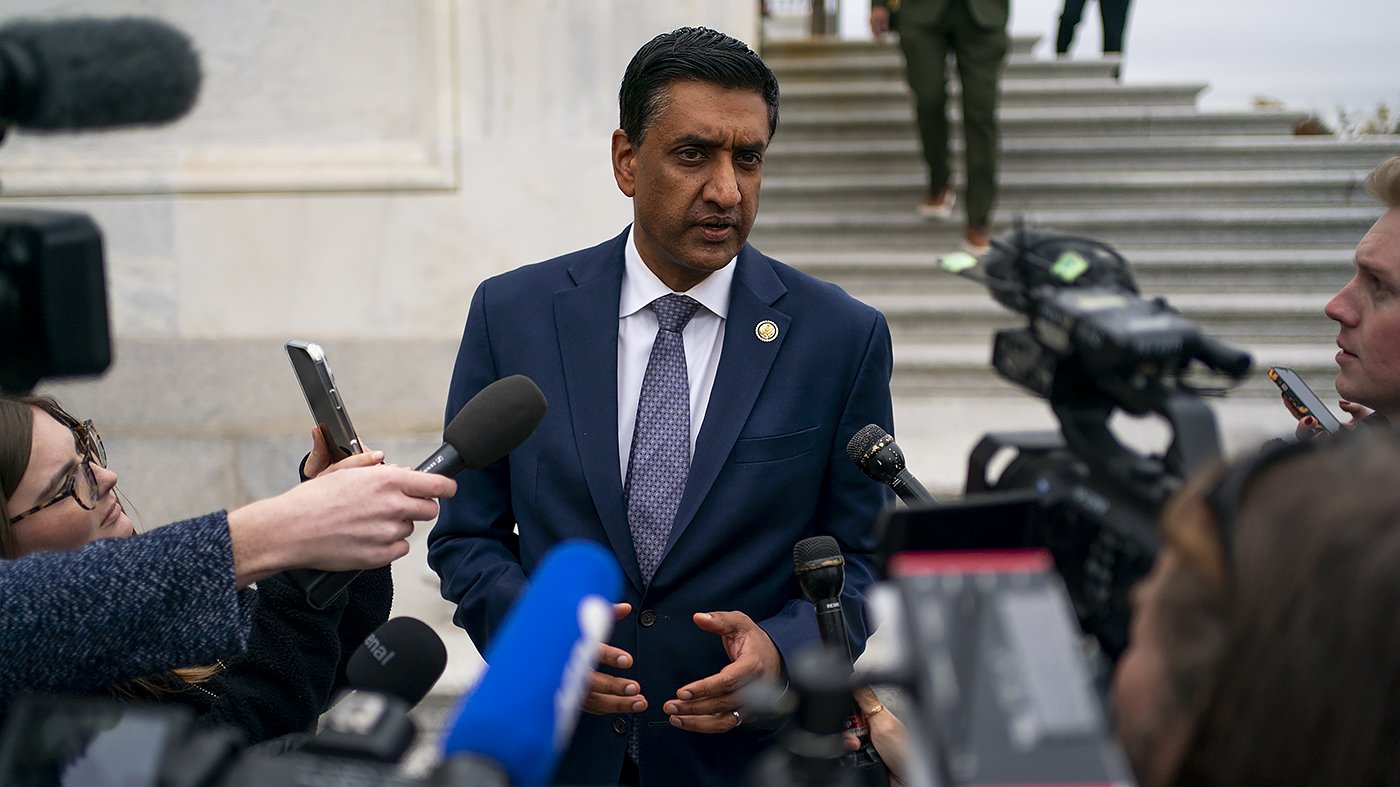
Democratic Congressman Ro Khanna sharply criticized Israeli Prime Minister Benjamin Netanyahu on Wednesday over reports the foreign leader was present in the White House Situation Room weeks before the United States and Israel launched a joint military operation against Iran. Khanna, a California Democrat considered a potential presidential candidate in 2028, framed the access as a fundamental breach of trust.
In a social media post, Khanna issued a direct pledge regarding future Democratic administrations. "The next Democratic President will never have the Israeli PM in the Situation Room," he wrote. "Trump having Netanyahu there before launching an immoral and illegal war is a betrayal of the American people."
Report Details High-Stakes Meeting
Khanna shared a report from The New York Times detailing the events leading to President Trump's decision to authorize the strike. The account describes Netanyahu arriving at the White House on February 11 with minimal public notice and being ushered into a highly classified briefing. The Situation Room, a secure facility for sensitive intelligence and military discussions, is rarely used for in-person meetings with foreign heads of state, according to the report. The seating arrangement reportedly deviated from protocol, with Trump and Netanyahu sitting across from each other rather than the U.S. president occupying the traditional head of the table.
The White House did not immediately respond to requests for comment on the meeting's specifics or Khanna's characterization.
Longstanding Criticism of Netanyahu
Khanna's latest rebuke is part of a sustained pattern of opposition to Netanyahu's policies. The congressman has been a vocal critic of Israel's military campaign in Gaza. In November 2025, he was among several lawmakers supporting a resolution that labeled Israel's actions in Gaza as genocide. His record includes skipping Netanyahu's address to a joint session of Congress in June 2024 and voting against additional military aid for Israel, citing concerns over civilian casualties.
"It was a hard vote," Khanna said in a 2024 television interview, explaining his opposition to aid packages. "This was a stance against a blank check for Netanyahu and offensive weapons unconditionally while he's talking about going into Rafah... when we know more women and children are going to die." This stance aligns with his broader foreign policy vision, which has drawn attention as he positions himself for a potential national campaign.
Regional Context: Ceasefire and Continued Strikes
The controversy emerges against a complex geopolitical backdrop. The U.S. and Israel recently agreed to a ceasefire deal with Iran, intended to halt hostilities and reopen the critical Strait of Hormuz. However, Israel continued airstrikes in Lebanon, despite Tehran's insistence that the ceasefire required an end to attacks there. The Trump administration and Netanyahu initially claimed the agreement did not cover Lebanon, a position disputed by Iranian officials and Pakistani Prime Minister Shehbaz Sharif.
This dissonance prompted direct U.S. intervention. Following a intense barrage of approximately 100 Israeli airstrikes in Lebanon within ten minutes on Wednesday, President Trump directed Netanyahu to scale back the attacks. In response, the Israeli prime minister instructed his cabinet on Thursday to begin negotiations with Lebanese officials "as soon as possible." Netanyahu stated the talks would focus on disarming the Hezbollah militant group and establishing a formal peace between Israel and Lebanon. This development follows recent reported pressure from the White House to de-escalate the situation and preserve the fragile understanding with Iran.
The episode underscores persistent tensions within the U.S.-Israel relationship and within the Democratic Party over Middle East policy. Khanna's forceful condemnation highlights a growing faction that seeks to condition support for Israel and scrutinize the intimacy of military and intelligence coordination, especially under a future administration. As a prominent progressive voice, his statements are likely to influence the party's foreign policy platform leading into the next presidential election cycle.