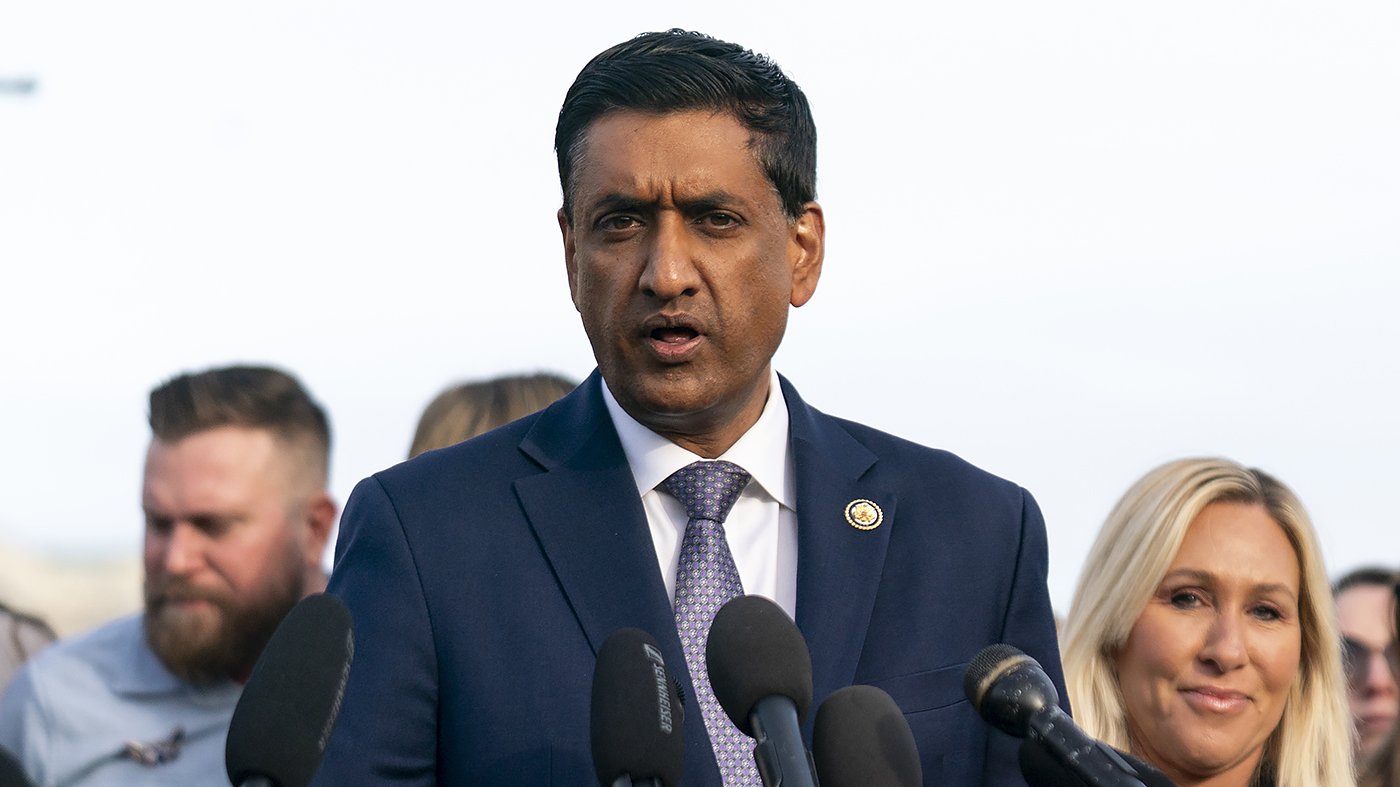
Democratic Congressman Ro Khanna of California hinted at a potential presidential campaign in 2028 during a public appearance this week, joining a growing field of Democrats eyeing the post-Biden era. Speaking at the National Action Network's annual convention in New York, Khanna engaged in a lighthearted exchange with civil rights leader Rev. Al Sharpton about future political ambitions.
When Sharpton questioned him about a White House bid, Khanna responded with a quip: "You're going to be my running mate?" The moment drew laughter but underscored serious political positioning as Democrats look beyond the current election cycle.
Current Priorities and Future Considerations
Khanna emphasized that his immediate focus remains on the upcoming midterm elections and helping House Minority Leader Hakeem Jeffries secure the Speaker's gavel. However, he outlined two primary reasons he would consider a presidential run, framing his potential candidacy around distinct policy visions.
"One is I represent the economic future, and I have a clear roadmap for how we're going to make sure every part of this country has an economic stake in the future," Khanna stated. He elaborated on this vision, mentioning worker equity, inclusive participation in technological advances like artificial intelligence, and economic security through healthcare and childcare support.
A Foreign Policy Framework
The congressman's second rationale centered on international relations, advocating for a departure from what he termed "the colonial model of the world." He invoked the words of Frederick Douglass, highlighting the abolitionist's advocacy for Chinese immigration and his vision of America as "a composite nation, a nation of all nations."
"I see that in the energy in our nation with young people, and I believe a multiracial America will finally be just not only here but just around the world," Khanna continued. He suggested his understanding of both economic transformation and the project of multiracial democracy might offer a unique contribution to national leadership.
The 2028 Democratic Field Takes Shape
Khanna enters a speculative field that already includes prominent figures like California Governor Gavin Newsom and former Vice President Kamala Harris, though neither has formally declared intentions. The early maneuvering reflects the party's long-term planning as it navigates the current administration's final years and a challenging geopolitical landscape, including ongoing tensions with Iran that affect global energy markets.
Other potential contenders are also testing the waters. Pennsylvania Governor Josh Shapiro, who also spoke at the convention, similarly hinted at 2028 possibilities. Meanwhile, former White House chief of staff Rahm Emanuel has proposed policy platforms for the midterms amid speculation about his own national ambitions. This early jockeying mirrors moves by other lawmakers, such as when Rep. Elissa Slotkin indicated her own openness to a future presidential run while concentrating on immediate electoral strategy.
The broader Democratic message heading into the midterms has focused on economic affordability, a challenge compounded by international instability. The party's future standard-bearer will likely need to articulate a coherent foreign policy, especially as debates continue over presidential war powers and nuclear authority and as technological solutions like thorium reactors are proposed for enduring diplomatic crises.
Khanna's comments, while speculative, mark a clear effort to define a candidacy around next-generation economic policy and a reimagined American role abroad. Whether this early vision resonates with Democratic primary voters remains to be seen, but it establishes the congressman as a serious voice in the conversation about the party's future direction.