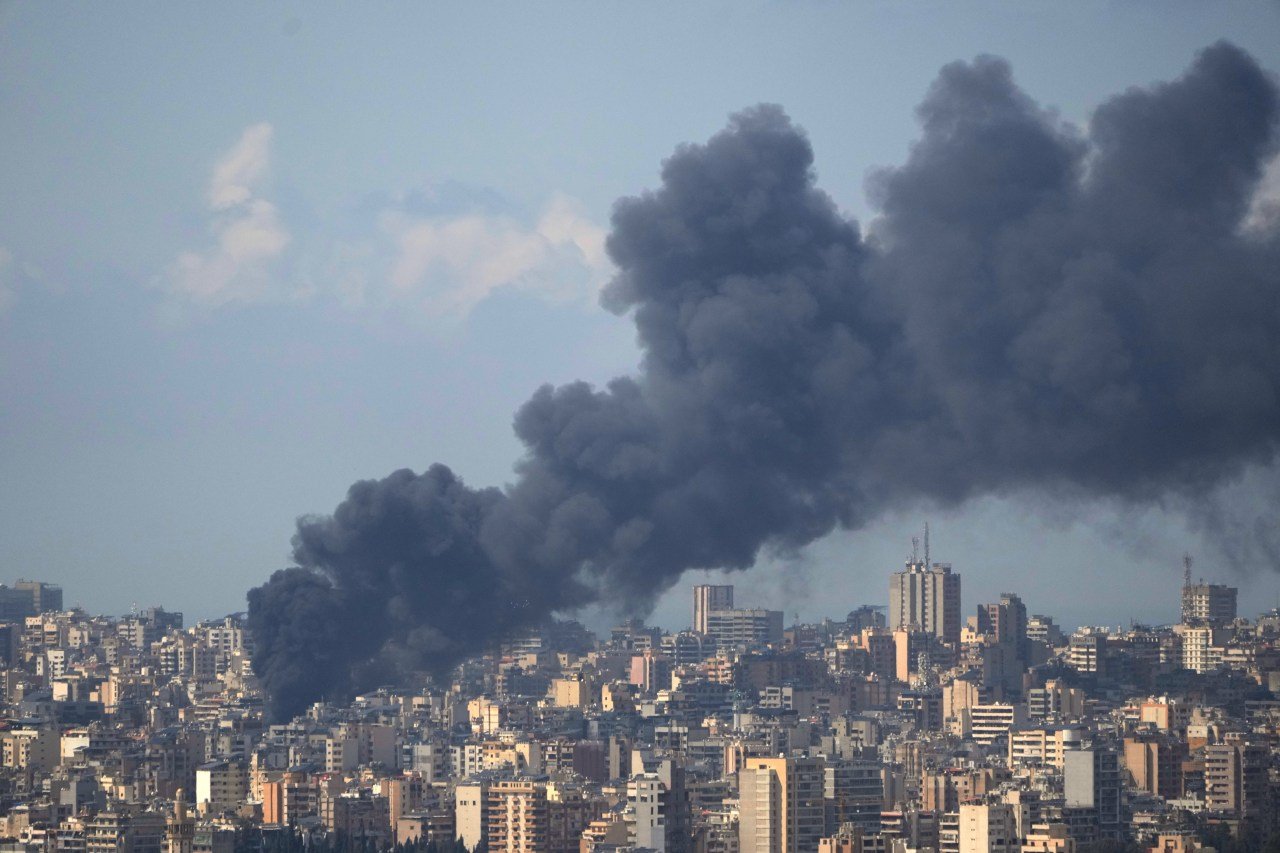
Israeli military forces launched a large-scale aerial assault on central Beirut Wednesday, striking commercial and residential districts hours after a ceasefire took effect in the separate conflict between the United States, Israel, and Iran. Lebanese health officials reported dozens of fatalities and hundreds of injuries in preliminary assessments.
The Israeli military described the operation as its most extensive coordinated strike in the current conflict with Hezbollah, hitting more than 100 targets across Beirut, southern Lebanon, and the Bekaa Valley within a ten-minute window. Black smoke rose over the capital as explosions shattered a bustling afternoon, sending emergency responders racing toward burning buildings and charred vehicles.
Ceasefire Does Not Extend to Lebanon
Israel explicitly stated that the newly announced ceasefire with Iran does not cover its ongoing hostilities with the Iran-backed Hezbollah militia in Lebanon. This position contradicts mediators, including Pakistan, who asserted the truce was region-wide. The strike demonstrates Prime Minister Benjamin Netanyahu's commitment to continue military pressure despite the parallel diplomatic development.
Lebanese Minister of Social Affairs Haneed Sayed condemned the attacks as a "very dangerous turning point," noting strikes had reached "the heart of Beirut" where many displaced civilians are sheltered. She reiterated the government's readiness to negotiate an end to hostilities, an offer Israel has not acknowledged. Prime Minister Nawaf Salam accused Israel of escalating violence while Lebanese officials sought a diplomatic solution and of showing "utter disregard for the principles of international law."
Dispute Over Targets and Human Shields
The Israeli military asserted it struck Hezbollah missile launchers, command centers, and intelligence infrastructure, accusing the group of using civilians as human shields. "The State of Lebanon and its civilians must refuse Hezbollah’s entrenchment in civilian areas," a military statement read.
Local officials and residents at strike sites forcefully denied the presence of military assets. Mohammed Balouza, a Beirut municipal council member, surveyed damage in the Corniche al Mazraa neighborhood, pointing to a hit apartment building behind a popular shop. "This is a residential area. There is nothing here," he said.
Hezbollah Rejects Return to Pre-War Status Quo
A Hezbollah official, speaking anonymously, told The Associated Press the group was allowing mediators a chance to secure a Lebanon ceasefire but noted, "we have not announced our adherence to the ceasefire since the Israelis are not adhering to it." The official stated Hezbollah would not accept a return to the pre-March 2 situation, where Israeli strikes continued despite a nominal truce since the last major war ended in November 2024. "We will not accept for the Israelis to continue behaving as they did before," the official said.
The latest violence exacerbates a humanitarian crisis. Israeli airstrikes have killed over 1,530 people in Lebanon, including more than 230 women and children, and displaced over one million. The offensive has drawn sharp criticism, with figures like Rep. Ansari filing impeachment articles against US Defense Secretary Hegseth over related Iran strikes, highlighting the legal and political fallout.
Confusion reigned among displaced civilians. Early Wednesday, many began packing to return home after the Iran ceasefire announcement, only to halt upon hearing Netanyahu's vow to continue the Lebanon campaign. "We can’t take this anymore... the uncertainty," said Fadi Zaydan, 35, at a Beirut displacement camp. His family, poised to return to Nabatieh, decided to wait indefinitely in Sidon, fearing they would be targeted at home.
Israeli military chief Lt. Gen. Eyal Zamir said forces would continue to "utilize every operational opportunity" against Hezbollah to protect northern Israel. The strike on central Beirut, a rare target since the war began, signals a potential escalation in tactics and scope, leaving the region on edge despite the ceasefire with Iran.