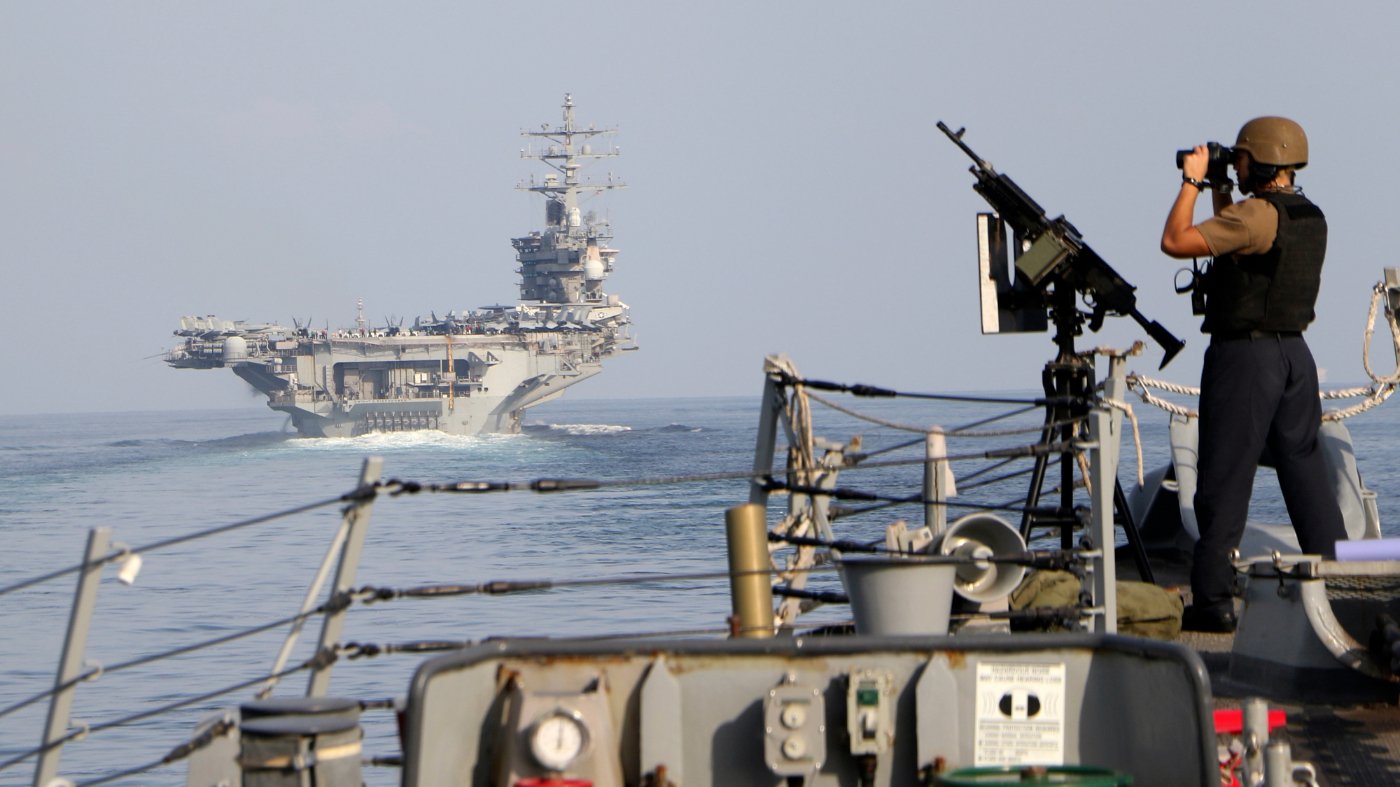
Direct Confrontation in Critical Waterway
United States Navy destroyers conducting mine-clearing operations in the Strait of Hormuz received a stark radio warning from Iranian forces this weekend, according to a report from the Wall Street Journal. Iranian Revolutionary Guard Corps Navy personnel transmitted "This is the last warning. This is the last warning" to one of two American guided-missile destroyers operating in the strategic passage.
The U.S. military response, as reported, emphasized compliance with international law. "Passage in accordance with international law. No challenge is intended to you, and I intend to abide by rules of our government's ceasefire," the American vessel reportedly replied, referencing the temporary pause in hostilities between Washington and Tehran.

Conflicting Accounts from Military Commands
Following the incident, official accounts from both sides diverged sharply. U.S. Central Command (CENTCOM) confirmed on social media that its forces had "began setting conditions for clearing mines" in the strait. The command identified the USS Frank E. Petersen and USS Michael Murphy as the destroyers involved, stating they transited the waterway "as part of a broader mission to ensure the strait is fully clear of sea mines" previously laid by the IRGC.
Conversely, the IRGC Navy issued a firm denial through its official Persian-language social media account. "The IRGC Navy fully and authoritatively manages the intelligent control of the Strait of Hormuz," the statement read. "Permission to pass is granted solely to non-military vessels in accordance with specific regulations. Reports published regarding the passage of U.S. vessels through the strait are denied, and any attempt by military vessels to pass will be met with the utmost firmness and resolve."
Economic and Strategic Stakes
The confrontation occurs against a backdrop of severe economic disruption. The IRGC began mining the waterway and threatening commercial vessels following initial U.S. and Israeli strikes on Iranian territory. These actions have dramatically reduced shipping traffic through the chokepoint, which carries about one-fifth of the world's seaborne oil, triggering a significant spike in global oil prices.
Admiral Brad Cooper, commander of CENTCOM, framed the U.S. operation as essential for restoring commerce. "Today, we began the process of establishing a new passage and we will share this safe pathway with the maritime industry soon to encourage the free flow of commerce," Cooper stated. The de-mining effort represents a direct challenge to Iran's attempt to exert unilateral control over the strategic lane, a move that former officials like Admiral James Stavridis have previously labeled as illegal.
Broader Geopolitical Context
This incident tests the fragile ceasefire currently in place between the United States and Iran. The radio exchange explicitly referenced the truce, suggesting both sides are operating with awareness of its precarious nature. The situation echoes previous moments of high tension, such as when the Trump administration ordered a naval blockade following collapsed negotiations.
Iran has historically used control of the strait as leverage in broader geopolitical disputes. Analysts note that Tehran may be wielding the Hormuz closure to pressure Washington on other fronts, including the Lebanon ceasefire standoff. The Biden administration now faces the complex task of ensuring maritime security without provoking a full-scale resumption of hostilities, a balance complicated by political pressures. Former President Donald Trump has recently threatened renewed military strikes as diplomatic talks continue.
The immediate economic consequences are already being felt in global markets. The reduction in Strait traffic has created shipping bottlenecks and insurance premium hikes that ripple through supply chains. The White House has been monitoring related financial anomalies, having recently issued an insider trading warning amid suspicious market bets on the conflict.
As U.S. forces continue their clearance operation, the world watches whether Iran's "final warning" will be followed by action, or whether diplomatic channels can contain this latest flare-up in one of the world's most volatile regions.