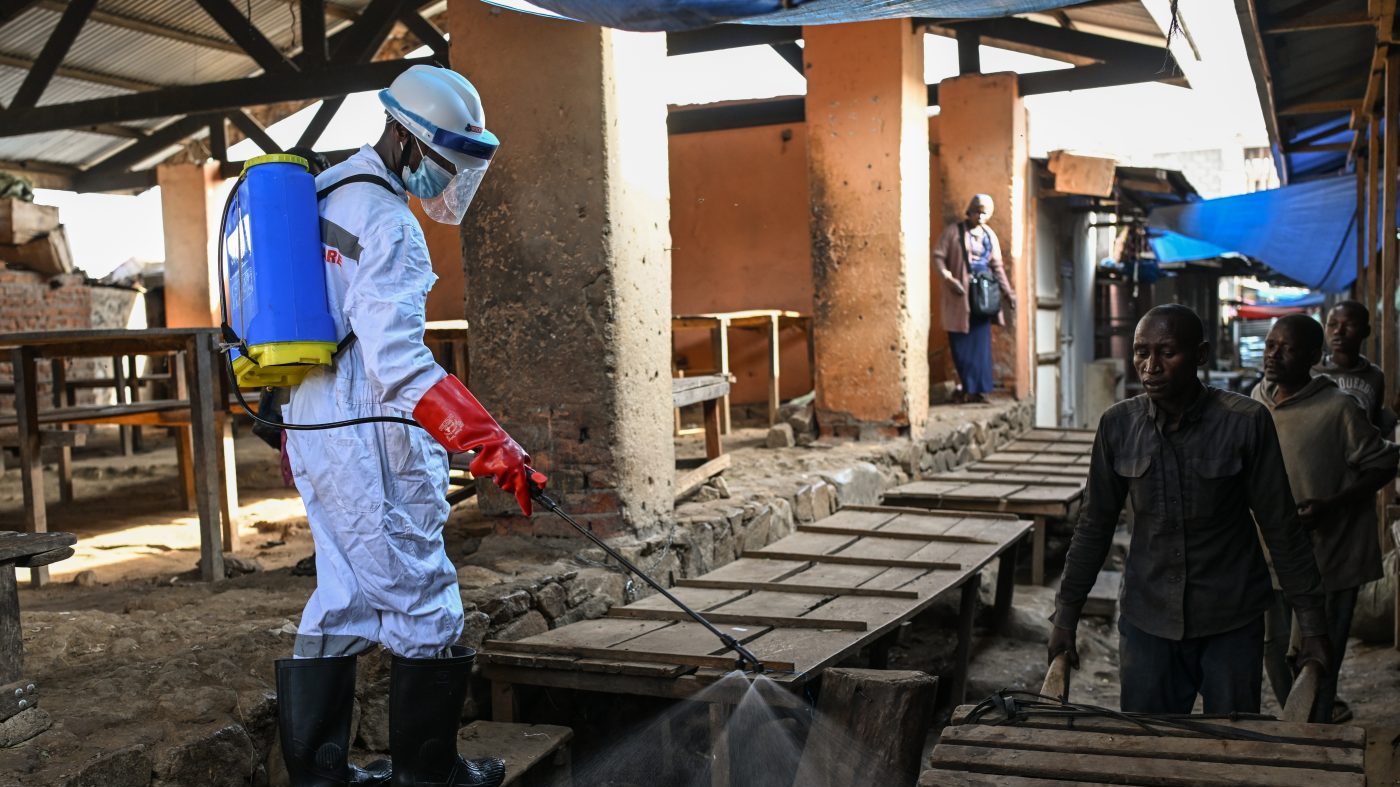
An American medical missionary infected with Ebola while treating patients in the Democratic Republic of the Congo is showing cautious signs of recovery after being airlifted to Germany, health officials confirmed Wednesday.
Dr. Peter Stafford, being treated in a specialized isolation unit at Charité Hospital in Berlin, remains weak but has not required intensive care or experienced organ failure, officials said during a press conference. His viral load is steadily declining under antiviral therapy, offering a glimmer of hope amid a widening outbreak of a rare and little-understood strain.

Stafford’s wife, Dr. Rebekah Stafford, has tested negative for the virus and remains symptom-free, though the entire family is under quarantine in a separate section of the unit. Officials noted that two of their children are toddlers, making the infection especially dangerous for them. The family has access to child-friendly accommodations and psychological support, and can see Stafford through a window.
Rare Strain Complicates Response
The outbreak is linked to the Bundibugyo strain of Ebola, for which there is no approved vaccine or targeted treatment. Unlike the more common Zaire strain that caused the 2014 West Africa epidemic, Bundibugyo has circulated largely undetected for weeks after the first known death, as authorities initially tested for the more familiar virus.
Health experts warn the outbreak is far larger than official figures suggest. Suspected cases in eastern Congo are approaching 1,000, with at least 220 suspected deaths. Congo’s health ministry reported Tuesday that 101 cases have been confirmed, while contact tracers are monitoring more than 3,000 possible exposures.
Uganda Reports Cases, Border Tensions Rise
Neighboring Uganda has confirmed seven cases, including the first death of a 59-year-old man in Kampala on May 14. While case numbers are not spiking, the number of locals exposed through healthcare workers has been rising, raising fears of wider community transmission. In response, Uganda has closed its border with Congo to curb the spread.
The resurgence of Ebola in Central Africa has triggered a global health emergency, with several countries imposing travel restrictions. Canada has imposed a 21-day quarantine for travelers from affected nations, while the United States has added Houston airport to its Ebola screening list as the outbreak worsens.
Funding Gaps and Political Fallout
Healthcare workers and aid groups on the ground are struggling to respond, with the International Rescue Committee warning that the outbreak could become the deadliest ever if funding continues to dry up. The crisis has also exposed vulnerabilities in global health infrastructure, as experts note that the U.S. still has a deep bench of expertise despite vacancies at the CDC and FDA.
As the Bundibugyo strain spreads, the political stakes are rising. The outbreak is testing international cooperation and the ability of fragile health systems to contain a pathogen with no vaccine. For now, the focus remains on Stafford’s recovery and the containment of a virus that has already claimed hundreds of lives.