The Center for Strategic and International Studies (CSIS) released a sobering assessment Wednesday, concluding that the United States will require years to restock its most advanced munitions expended during the conflict with Iran. The analysis highlights a significant vulnerability in U.S. military readiness as production lags behind wartime consumption.
Key Systems Face Multi-Year Replacement Timelines
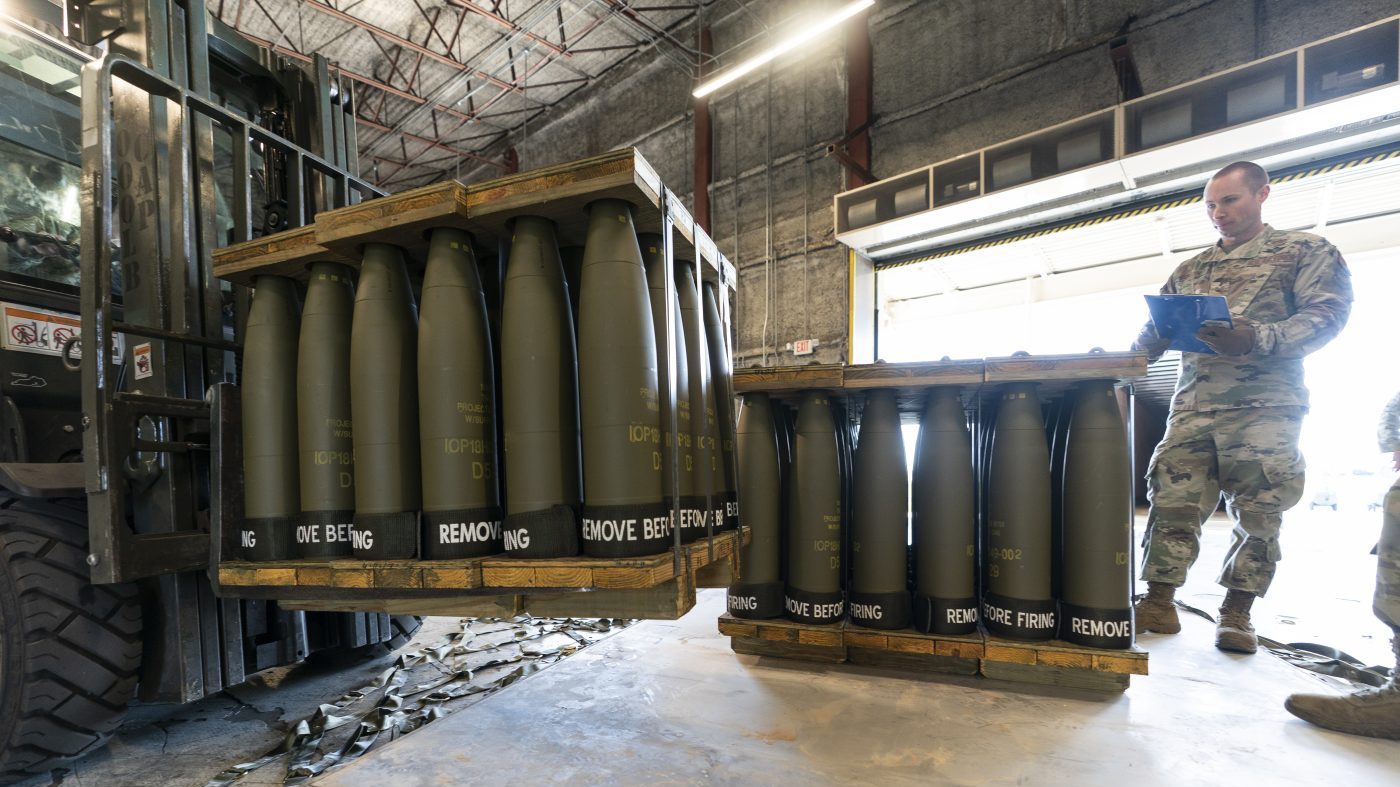
CSIS projects it will take three years or longer to replace Tomahawk Land Attack Missiles (TLAMs), Terminal High Altitude Area Defense (THAAD) anti-ballistic missile systems, and Patriot air defense interceptors—all of which were “heavily used” in the campaign. Joint Air-to-Surface Standoff Missiles (JASSM) and Precision Strike Missiles, also heavily expended, face a shorter but still significant timeline of several months to a year. Even Standard Missiles like the SM-3 and SM-6, which saw less intensive use, will require roughly two years to bring inventories back to prewar levels.

The report underscores the Trump administration’s awareness of the problem. The president’s $1.5 trillion FY 2027 defense budget includes large munitions procurement to address these “magazine depth” concerns. A war supplemental for additional munitions funds is expected as the Department of Defense seeks to replace what was expended in Operation Epic Fury and build stocks above prewar levels. The administration has also signed framework agreements with industry to expand production capacity, which could accelerate future deliveries.
However, the U.S. must juggle its own replenishment with commitments to allies. Ukraine remains desperate for Patriot missiles to defend against Russian attacks, and Washington is poised to support 17 other nations that use the interceptor.
TLAMs and JASSMs Under the Microscope
More than 1,000 TLAMs were fired during the Iran war, yet the U.S. received only 207 deliveries of the cruise missile in 2026. The Trump administration has requested 785 TLAMs for FY 2027. CSIS notes that deliveries have been “re-sequenced to prioritize U.S. needs over those of allies and partners.” Earlier budget documents projected zero deliveries to the U.S. between August 2023 and April 2027, but updated schedules show earlier orders arriving throughout 2026.
Comparatively, the U.S. used 1,100 JASSMs and received 484 deliveries in 2026. The administration has requested 821 JASSMs for the next fiscal cycle.
Time, Not Money, Is the Real Constraint
While the White House is prepared to pay for expedited orders across a wide range of weapons, CSIS emphasizes that the bottleneck is time, not funding. “It takes time to expand production capacity and to build these complex systems,” the analysis states. “Thus, there will be a window of vulnerability for several years until inventories return to their previous levels and another several years before they get to the levels that war planners desire.”
The report suggests the Pentagon must develop contingency plans for this gap. Substituting other munitions carries tradeoffs: alternative ground-attack weapons are shorter-range, exposing launch platforms to greater risk, while alternative counter-drone systems are expensive.
Researchers point to the demonstrated skill of the U.S. military in operations in Iran and Venezuela, and express hope that China may be deterred from aggression by its own poor performance in the 1979 Vietnam War. “That difference in experience may preserve deterrence until munitions inventories are restored,” the analysis concludes.
This assessment comes amid broader geopolitical tensions, including criticism of U.S.-Iran peace talks as a strategic error and debates over arms sales delays to Taiwan.