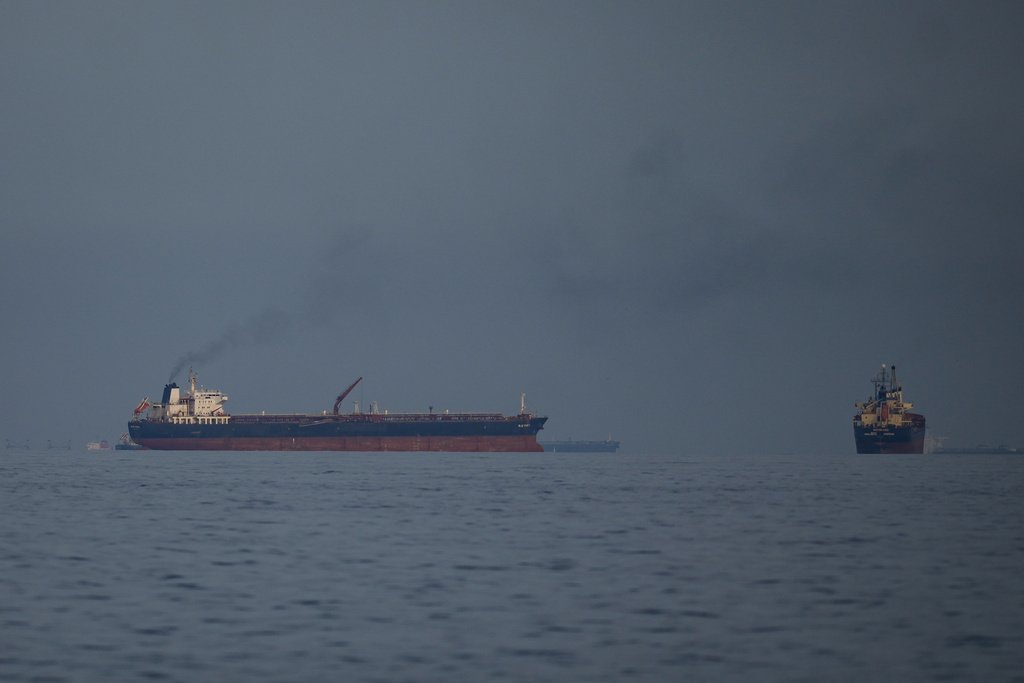
President Donald Trump has directed the United States Navy to establish a blockade of the Strait of Hormuz, a critical global oil transit chokepoint, following the collapse of direct negotiations with Iran over the weekend. The announcement marks a significant escalation in military posture toward Tehran.
In a post on Truth Social Sunday morning, Trump declared the action would begin immediately. “Effective immediately, the United States Navy, the Finest in the World, will begin the process of BLOCKADING any and all Ships trying to enter, or leave, the Strait of Hormuz,” the president wrote. He further instructed naval forces to “seek and interdict every vessel in International Waters that has paid a toll to Iran.”
The decision comes after a high-stakes diplomatic effort in Islamabad, Pakistan, failed to yield a breakthrough. The talks, which represented a rare moment of direct engagement, were aimed at solidifying a fragile ceasefire and addressing core disputes, including Iran's nuclear capabilities.
Vice President J.D. Vance confirmed the diplomatic impasse late Saturday. The U.S. delegation, which also included special envoy Steve Witkoff and senior adviser Jared Kushner, briefed Trump on the outcome. In his social media post, Trump stated Iran was “unwilling” to negotiate substantively on its nuclear program, which he described as the paramount concern.
“In many ways, the points that were agreed to are better than us continuing our Military Operations to conclusion,” Trump wrote, “but all of those points don’t matter compared to allowing Nuclear Power to be in the hands of such volatile, difficult, unpredictable people.”
The president connected the blockade order to ongoing U.S. military operations to clear naval mines allegedly laid by Iran in the strategic waterway, framing it as a necessary response to Iranian threats. The Strait of Hormuz is a vital artery for global energy supplies, with about one-fifth of the world's oil passing through it. A naval blockade represents a severe measure typically associated with a state of conflict.
This move is certain to provoke a sharp response from Tehran and risks triggering a broader regional confrontation. It also follows a pattern of the administration utilizing national security justifications for assertive actions, a tactic seen in other contexts such as the controversial defense of major domestic expenditures.
The composition of the U.S. negotiating team has drawn criticism from some foreign policy veterans. Former officials have questioned the reliance on envoys with backgrounds in real estate rather than traditional diplomacy for such sensitive nuclear discussions. The failure of the talks and the subsequent military escalation will intensify scrutiny of this approach.
The announcement plunges the already precarious situation in the Gulf into deeper uncertainty. The administration's strategy appears to have shifted abruptly from diplomacy to a forceful naval interdiction campaign, raising immediate questions about the rules of engagement, the reaction of international shipping, and the potential for miscalculation. Global energy markets are likely to react volatility to the news of a blockade affecting such a crucial transit route.