Senior Republican Foresees Military Escalation
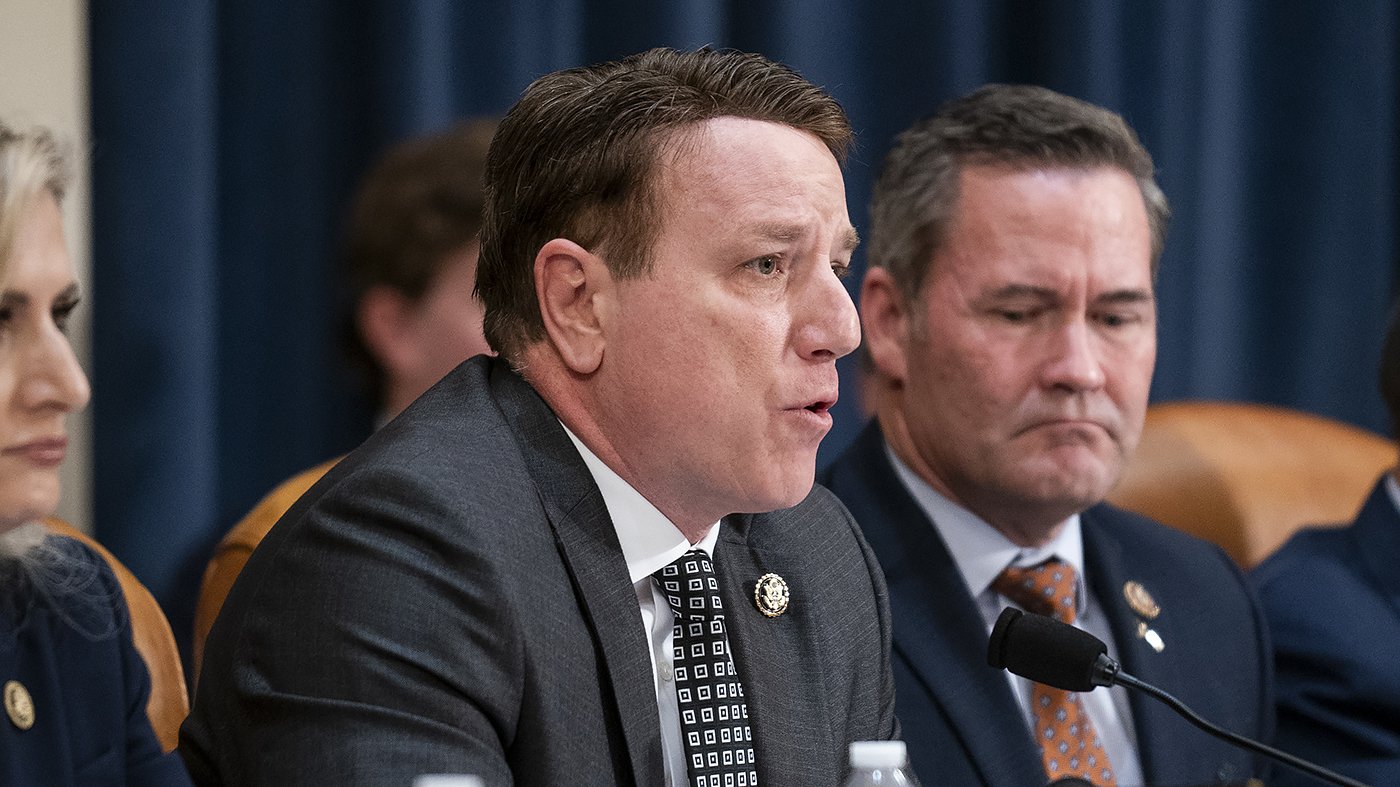
Representative Pat Fallon, a Texas Republican who chairs the House Armed Services Subcommittee on Military Personnel and served as an Air Force officer, stated on Monday that he anticipates President Donald Trump will order American troops into Iran. In an interview on Fox Business Network, Fallon characterized such a military escalation as virtually certain, declaring he could envision no other resolution to the ongoing crisis.
"Boots on the Ground" Forecast
When pressed on whether the U.S. would commit ground forces, Fallon was explicit. "I personally think it's going to be boots—at least Special Ops, American special operators—on the ground, with allies in the region and air cover," he stated. He emphasized a perceived necessity to see the mission through, arguing, "We have to change the tact of the Tehran government, or we can't leave. We can't leave until the job is done."
The congressman's prediction comes as the Trump administration confronts a self-imposed Tuesday deadline for Iran to reopen the Strait of Hormuz. The critical waterway, through which approximately one-fifth of global oil shipments pass, has been effectively closed since late February, triggering a sharp rise in energy prices and global tensions. Over the weekend, President Trump issued a stark, profanity-laced social media ultimatum, threatening to escalate attacks on Iranian civilian infrastructure like power plants and bridges if no agreement is reached.
Strategic Scale and Political Calculations
Fallon acknowledged the immense challenge a ground campaign would represent, noting Iran's population of 93 million and its vast geographic size. "It's five times the size of Iraq," he said, comparing it to the 2003 invasion. "It's larger in size than Spain, France, the United Kingdom and Germany combined." Despite the scale, he expressed optimism that domestic opposition within Iran would aid any U.S. operation. "80 percent of the people in Iran hate this regime," Fallon claimed. "So once an action like that is taken, I do believe that people are going to rise up, and the IRGC is going to melt away."
This hawkish congressional perspective emerges alongside conflicting signals from the administration. While Trump has publicly refused to rule out deploying troops, there have also been reports of behind-the-scenes ceasefire proposals circulated by third-party mediators. Neither Washington nor Tehran has formally responded to these drafts, leaving the immediate path forward unclear.
The president's aggressive rhetoric, including his latest social media ultimatum threatening 'Hell' for Iran, has drawn criticism from some quarters as counterproductive. Meanwhile, regional dynamics remain volatile, with Israeli forces recently striking a major Iranian petrochemical facility as the U.S. deadline approached.
Fallon's comments underscore a growing divide in Washington regarding Iran strategy. His prediction of inevitable troop deployment contrasts with more cautious voices within the foreign policy establishment and comes as the broader political landscape remains fraught ahead of the next election cycle. The congressman's position as a subcommittee chair on military personnel lends weight to his assessment, suggesting such a scenario is actively contemplated within relevant House committees.
As Tuesday's deadline arrives, the administration faces a critical decision point. Will it follow through on its threats of severe escalation, potentially involving ground forces as forecast by its allies in Congress, or will diplomatic channels, however strained, yield a last-minute solution? The outcome will have profound implications for global energy markets, regional stability, and the trajectory of U.S. foreign policy.