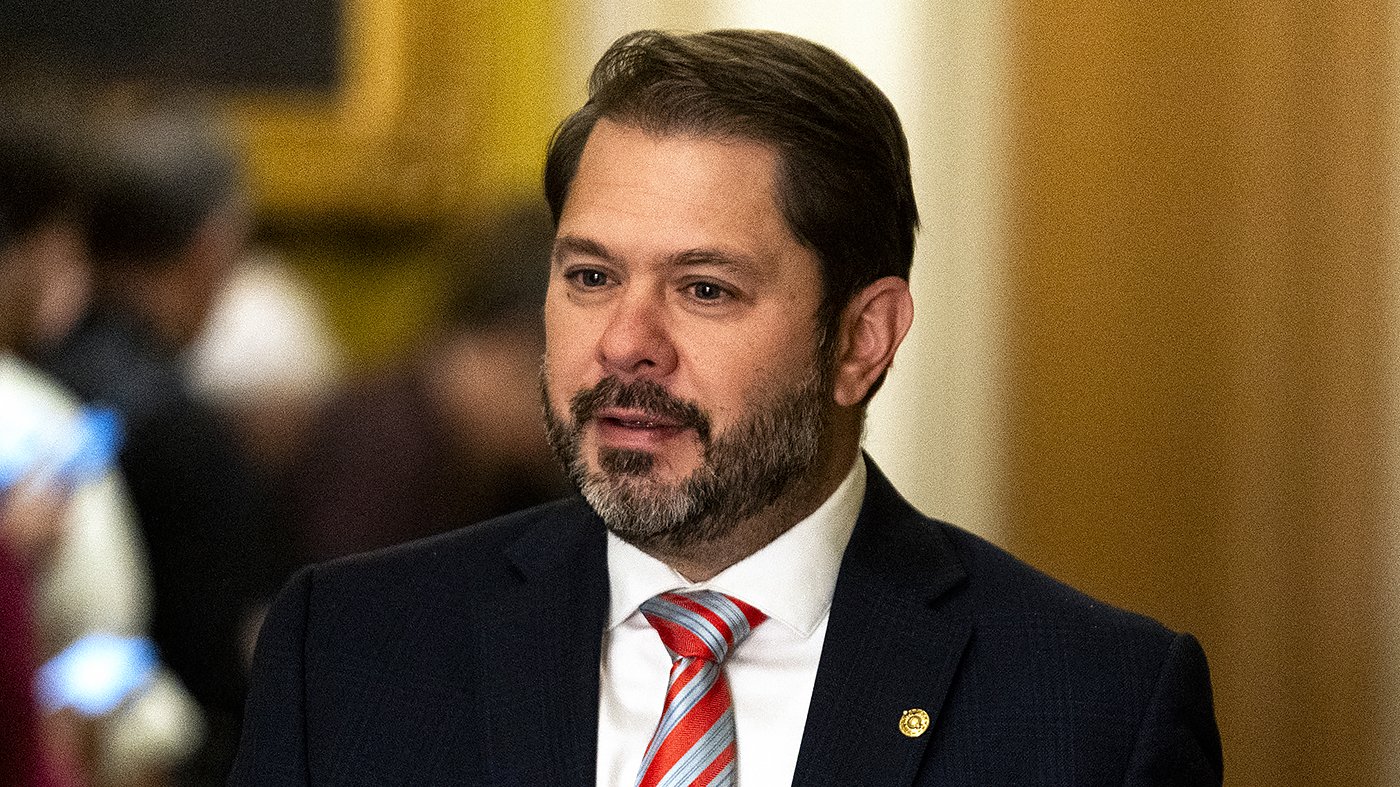
Sen. Ruben Gallego (D-Ariz.) on Wednesday charged that Republican lawmakers are engineering a pretext for yet another U.S.-led regime change conflict—this time targeting Cuba—as the Trump administration tightens its oil blockade and files criminal charges against former Cuban President Raúl Castro.
“We’re seeing Republicans manufacture a reason for another regime change war in front of our very eyes—this time in Cuba,” Gallego wrote in a post on X. He added, “I was sent to fight abroad with other working-class kids by the same type of DC war hawks. We must say no to more forever wars.”
President Donald Trump and Secretary of State Marco Rubio have been pressing Havana to overhaul its economic system and install new leadership. In March, Cuba’s deputy prime minister, Oscar Pérez-Oliva Fraga, signaled a willingness to open the door to more foreign investment, but the administration is demanding deeper concessions as Cubans endure widespread power outages and 20-hour blackouts blamed on the oil blockade.
On Wednesday, Rubio announced a $100 million aid package for food and medicine, contingent on distribution by the Catholic Church or another trusted charity—not the Cuban military-linked conglomerate that controls much of the island’s commerce. The move follows a pattern of pressure that Democrats and Cuban officials warn could escalate into direct intervention.
Concerns about regime change have intensified amid parallels to recent U.S. actions: a push to overthrow Iran’s government, detailed in reports of a U.S.-Israel regime change plan, and a January military raid in Venezuela that led to the capture of President Nicolás Maduro. The administration has also tightened sanctions on Iran, targeting its currency exchange networks.
Cuban President Miguel Díaz-Canel slammed the charges against Castro, which stem from the 1996 downing of two civilian planes by the Cuban military, killing four men. The aircraft belonged to Brothers to the Rescue, a Miami-based Cuban exile group that was searching for people fleeing the island. “This is a political maneuver, devoid of any legal foundation, aimed solely at padding the fabricated dossier they use to justify the folly of a military aggression against #Cuba,” Díaz-Canel wrote on X.
The indictment revives a decades-old incident that has long fueled tensions between Washington and Havana. Gallego, a Marine Corps veteran who served in Iraq, has been a vocal critic of endless military engagements. He recently clashed with Senate Republicans over a $1.78 billion fund for Trump allies, and has pushed for DACA protections and anti-profiling measures.
As the 2026 midterms approach, political volatility is expected to rise, and the Cuba standoff could become a flashpoint. For now, Gallego’s warning underscores a deepening divide over whether the U.S. is being drawn into another foreign entanglement under the guise of humanitarian aid and justice.