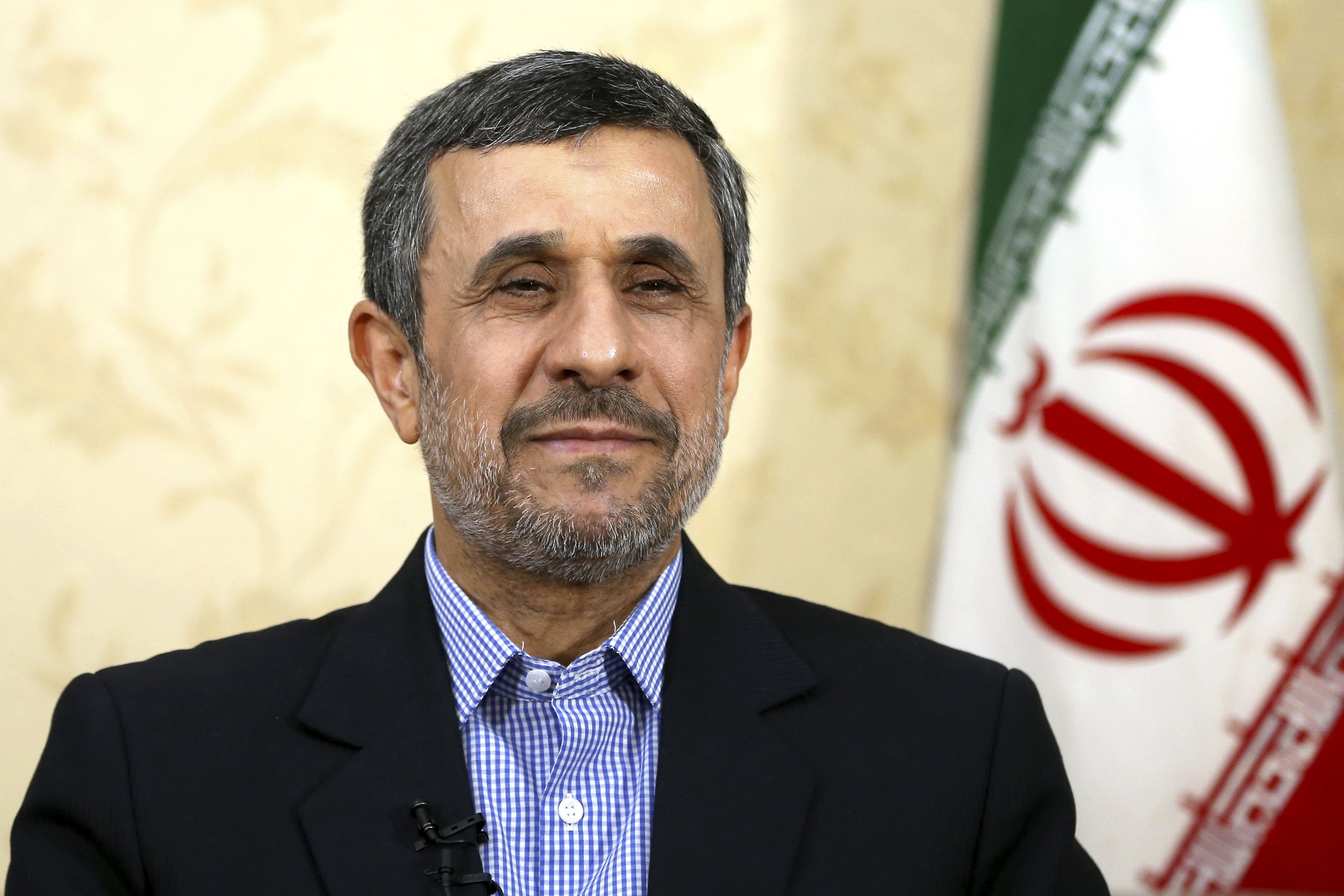
The United States and Israel may have entered military action against Iran with a covert regime change blueprint that unexpectedly identified Mahmoud Ahmadinejad, the former Iranian president known for his virulent anti-American and anti-Israeli rhetoric, as a potential successor, according to a New York Times report.
US officials who were briefed on the plan told the Times that Israeli strategists developed a multi-stage approach to topple Iran's government. The scheme reportedly envisioned Ahmadinejad taking power despite his long history of Holocaust denial, his support for Iran's nuclear program, and his harsh criticism of both Washington and Jerusalem.
The plan never came to fruition, however. Ahmadinejad was injured during the opening days of the conflict, which began with US-Israeli strikes on February 28. Those strikes also killed Iran's supreme leader, Ayatollah Ali Khamenei. The former president had been briefed on the plan but became disillusioned after surviving the attacks, the report notes.
How Ahmadinejad was recruited remains unclear, and his current whereabouts are unknown. He served as Iran's president from 2005 to 2013, gaining international notoriety for denying the Holocaust and staunchly backing Iran's nuclear ambitions. In recent years, he fell out of favor with the regime after accusing its leaders of corruption and was barred from running for reelection.
The report indicates that US and Israeli officials sought individuals within the Iranian regime willing to cooperate in overthrowing the government. Some officials expressed skepticism about whether Ahmadinejad could realistically lead, given his polarizing legacy and the fact that he was no longer in power.
The revelation offers a clear indication that Washington and Jerusalem may have harbored broader ambitions for the conflict than they publicly acknowledged. The White House has not responded to a request for comment on the report.
President Trump has publicly supported the idea of a new leader in Iran, but his administration has consistently framed its military operations—dubbed Operation Epic Fury—as primarily aimed at eliminating Iran's nuclear capabilities, not pursuing regime change. Trump stated that the operation's objectives were to destroy Iran's offensive missiles and production, dismantle its navy and other security infrastructure, and ensure Iran can never develop nuclear weapons.
The report emerges amid broader US pressure on adversaries. The Trump administration has recently tightened sanctions on Iran, targeting its currency exchange and shadow fleet, while also ramping up pressure on Cuba with regime change in mind. The disclosure of the Ahmadinejad plan is likely to fuel debate over the true scope of US-Israeli objectives in the region.