Senate Republicans on Tuesday voted along party lines to kill a Democratic attempt to block the Trump administration from creating a $1.776 billion fund intended to compensate individuals—including the president himself—who claim they were politically targeted by the federal government.
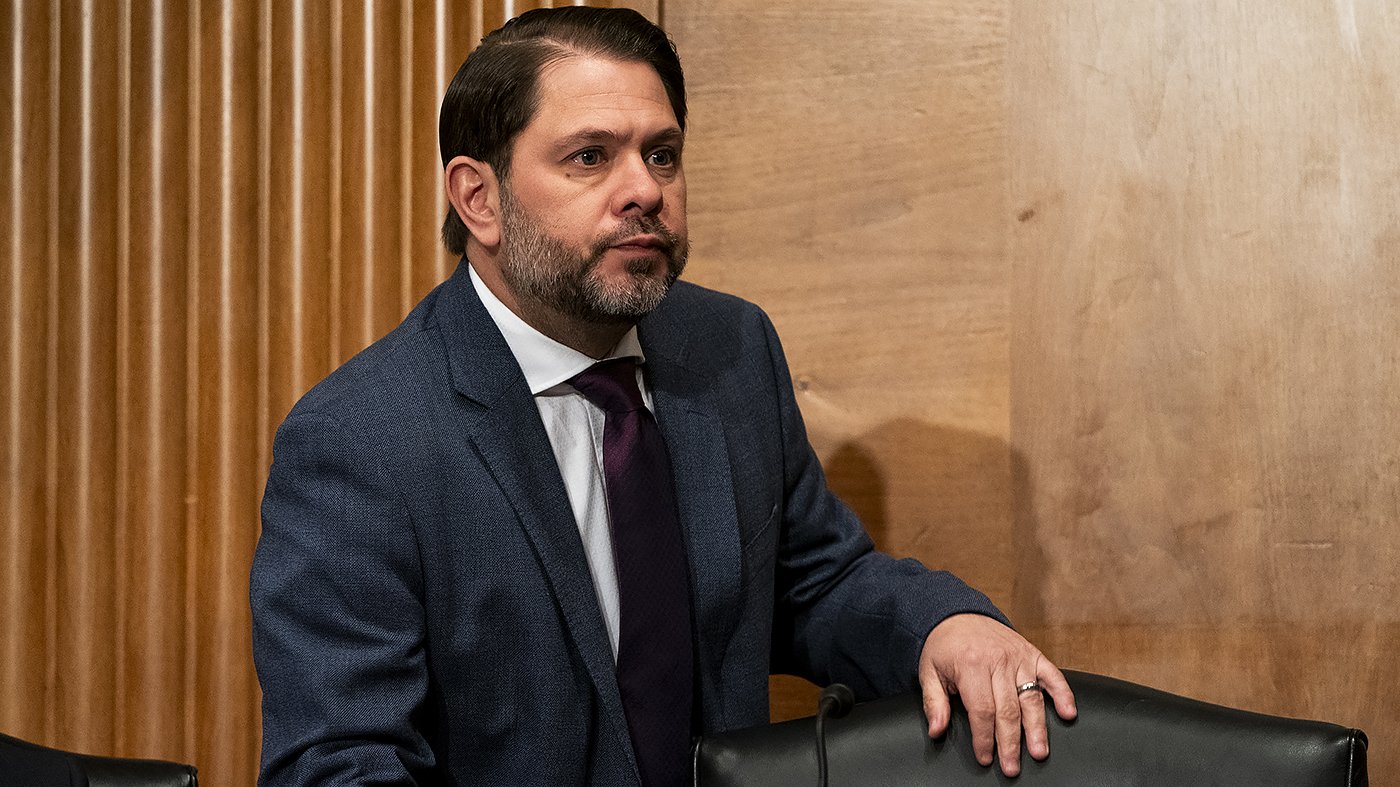
The amendment, introduced by Sen. Ruben Gallego (D-Ariz.), would have barred the Department of Justice from implementing the so-called “anti-weaponization” fund, which was established Monday as part of a settlement between President Trump and the IRS. Trump had sued the agency for $10 billion in January after a contractor leaked his tax returns to news outlets.
Sen. Rand Paul (R-Ky.), who chairs the Homeland Security and Governmental Affairs Committee, said the Budget Committee ruled that Gallego’s amendment violated procedural rules. The panel then tabled the measure in an 8-7 party-line vote.
“I offer this amendment for one simple reason: taxpayer dollars should never be used to enrich a sitting president, his family or his political allies,” Gallego said during the hearing. He added that Trump “sued his own government and then negotiated an arrangement with his own Department of Justice to create a nearly $2 billion fund to compensate himself, his family and his allies.”
Acting Attorney General Todd Blanche, who will appoint five members to oversee the fund, told lawmakers during a separate Senate Appropriations subcommittee hearing Tuesday that the commissioners will set the rules for disbursements. When Sen. Chris Coons (D-Del.) pressed whether the fund could pay individuals convicted of crimes related to the Jan. 6, 2021, attack on the Capitol—including members of the Oath Keepers—Blanche said any American could apply.
“The commissioners will set rules,” Blanche said. “That’s not for me to set, that’s for the commissioners, and whether an individual, an Oath Keeper, as you just mentioned, applies for compensation—anybody in this country can apply.”
Gallego sharply criticized the possibility that Jan. 6 defendants could receive payouts. Holding a photo of individuals convicted of assaulting police officers during the riot, he remarked, “So much for backing the blue.” He added, “This is not justice, it is profound abuse of public funds.”
Under the settlement, Trump and his sons, Donald Trump Jr. and Eric Trump, will receive a formal apology from the DOJ but no monetary payment. However, the fund is open to others who claim they were wrongly targeted by the Biden administration, a group that could include Trump allies and donors.
Dozens of House Democrats filed a separate lawsuit Monday to block the fund, arguing it “raises the specter of corruption unparalleled in American history.” The controversy has drawn sharp criticism from across the political spectrum, with some comparing it to a private slush fund for the president’s inner circle.
The legislative defeat for Democrats comes as the broader political landscape shifts: Trump’s approval ratings have slipped, and the administration faces mounting scrutiny over its use of executive power. The fund, which Blanche described as a mechanism to address “weaponization” of government, is likely to remain a flashpoint in the coming weeks.