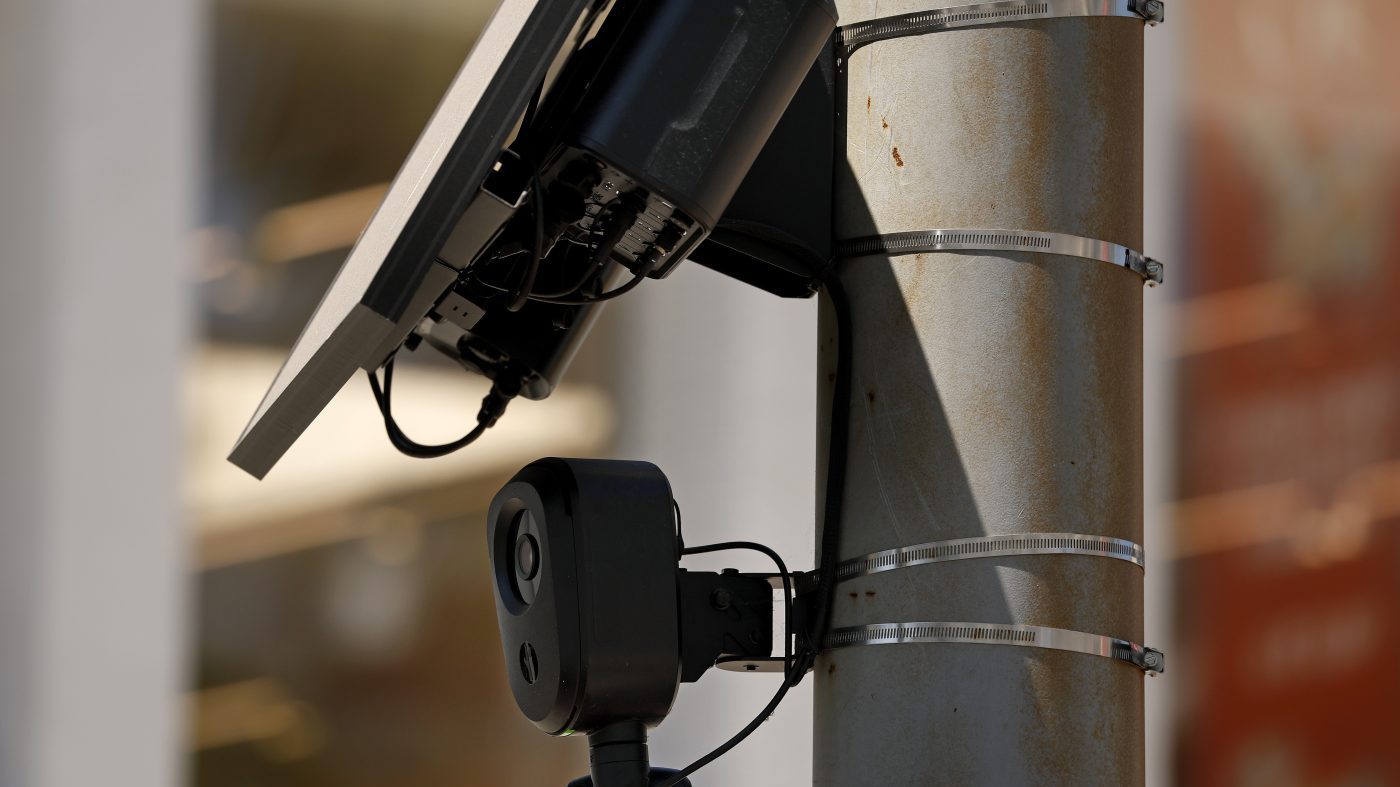
Garrett Langley, the 38-year-old founder and CEO of Flock Safety, is rapidly becoming a household name in tech, alongside figures like Mark Zuckerberg and Jeff Bezos. His Atlanta-based company, launched in 2017, has installed solar-powered, AI-driven cameras in every U.S. state except Alaska. Flock now operates more than 120,000 cameras, which the company says supported over 1 million criminal investigations and incidents in 2025 alone.
Langley's vision is audacious: he believes Flock could nearly eliminate crime within a decade. "I've talked to plenty of activists who think crime is just the cost of modern society. I disagree," he told Forbes in 2025. "I think we can have a crime-free city and civil liberties. We can have it all."

But his rapid expansion has not come without controversy. Protests have erupted in some communities, with demonstrators dismantling or destroying Flock cameras, and several cities have terminated their contracts with the company. The backlash highlights a growing tension between public safety and privacy rights, a debate that Langley and his team are navigating as they push forward.
From Clutch to Flock: Langley's Entrepreneurial Path
Langley grew up in Atlanta and attended the Georgia Institute of Technology, where he studied electrical engineering. Before founding Flock, he launched a monthly car subscription service called Clutch. He also co-created an app called Experience, which upgraded sports or concert tickets to VIP-status events, alongside fellow Georgia Tech alumni. That same trio would later come together to create Flock in 2017.
The Birth of Flock Safety
Langley says he was inspired to start Flock after witnessing unchecked crime in Atlanta. The first prototype was rudimentary: an Android phone camera housed in a waterproof box, used to photograph cars and license plates, which could then be searched via an app. From that humble beginning, Flock has grown into a major player in the surveillance technology sector.
Today, Flock's cameras are a common sight on highways and neighborhood streets, and the company has expanded its offerings to include license plate recognition, vehicle tracking, and even gunshot detection. However, as the privacy backlash grows, Flock has had to adjust its policies. The company has revised its data retention rules amid lawsuits and criticism, a move that tightens data rules but may not fully appease skeptics.
Langley remains undeterred, arguing that Flock's technology can coexist with civil liberties. His confidence has drawn both praise and skepticism, but his influence is undeniable. As Flock's network expands, so does the debate over how far surveillance should go in the name of safety.