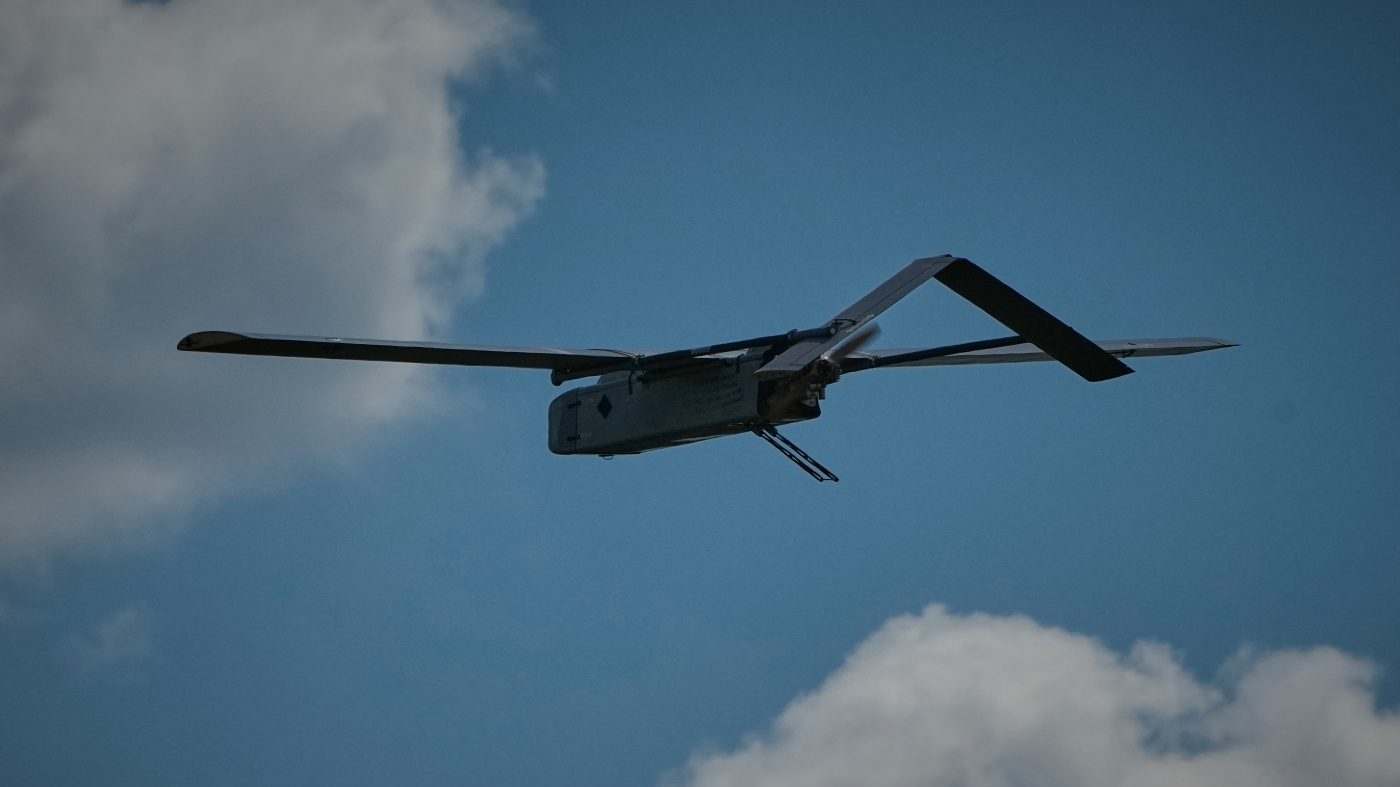
Defense Secretary Pete Hegseth has directed the Pentagon to fast-track the development and fielding of counter-drone systems, warning that bureaucratic delays now constitute a direct threat to military readiness. In a memo partially obtained by NewsNation, Hegseth orders the department to treat any holdup in deploying counter-unmanned aircraft systems (C-UAS) as an “operational risk,” a designation typically reserved for battlefield vulnerabilities.
“This memorandum directs the Department to accept prudent risks, identify approval paths early, staff them fast, standardize them across the Department, and elevate them when they stall,” Hegseth wrote. The language signals a push to strip away layers of review that have historically slowed procurement, especially for emerging technologies.

The urgency reflects a global landscape where drones have become both cheaper and more lethal. In Ukraine, small unmanned systems have repeatedly blunted Russian advances, helping Kyiv extend a war that many initially expected to end quickly. The Pentagon has sent teams to train with Ukrainian soldiers, absorbing lessons on drone tactics, electronic warfare, and mass production. However, a dedicated Army program studying drone use in foreign conflicts was abruptly disbanded in August after its commanding general was removed in July, raising questions about institutional continuity.
Closer to home, drones are now a fixture along the southern border, where the Department of Homeland Security is using counter-drone measures, including lasers, to disrupt cartel smuggling attempts. The Pentagon memo explicitly warns that the U.S. cannot afford to fall behind as the technology becomes more ubiquitous and less expensive, a point underscored by recent incidents such as drone strikes near Chișinău that exposed air-defense gaps in Moldova.
Hegseth’s directive aligns with his broader push to modernize the military’s approach to autonomous warfare. In a recent speech at Quantico, he unveiled a new autonomous warfare command, Project Meridian, which aims to integrate drones, artificial intelligence, and robotics across all service branches. That initiative has already drawn outside expertise, with Hegseth tapping figures like Elon Musk and Palmer Luckey to advise on the project. The memo now extends that urgency to the procurement pipeline, demanding that approval paths be identified early, staffed quickly, and standardized across the department, with any stall escalated to senior leadership.
“We will not answer a fast-moving threat with a slow-moving bureaucracy,” Hegseth wrote, a line that encapsulates his frustration with the Pentagon’s traditional acquisition system. The message is clear: the era of treating drone defense as a niche capability is over, and delays are no longer acceptable.
The move comes as Hegseth also seeks to reduce the size of the top brass, proposing a 20% cut in flag officers, a plan that has met resistance from some Senate Republicans. Critics argue that slashing senior ranks could hinder oversight, but Hegseth frames it as a necessary step to streamline decision-making. The anti-drone memo, however, focuses squarely on operational tempo, signaling that the Pentagon is shifting from a peacetime mindset to one that prioritizes speed and adaptability.
Military analysts note that the memo’s language about “accepting prudent risks” is a significant departure from the risk-averse culture that has dominated the Pentagon. By explicitly labeling delays as operational risks, Hegseth is forcing commanders to weigh the cost of inaction against the possibility of failure in testing or fielding new systems. This could lead to faster fielding of prototype drones, jammers, and directed-energy weapons, even if they are not fully mature.
The Pentagon’s increased focus on counter-drone technology is not just about current conflicts but also about preparing for future ones. With adversaries like China and Russia investing heavily in drone swarms, the U.S. military is racing to develop defenses that can neutralize threats at scale. The memo’s emphasis on standardization suggests that Hegseth wants to avoid the patchwork of service-specific programs that have historically complicated joint operations.
For now, the directive is a clear signal to the defense industry and military planners alike: the window for deliberation is closing. As drones become more ubiquitous on battlefields and borders, the Pentagon is betting that speed, not caution, will be the key to staying ahead. Whether the bureaucracy can deliver on that promise remains to be seen, but Hegseth’s memo makes one thing certain—procrastination is no longer an option.