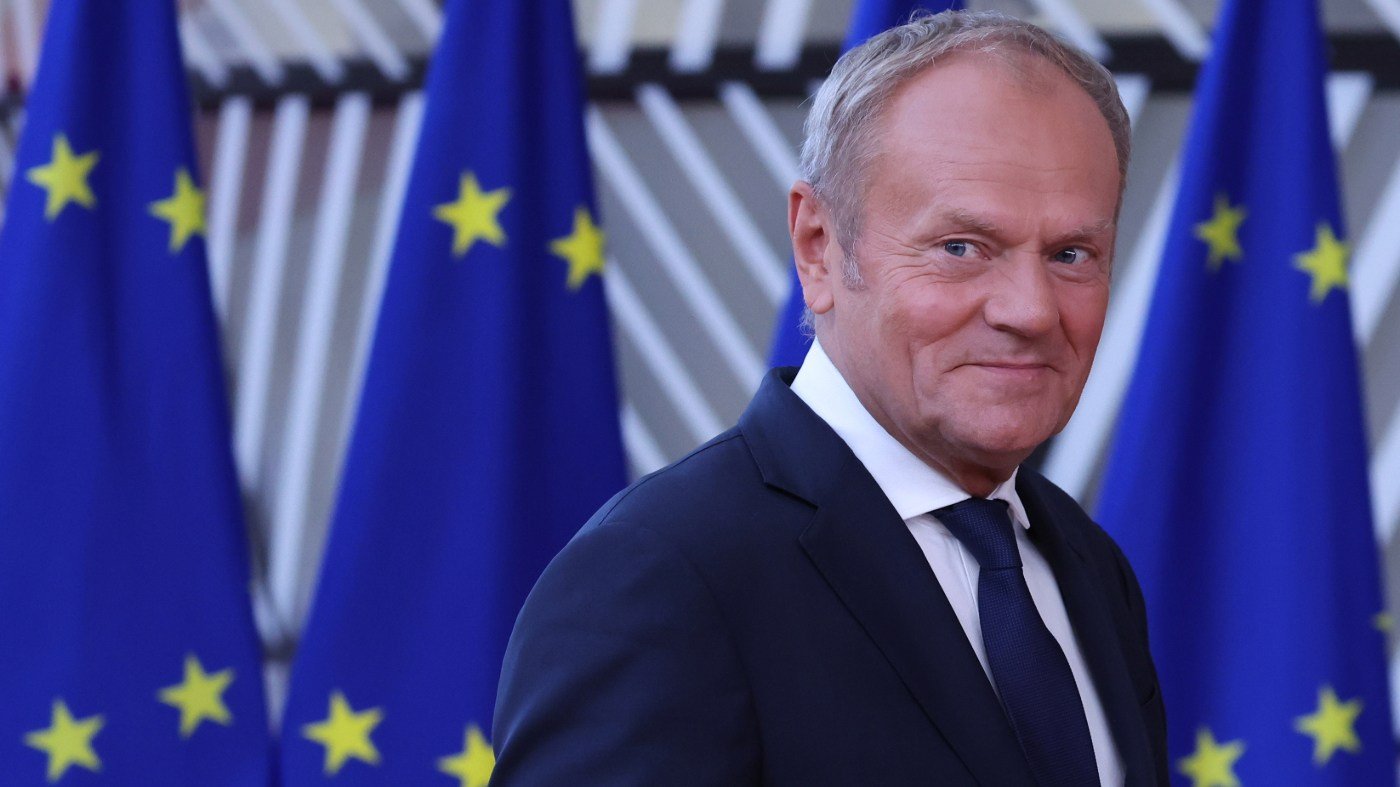
Prime Minister Donald Tusk recently revealed that Poland had intercepted a Russian provocation near the Kaliningrad exclave, underscoring a broader shift: the frontline of European security now runs through Central Europe. The region has become the continent's new center of gravity, both economically and militarily.
Economic Dynamism Shifts East
While Germany remains Europe's largest economy, its industrial heartland is being supplemented by rapid growth in Central and Northern Europe. In 2025, Poland's GDP expanded by 3.6%, Lithuania's by 2.9%, and the Czech Republic's by 2.6%. These countries are also outpacing Western peers in new industrial enterprise births per capita, signaling a eastward expansion of Europe's manufacturing base.

This growth is fueled by affordable operating costs, skilled talent, and strong research institutions, creating vibrant startup ecosystems in cities like Prague, Riga, Tallinn, and Warsaw. Better integration of these industrial and technological strengths could lead to more secure supply chains and attract American investment, strengthening the transatlantic economy.
Energy Security and Strategic Vulnerabilities
Europe's energy security remains a pressing concern. Since Russia's invasion of Ukraine, the EU has worked to diversify energy supplies, but it must avoid replacing Russian hydrocarbons with dependence on Chinese green technology. The United States can help by partnering on civil nuclear technology, grid modernization, and diversifying supply chains. U.S. companies are already exploring opportunities in data center energy demands and other areas.
Military Pillar of NATO
Central Europe is now a military pillar of NATO. Poland fields the alliance's third-largest military, and the region leads in defense investment. Lithuania, Estonia, and Poland are approaching or exceeding NATO's 5% GDP spending goal. Germany is also transforming, with a defense budget projected at $147 billion for 2026, exceeding the combined 2022 budgets of France, Germany, and Italy. Berlin aims to build the Bundeswehr into Europe's strongest conventional force, with plans to expand to 460,000 troops by 2039.
However, as Palantir CTO Shyam Sankar noted, deterrence depends on industrial capacity, not just stockpiles. Central Europe's ability to scale production will be critical. The region's infrastructure—depots, logistics corridors, and staging areas—provides strategic depth essential for collective defense.
Ukraine's Role
Ukraine's sovereignty and integration into European structures are vital for transatlantic security. Its defense industrial capacity could further energize the region's economic and military core. The arteries connecting Ukraine to Central Europe have enormous potential to mature.
For the United States, recognizing the strength and production capacities of its allies is essential. Central Europe's geography and emerging capabilities make it indispensable to NATO's future. As the region grows, its role in countering Russian aggression and Chinese influence will only increase, making it a linchpin of Western security.