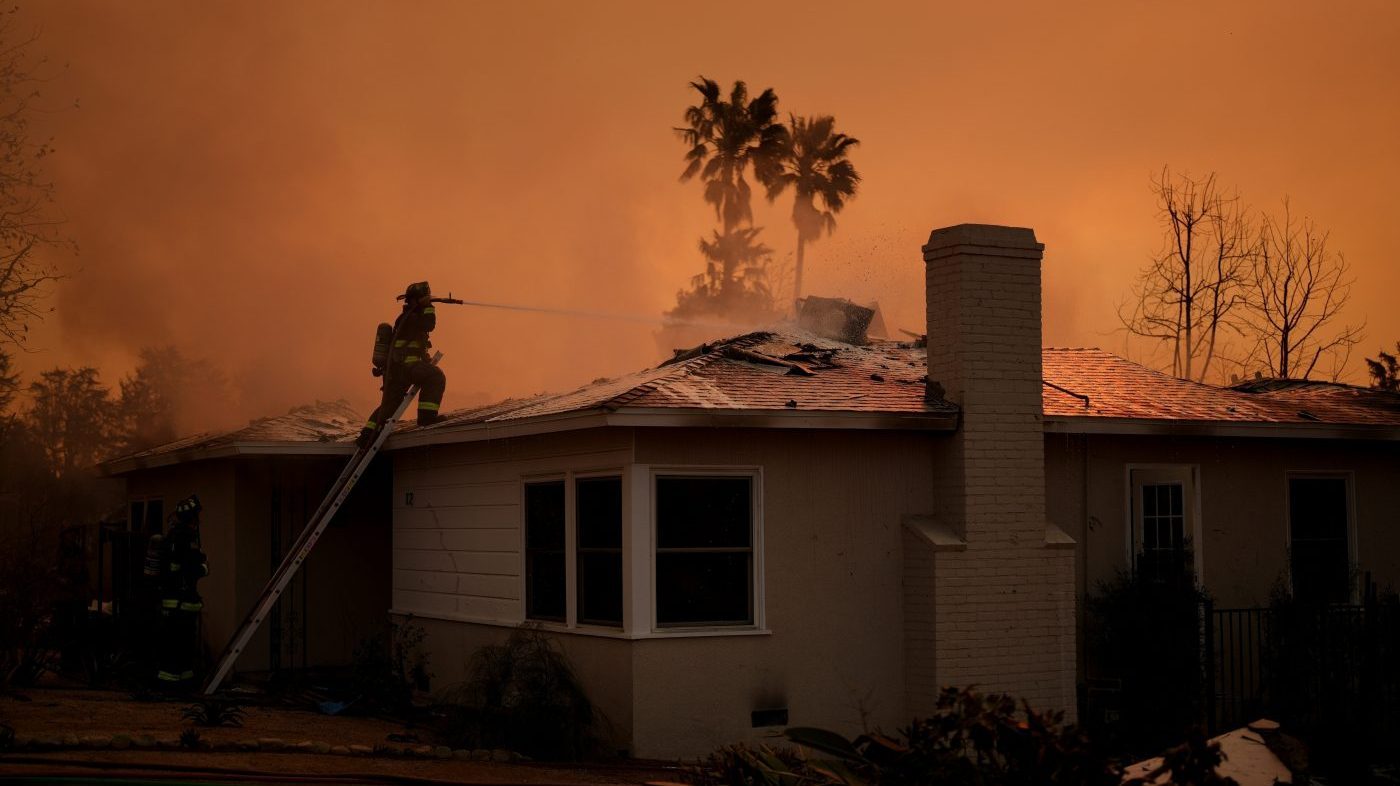
Wildfires are leaving a toxic legacy in the nation's water supplies, with new research showing that contamination can persist for up to eight years. The findings come as climate change and stronger El Niño events drive more frequent and intense blazes, threatening the streams and rivers that provide drinking water to millions of Americans.
So far in 2026, more than 68,000 wildfires have scorched over 14,000 square miles across the U.S. When rains follow, ash and organic matter wash into waterways, overwhelming treatment plants built for cleaner conditions. Communities are scrambling to adapt, but the costs are steep and the solutions are often temporary.

Las Vegas, New Mexico, Still Reeling
The city of Las Vegas, New Mexico, is a stark example. After the Hermit's Peak/Calf Canyon fire contaminated the Gallinas River in 2022, residents went without water for months. The city has since distributed bottled water and trucked in supplies from neighboring towns while raising funds for a new treatment plant.
Karen Pettine, who has owned the Hillcrest Restaurant for 50 years, says the crisis forced her to close sometimes for a week at a time. "It's hard to run a restaurant without good water," she said. "They brought in semi-truckloads of bottled water. You could pick up four cases at a time. The water situation is ongoing because when it rains, it floods and it brings dirty water down the stream."
Mayor David Romero said climate change has made previously reliable systems unpredictable. "It's a scary situation that we're all going to encounter," he warned.
Watersheds Under Stress
Forested watersheds supply water to nearly two-thirds of U.S. municipalities, according to Carli Brucker, lead author of a University of Colorado Boulder study. Her research, which compared burned and unburned basins, found that water quality impacts can last up to eight years.
Amanda Hohner, an assistant professor at Montana State University, said the increasing severity of wildfires is making watersheds more vulnerable. "Wildfires are a natural part of forest ecosystems, but the scale and intensity are new challenges," she said.
Treatment plants typically rely on trees and soil as natural filters, but fires cause spikes in heavy metals and dissolved organic matter that plants aren't designed to handle, Brucker explained. This can force shutdowns and reliance on backup sources, which may not be available.
Treatment Challenges and Costs
Reservoirs can help by allowing particles to settle, but the nutrient-rich sediments can fuel algal blooms, said Kyle Shimabuku, an associate professor at Gonzaga University. The algae can sicken people and kill fish.
Chlorine, a common disinfectant, also reacts with fire-derived organic matter to form disinfection byproducts, which are regulated by the EPA because they can cause cancer, said Garrett McKay of Texas A&M. Plants must remove the organic matter before disinfecting, causing delays.
Upgrades are costly. Glenwood Springs, Colorado, received an $8 million emergency loan from the Colorado Water Conservation Board after a 2020 fire threatened its water sources. Fort Collins closed its river intake and relied on Horsetooth Reservoir after the Cameron Peak fire.
Las Vegas, New Mexico, was hit again in 2024 and 2025, with debris flows forcing the city to truck in 2.2 million gallons of water from Santa Fe and Santa Rosa. The city is still working on a permanent fix.
Experts say utilities are increasingly reaching out for help finding new water sources or treatment methods. "They're extremely concerned," McKay said. As climate change intensifies, the threat to drinking water is likely to grow, leaving communities to bear the burden.