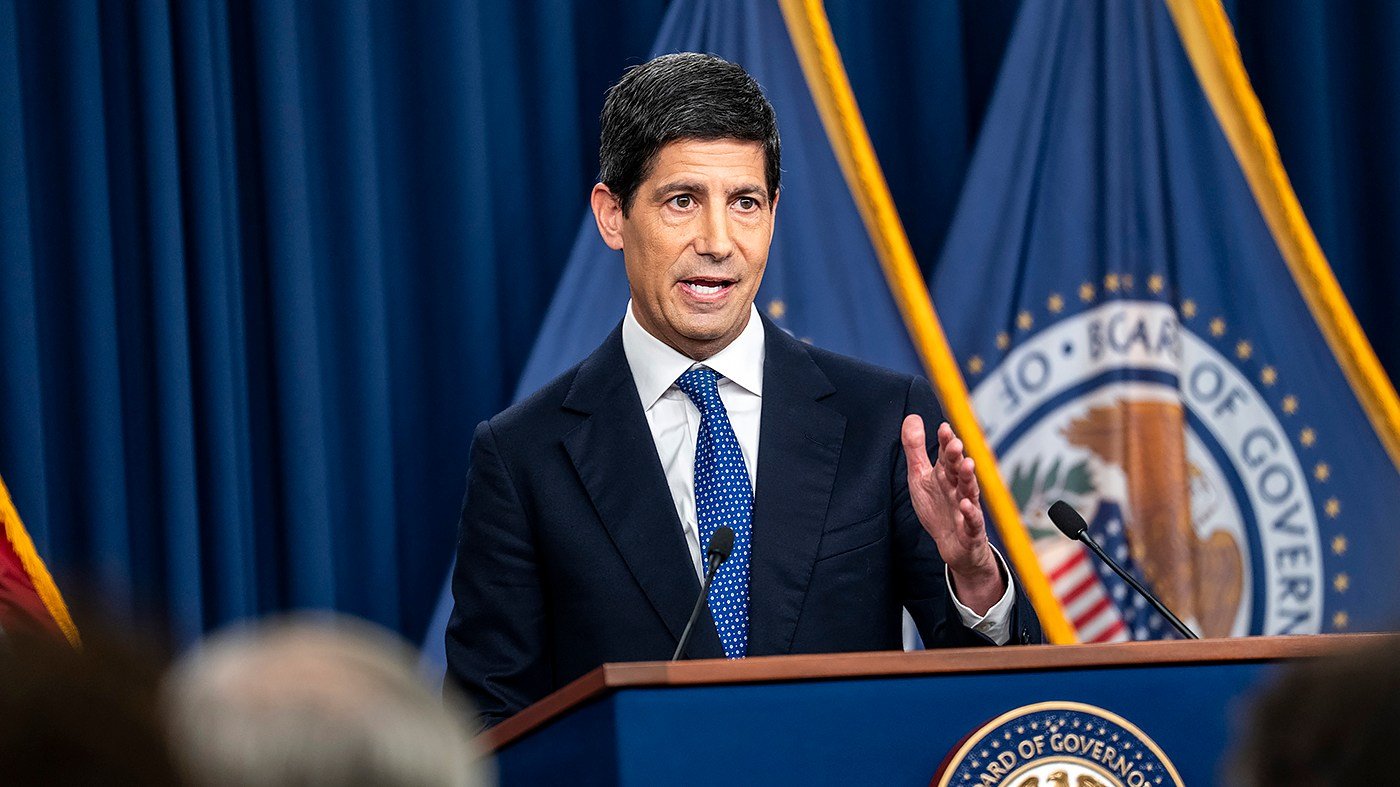
The Federal Reserve released its 2027 meeting calendar on Thursday, confirming that the Federal Open Market Committee (FOMC) will hold eight sessions next year, with one dedicated solely to strategic discussions and no interest rate decision. The schedule marks a tangible shift under Chair Kevin Warsh, who has pushed to rebalance the central bank's focus toward longer-term policy questions.
According to the Fed's announcement, the FOMC will convene eight times in 2027, starting in late January and continuing at roughly six-week intervals. At the end of each two-day meeting, the committee will vote on the federal funds rate—except for the gathering scheduled for October 26–27, which will be reserved for what the Fed described as "discussion of broad monetary policy strategy issues."

Warsh first signaled this change last month, after the FOMC held rates steady in a 3.75%–4% range. He told reporters that the adjustment was driven by "straightforward" logic: policy decisions require timely and regular assessments of incoming data, but the committee also needs dedicated time for strategic thinking.
"Getting policy right involves assessing near-term developments at timely, regular, and information-rich intervals," Warsh said. "But it's equally important we reserve time and space, as an intellectually diverse group, for strategic deliberations—for thinking anew about big questions, looking out over longer time horizons, focusing, as I say, on the left side of the decimal point."
The minutes from the FOMC's July meeting show that Warsh first raised the idea of altering the schedule then. He observed that holding six meetings per year, spaced two months apart, would allow more data to accumulate between decisions than the current setup. Under the Federal Reserve Act, the committee is required to meet at least four times annually.
Warsh has indicated that in 2028, the FOMC will hold two such strategy-focused meetings and six regular policy meetings. The change has drawn praise from some economists, including Jason Furman, who chaired the Council of Economic Advisers under President Obama. Furman called the move a "great move" on social media, saying he has long believed the Fed spends too much time on immediate concerns and not enough on long-term strategy.
The calendar tweak is the latest sign of Warsh's influence since he succeeded Jerome Powell in May. Under his leadership, the FOMC has moved away from issuing forward guidance in its policy statements, and Warsh has notably declined to submit his own "dot" projections in the committee's quarterly economic forecasts—a break from tradition that he has defended as a way to let markets focus on actual data rather than policymakers' predictions.
"I understand the desire for rolling forecasts and commentary from this committee," Warsh said in July. "But for our part, we need to observe market reaction to developments, direct and unfiltered."
The 2027 schedule also comes as the Fed continues to navigate an uncertain economic landscape, with inflation pressures persisting and labor markets showing resilience. The decision to carve out a dedicated strategy session underscores Warsh's broader effort to reshape the Fed's approach to monetary policy, a theme that is likely to define his tenure.